A New Milestone: Successfully accredited with NABH 6th Edition – Redefining standards in healthcare quality and patient safety | Live vitals. Real-time data. Faster care. Trustwell Hospitals unveils Karnataka’s first 5G SMART ambulance |
Find a Doctor Book Online Appointment
Sports Injury Hospital In Bangalore

Sports Injury Hospital In Bangalore

Sports Injury Hospital Bangalore

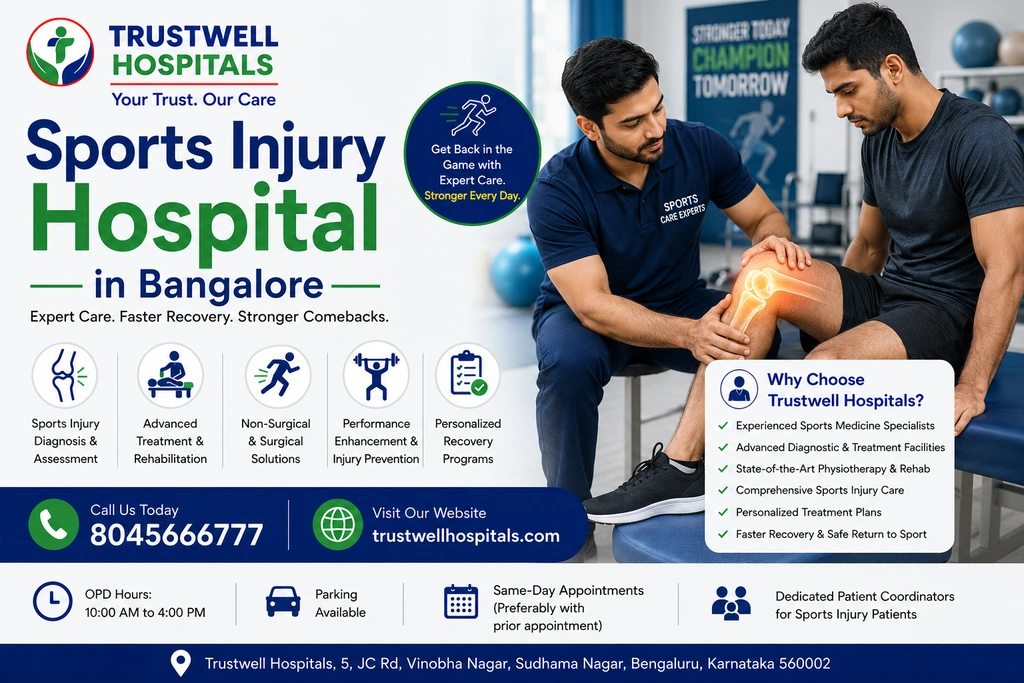
Persistent knee pain, shoulder discomfort, ankle instability, or difficulty returning to sports can affect performance and everyday activities. Trustwell Hospitals provides specialised sports injury treatment in Bangalore through experienced orthopaedic and sports medicine specialists who tailor treatment according to the type of injury and individual activity goals.

✔ 10,000+ Orthopaedic Patients Treated
✔ 1,500+ Procedures Performed
✔ 95% Patient Satisfaction
✔ Dedicated Sports Injury Team
✔ Insurance Support Available
✔ Rehabilitation Guidance Available
 
Book an Appointment

Speak with a Sports Injury Specialist

Are These Sports Injury Symptoms Preventing You From Staying Active?
sports injury hospital in bangalore

Sports injuries can cause different symptoms depending on the joint involved, the severity of tissue damage, and whether ligaments, tendons, muscles, or cartilage are affected.

Persistent Joint Pain During Activity

Pain while running, climbing stairs, exercising, or playing sports may develop when muscles, ligaments, or cartilage become strained or injured. Symptoms that continue despite rest deserve evaluation.

Sudden Pain After Twisting or Impact

A fall, awkward landing, or sudden change in direction can produce immediate pain. Such injuries may involve ligaments, tendons, or joint structures and should not be ignored.

Difficulty Returning to Sports

Some individuals notice reduced confidence while running, jumping, or changing direction. Persistent symptoms may interfere with athletic performance and daily activities.

Joint Instability

The knee, ankle, or shoulder may feel as though it could give way during movement. Instability often indicates damage to supporting structures and warrants specialist assessment.

Reduced Strength

Weakness while lifting objects, pushing, throwing, or exercising may occur when muscles or tendons are affected. Early treatment may help restore function.

Swelling Around the Joint

Inflammation following an injury can cause swelling and stiffness. The extent of swelling often provides clues regarding the severity of tissue damage.

Restricted Movement

Simple activities such as bending the knee, raising the arm, or rotating the shoulder may become uncomfortable. Loss of movement can affect sports participation and everyday tasks.

Pain While Walking

Discomfort during walking or climbing stairs may occur when weight-bearing joints are involved. Persistent symptoms can gradually affect mobility.

Clicking or Catching Sensations

Some patients experience unusual sounds or locking sensations during movement. These symptoms may occur when cartilage or soft tissues are injured.

Night-Time Discomfort

Pain that interferes with sleep or prevents comfortable positioning may affect quality of life and recovery.

Stiffness After Rest

Joints may feel tight after sitting or resting for prolonged periods. Regular symptoms may indicate underlying inflammation or structural injury.

Inability to Continue Sporting Activities

When pain or instability prevents participation in exercise or sports, specialist evaluation helps identify the cause and appropriate treatment options.

These symptoms do not always confirm a serious sports injury. A consultation with a sports injury specialist in Bangalore can help determine the cause and recommend appropriate next steps.

How Are Sports Injuries Diagnosed?

Diagnostic findings often determine which treatment approach is most suitable.

X-Rays

X-rays help assess fractures, joint alignment, and age-related changes. They provide valuable information regarding bone structures and injury patterns.

MRI Scan

MRI produces detailed images of ligaments, cartilage, tendons, and muscles. These findings help specialists identify tears and soft tissue injuries that may not appear on X-rays.

CT Scan

CT scans provide additional information regarding complex fractures and bone injuries when greater anatomical detail is required.

Blood Tests

Laboratory investigations help identify inflammation, infection, or medical conditions that may mimic sports-related injuries.

Functional Assessment

Movement analysis and clinical examination help specialists understand how the injury affects balance, strength, flexibility, and performance.

Physical Examination

Joint stability, range of motion, muscle strength, and tenderness are carefully assessed. These findings are correlated with imaging studies to guide treatment planning.

Diagnostic findings help determine whether rehabilitation, minimally invasive procedures, or surgery may be most appropriate.

Why Do Patients Choose Trustwell Hospitals for Sports Injury Treatment in Bangalore?

Choosing the right treatment centre involves more than selecting a procedure. Patients often consider specialist expertise, diagnostic accuracy, treatment options, communication, and long-term recovery support.

Experience Managing Different Sports Injuries

Trustwell Hospitals has treated more than 10,000 orthopaedic patients, including individuals with ligament tears, cartilage injuries, tendon disorders, and recurrent sports-related problems requiring specialised evaluation.

Comprehensive Diagnostic Support

Advanced imaging and clinical assessment help identify the exact source of pain or instability. Accurate diagnosis supports better treatment decisions and individualised care.

Complete Treatment Spectrum

More than 1,500 orthopaedic procedures have been performed, ranging from rehabilitation and conservative management to arthroscopy and reconstructive procedures.

Trusted Outcomes

The department maintains patient satisfaction scores exceeding 95%. Published studies have shown favourable outcomes after appropriately selected sports injury treatments. Individual outcomes vary.

Personalised Guidance

Patients receive explanations regarding diagnosis, treatment choices, expected recovery, and return-to-activity planning, helping them make informed decisions.
 

Long-Term Rehabilitation Support

Recovery does not end with treatment. Physiotherapy, strengthening exercises, injury prevention strategies, and regular follow-up help support long-term joint health and reduce the risk of reinjury.
Get Back to the Activities You Enjoy

Explore Your Recovery Options

What Facilities Are Available for Sports Injury Treatment at Trustwell Hospitals?

All stages of diagnosis, treatment, rehabilitation, and recovery are available under one roof, allowing patients to receive coordinated care throughout their treatment journey.

Advanced Imaging Services

MRI, CT scans, X-rays, and diagnostic facilities help specialists identify ligament tears, cartilage injuries, tendon damage, and fractures. These investigations support accurate treatment planning.

Arthroscopy Operating Facilities

Specialised equipment supports minimally invasive procedures performed through small incisions. Arthroscopic techniques may help reduce tissue disruption and support recovery.

Physiotherapy and Rehabilitation Services

Structured rehabilitation programmes focus on strength, flexibility, balance, and movement control. Rehabilitation plays a major role in helping patients regain confidence and mobility.

In-House Laboratory Services

Laboratory investigations help assess inflammation, infection, and general health before treatment. Having these facilities within the hospital helps streamline care.

Recovery and Monitoring Areas

Dedicated post-procedure facilities provide observation and nursing support after treatment and surgery.
 
Speak to Sports Injury Specialist

Get Answers to Your Questions

Who Are the Sports Injury Specialists at Trustwell Hospitals?

The team manages patients with varying injury patterns, ranging from simple sprains and overuse injuries to ligament tears and complex joint disorders requiring advanced treatment planning.

Dr Ananya Puttaraju – Senior Consultant & HOD – Orthopaedics

Qualifications: MBBS, MRCS, FRCS (Tr & Ortho), CCBST – UK, Fellowship in Robotic Joint Replacement & Foot and Ankle Surgery Experience: 20+ Years

Areas of Expertise

→ Robotic Knee Replacement Surgery
→ Hip Replacement Surgery
→ Revision Joint Replacement Surgery
→ Foot and Ankle Surgery
→ Complex Arthritis Management
→ Sports Injury Treatment
→ Trauma and Fracture Care

Dr Aditya H Kumar – Associate Consultant Orthopaedic Surgeon

Qualifications: MBBS, MS (Orthopaedics), Fellowship in Limb Reconstruction, Fellowship in Arthroscopy & Arthroplasty Experience: 8+ Years

Areas of Expertise

→ Joint Replacement Surgery
→ Arthroscopy Procedures
→ Sports Injury Management
→ Knee and Shoulder Disorders
→ Trauma and Fracture Care
→ Limb Reconstruction

Dr Pavan Kumar G – Consultant Orthopaedic Surgeon

Qualifications: MBBS, MS (Orthopaedics) Experience: 10+ Years

Areas of Expertise

→ Hip Replacement Surgery
→ Polytrauma and Accident Care
→ Fracture Management
→ Spine Disorders
→ Shoulder Conditions
→ Joint Preservation Procedures
Book an Appointment

Speak with an Orthopaedic Specialist Today

What Sports Injury Treatments Are Available at Trustwell Hospitals?

The most suitable treatment depends on the type of injury, severity, imaging findings, activity level, and overall health.

Medication and Conservative Treatment

Approach: Medicines, rest, activity modification, and structured rehabilitation are used to manage symptoms and support healing. Patient Benefit: Many injuries improve without surgery. Typically Used For: Mild sprains, muscle strains, and overuse injuries.

Physiotherapy and Sports Rehabilitation

Approach: Individualised exercise programmes help improve flexibility, muscle strength, balance, and movement patterns. Patient Benefit: Helps restore mobility and support return to activity. Typically Used For: Recovery after injury and prevention of recurrence.

Arthroscopic Procedures

Approach: Small instruments and cameras are used through tiny incisions to diagnose and treat joint problems. Patient Benefit: May help reduce tissue damage and support faster rehabilitation. Typically Used For: Cartilage injuries, meniscus tears, and shoulder disorders.

Ligament Reconstruction

Approach: Damaged ligaments are repaired or reconstructed using specialised techniques. Patient Benefit: Helps improve joint stability and confidence during movement. Typically Used For: ACL injuries and recurrent instability.

Tendon Repair Procedures

Approach: Torn tendons are repaired to restore normal function and strength. Patient Benefit: Supports improved movement and recovery. Typically Used For: Rotator cuff tears and tendon injuries.

Joint Preservation Procedures

Approach: Treatment focuses on preserving natural joint structures wherever possible. Patient Benefit: Helps maintain long-term joint function. Typically Used For: Selected cartilage and soft tissue injuries.

Patients requiring treatment for ligament injuries may benefit from understanding ACL reconstruction in Bangalore. Several knee conditions can also be addressed through knee treatment in Bangalore, while shoulder-related injuries may require specialised shoulder treatment in Bangalore.

Individuals with ankle sprains, tendon problems, or sports-related foot injuries may also require evaluation through foot and ankle care in Bangalore. Patients with cartilage or meniscal injuries frequently benefit from arthroscopy in Bangalore, which uses minimally invasive techniques to treat selected joint conditions.

Which Treatment Is Right for Your Condition?

The most appropriate treatment depends on the type of injury, severity, activity level, imaging findings, and long-term goals.

Injury Severity / Situation Commonly Recommended Treatment Typical Approach
Mild Sprain or Strain Medication and Rehabilitation Conservative Treatment
Persistent Symptoms Physiotherapy and Structured Exercises Functional Recovery
Meniscus or Cartilage Injury Arthroscopy Minimally Invasive Treatment
Ligament Tear Reconstruction Procedures Stability Restoration
Tendon Rupture Tendon Repair Surgery Functional Restoration
Recurrent Instability Individualised Treatment Planning Advanced Evaluation

Specialist assessment and imaging findings help determine the most suitable approach for each patient.

Unsure Which Treatment Is Right for You?

Receive Personalised Recommendations

What Should You Expect Before, During, and After Treatment?

The care team guides patients through every stage of diagnosis, treatment, and recovery.

Before Treatment

Patients may undergo imaging studies, blood investigations, and a detailed assessment. Instructions regarding medications and preparation vary according to the planned procedure.

During Treatment

Anaesthesia and continuous monitoring are used where required. The specific treatment approach depends on the injury and clinical findings.

Recovery and Rehabilitation

Recovery timelines vary according to the injury and procedure performed. Physiotherapy, strengthening exercises, and follow-up reviews help support a safe return to physical activity.

Patients requiring treatment for broader musculoskeletal disorders may also explore orthopaedic hospitals in Bangalore. In selected cases involving spinal injuries or nerve-related symptoms, evaluation through spine surgery in Bangalore may also be appropriate.

Is Sports Injury Treatment Covered Under Health Insurance?

Many procedures performed for sports injuries are covered under health insurance when medically indicated, subject to policy terms and approval.

Common Insurance Providers

→ Star Health → HDFC ERGO → ICICI Lombard → Niva Bupa → Care Health Insurance

Cashless Treatment Support

Cashless facilities are available for eligible patients, and the hospital team assists patients with documentation and pre-authorisation.
Check Your Insurance Benefits

Get Help With Cashless Treatment Support

What Can Happen If Sports Injuries Are Ignored?

Persistent Pain

Symptoms may gradually worsen and interfere with exercise, work, and daily activities.

Joint Instability

Untreated ligament injuries may increase the risk of repeated episodes of giving way.

Reduced Athletic Performance

Delayed treatment can affect speed, strength, balance, and confidence during activity.

Secondary Joint Damage

Long-standing instability or cartilage injuries may contribute to early wear and tear within the joint.

Restricted Mobility

Walking, climbing stairs, and routine physical activities may become increasingly difficult.

Early evaluation may help prevent progression and support timely recovery.

Your Treatment Journey at Trustwell Hospitals

Book an Appointment

The process begins with a consultation and review of symptoms, activity levels, and previous injuries.

Clinical Assessment and Imaging

Physical examination and investigations help determine the type and severity of the injury.

Treatment Planning

Specialists discuss treatment options based on diagnosis, sporting demands, and long-term goals.

Treatment and Rehabilitation

Medication, physiotherapy, arthroscopy, or reconstructive procedures may be recommended depending on clinical findings.

Follow-Up and Return-to-Sport Guidance

Recovery programmes and periodic reviews help support safe return to physical activities and reduce reinjury risk.
Start Your Journey Back to an Active Lifestyle

Take the First Step Towards Recovery

Is Trustwell Hospitals Accredited?

NABH Accredited

Trustwell Hospitals follows recognised standards relating to patient safety and quality care.

Healthcare Excellence Recognition

The hospital has received recognition for healthcare quality and patient-focused services.

Where Is Trustwell Hospitals Located and When Can You Visit?

Trustwell Hospitals is located in central Bengaluru and provides orthopaedic and sports injury consultations throughout the week.

Hospital Information

Address: 5, JC Rd, Vinobha Nagar, Sudhama Nagar, Bengaluru, Karnataka 560002 Phone: 80 4566 6777 OPD Hours: 10:00 AM to 4:00 PM Parking Facilities: Available

Nearby Transportation and Landmarks

→ Bengaluru City Railway Station (KSR Bengaluru): Approximately 4–5 km away. → Kempegowda Bus Station (Majestic): Approximately 4–5 km away. → Kempegowda International Airport: Approximately 35–40 km away. → Lalbagh Metro Station: Approximately 2–3 km away. → Lalbagh Botanical Garden: A prominent nearby landmark. → Bengaluru Town Hall: Approximately 1–2 km away.

Patients Visit Us From

Patients regularly visit Trustwell Hospitals from Jayanagar, Basavanagudi, Koramangala, Rajajinagar, Malleshwaram, Indiranagar, Richmond Town, and surrounding areas across Bengaluru.

Frequently Asked Questions About Sports Injury Treatment in Bangalore

Can non-athletes develop sports injuries?

Yes. Sports injuries are not limited to professional athletes. Recreational exercisers and individuals involved in daily physical activities may also experience similar injuries.

Are younger individuals more prone to sports injuries?

Injuries can occur at any age. The type and severity often depend on activity levels, training methods, and previous injuries.

Can old injuries become painful again?

Yes. Previous injuries may sometimes lead to recurrent pain, instability, or reduced performance, especially if rehabilitation was incomplete.

Do warming up and stretching help prevent injuries?

Proper warm-up routines and flexibility exercises may help reduce the risk of certain injuries and improve performance.

Can improper footwear contribute to injuries?

Yes. Unsuitable footwear may increase stress on joints and soft tissues and contribute to overuse injuries.

Is cross-training beneficial for injury prevention?

Cross-training helps improve overall conditioning and may reduce excessive stress on specific muscles and joints.

Does dehydration affect athletic performance?

Yes. Poor hydration may contribute to fatigue, muscle cramps, and reduced endurance.

Can weight gain increase stress on joints?

Excess body weight places additional pressure on weight-bearing joints and may affect recovery and performance.

Is it safe to return to sports immediately after pain improves?

Not always. Returning too early may increase the risk of reinjury. Activity progression should follow medical advice and rehabilitation goals.

Can sports injuries increase the risk of arthritis later in life?

Certain cartilage and ligament injuries may increase the likelihood of developing joint degeneration over time.

Can diabetes influence recovery after surgery?

Yes. Good blood sugar control helps support healing and reduce the risk of complications.

Does smoking affect healing?

Smoking may reduce blood supply to tissues and negatively influence recovery following injuries and surgery.
Get Cost Estimation

Understand Your Treatment Expenses

Book an Appointment