Frequently Asked Questions About Arthroscopic Surgery at Trustwell Hospitals
Here are answers to some of the most common questions about arthroscopic surgery, recovery, insurance, and treatment.
Is arthroscopic surgery painful?
No. The procedure is performed under anaesthesia, so pain is not felt during surgery. Mild discomfort after surgery is expected and is usually managed with medications and rehabilitation.
Which joints can be treated using arthroscopy?
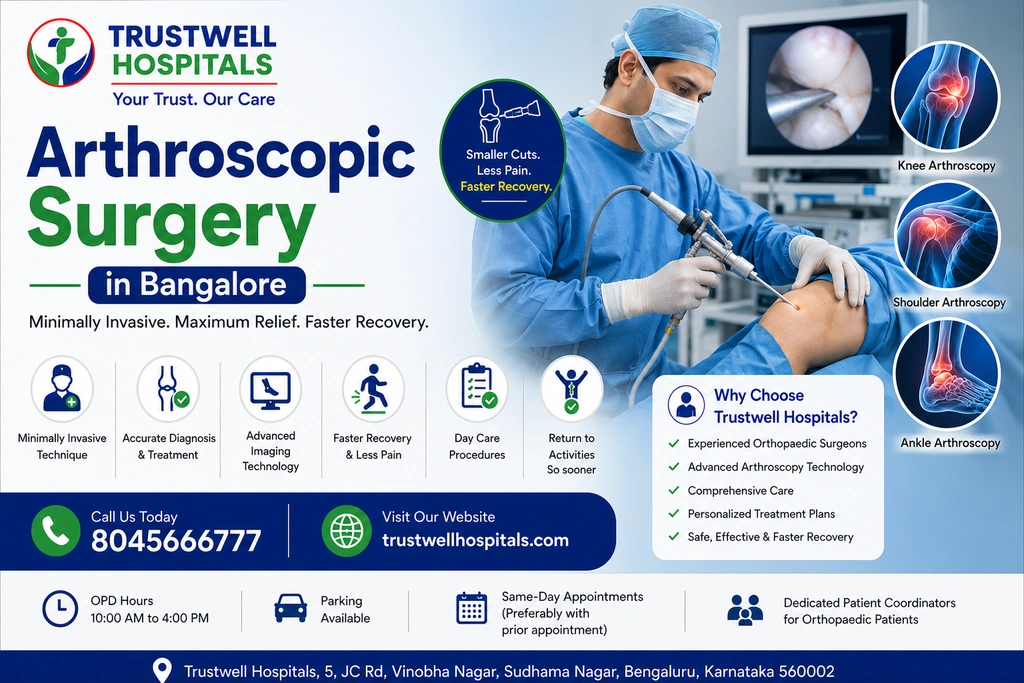
Arthroscopy is commonly performed for the knee, shoulder, ankle, and hip joints depending on the underlying condition.
How long is the hospital stay after arthroscopic surgery?
Many patients are discharged within one or two days, although the duration varies according to the procedure performed and individual recovery.
Does health insurance cover arthroscopic surgery?
Yes. Many insurance plans cover arthroscopy, subject to policy terms and approval requirements.
When can I return to work after arthroscopy?
Recovery timelines vary by patient and procedure. Desk-based work may often be resumed earlier than physically demanding activities.
Will I require physiotherapy after surgery?
Yes. Rehabilitation and strengthening exercises are important components of recovery and help restore movement and stability.
What type of anaesthesia is used?
Arthroscopic procedures are usually performed under spinal or general anaesthesia depending on the condition and patient requirements.
Can both joints be treated at the same time?
In selected situations, surgeons may treat both joints during the same admission. The decision depends on the condition and overall health of the patient.
Will there be large scars after surgery?
Arthroscopy uses small incisions, which generally result in smaller scars compared with open surgery.
Is arthroscopy safer than open surgery?
Arthroscopy is minimally invasive and may offer advantages in suitable patients, although every procedure carries potential risks.
Can arthritis be treated with arthroscopy?
Selected conditions associated with arthritis may benefit from arthroscopy, although advanced arthritis may require other treatment options.
Patients with severe joint degeneration may eventually require
joint replacement surgery in Bangalore.
What warning signs should prompt immediate medical attention?
Fever, increasing pain, wound discharge, excessive swelling, or sudden difficulty moving the joint should be reported promptly.
Is arthroscopy suitable for elderly patients?
Age alone does not determine suitability. Overall health, symptoms, and treatment goals are considered during evaluation.
How is arthroscopy different from open surgery?
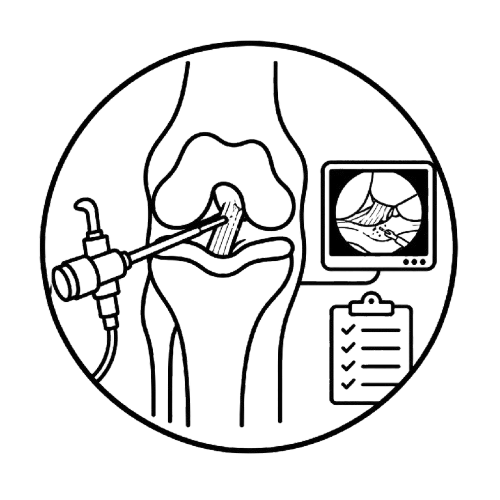
Arthroscopy uses specialised instruments and a camera through small incisions, whereas open surgery involves larger cuts and greater tissue exposure.
Understanding your treatment options is the first step toward restoring mobility and returning to an active lifestyle.


 Neuro Sciences
 Gastro Sciences
 Kidney Diseases
 Orthopedics
 Transplantation
 ENT and Head-Neck Surgery
 Advanced Trauma Center
 Cardiology
 Interventional Pulmonology
 Hematology and Bone Marrow Transplant(BMT)
 Anesthesia
 Critical Care Excellence, Comprehensive Intensive Care Services in Bangalore
 Dental Surgery and Oral Implants
 Dermatology and Cosmetic Surgery
 Endocrinology and Diabetology
 Facial Plastic and Reconstructive Surgery
 Family Medicine
 Internal Medicine
 Microbiology
 Obstetrics and Gynaecology
 Oncology
 Ophthalmology
 Oral and Maxillofacial Surgery
 Pathology and Laboratory
 Pediatrics