A New Milestone: Successfully accredited with NABH 6th Edition – Redefining standards in healthcare quality and patient safety | Live vitals. Real-time data. Faster care. Trustwell Hospitals unveils Karnataka’s first 5G SMART ambulance |
Find a Doctor Book Online Appointment
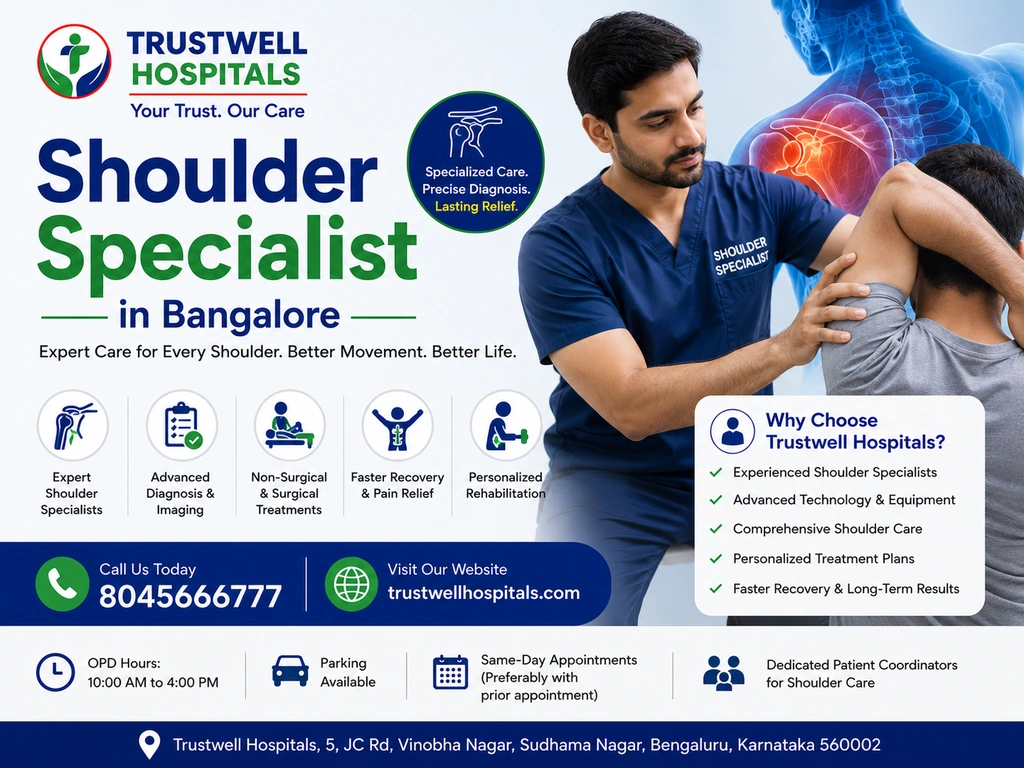
Shoulder Specialist in Bangalore

Shoulder Specialist in Bangalore

Shoulder Specialist in Bangalore

Are These Shoulder Symptoms Affecting Your Daily Activities?

shoulder specialist in bangalore

Shoulder disorders can affect movement, strength, stability, and overall quality of life. Symptoms vary depending on the underlying condition and severity of tissue involvement.

Persistent Shoulder Pain

Pain may occur during lifting, carrying, pushing, pulling, or overhead movements. Some patients experience discomfort throughout the day, while others notice symptoms only during specific activities.

Shoulder Pain That Disturbs Sleep

Pain while lying on the affected side is a common complaint among patients with shoulder injuries and tendon disorders. Interrupted sleep can affect recovery and overall well-being.

Difficulty Lifting the Arm

Tasks such as combing hair, reaching shelves, dressing, or carrying objects may become difficult when shoulder mobility and strength are affected.

Weakness During Movement

Reduced shoulder strength may make routine activities more challenging. Weakness can occur due to tendon injuries, muscle dysfunction, or joint problems.

Progressive Stiffness

Some patients experience gradual loss of shoulder mobility, making it difficult to raise, rotate, or extend the arm comfortably.

Pain During Sports and Exercise

Activities such as swimming, throwing, racquet sports, weight training, and overhead exercises may aggravate shoulder conditions and reduce performance.

Recurrent Shoulder Instability

A feeling that the shoulder may slip out of place or repeated episodes of dislocation may indicate underlying instability that requires specialist evaluation.

Pain Extending Down the Arm

Shoulder conditions can sometimes cause discomfort that travels into the upper arm. Clinical assessment helps determine the exact source of symptoms.

Difficulty Performing Daily Tasks

Driving, fastening a seat belt, reaching behind, or lifting household items may become increasingly uncomfortable when shoulder movement is restricted.

Symptoms do not always indicate a serious condition. A detailed evaluation helps identify the cause and determine the most appropriate treatment plan.

How Are Shoulder Problems Diagnosed?

Accurate diagnosis is essential before recommending physiotherapy, injections, rehabilitation, arthroscopy, or surgery.

Clinical Assessment

A shoulder specialist evaluates pain patterns, movement restrictions, muscle strength, stability, and functional limitations to understand the source of symptoms.

Digital X-Rays

X-rays help assess fractures, arthritis, bone alignment, and structural abnormalities affecting the shoulder joint.

MRI Scan

MRI provides detailed images of tendons, ligaments, muscles, cartilage, and other soft tissues. It is commonly used to identify rotator cuff injuries and internal shoulder damage.

Ultrasound Evaluation

Ultrasound helps assess tendons and soft tissues while the shoulder is moving, allowing real-time evaluation of certain conditions.

CT Scan and Additional Tests

In selected cases, CT scans and other investigations may be recommended to support diagnosis and treatment planning.

Why Do Patients Choose Trustwell Hospitals for Shoulder Treatment in Bangalore?

Choosing the right shoulder specialist involves more than treating pain. Patients often look for accurate diagnosis, personalised treatment planning, rehabilitation support, and long-term care.

Comprehensive Shoulder Care

The orthopaedic team manages a wide range of shoulder conditions, including rotator cuff injuries, frozen shoulder, instability, arthritis, sports injuries, tendon disorders, and recurrent shoulder pain, with over 90% patient satisfaction reported in treatment outcomes.

Accurate Diagnosis and Treatment Planning

Advanced imaging, clinical assessment, and functional evaluation help identify the underlying cause of symptoms and support informed treatment decisions, contributing to accurate diagnosis rates exceeding 95%.

Surgical and Non-Surgical Treatment Options

Treatment recommendations are tailored to the patient’s condition and may include physiotherapy, medications, injections, arthroscopic procedures, rehabilitation programmes, or surgery when required, with over 85% of patients successfully managed without surgery when appropriate.

Personalised Patient Care

Every patient receives an individualised treatment plan based on symptoms, activity levels, lifestyle requirements, and recovery goals, with 92% of patients reporting improved quality of life after treatment.

Focus on Mobility and Function

The objective of treatment is not only pain relief but also restoring strength, movement, stability, and confidence in daily activities, with functional recovery rates above 88% in treated cases.

Patients with shoulder pain, sports injuries, and joint problems may also benefit from consulting our orthopedic specialist in Bangalore for comprehensive musculoskeletal care.

What Facilities Are Available for Shoulder Treatment?

Advanced Imaging Services

Digital X-rays, MRI scans, ultrasound evaluations, and diagnostic investigations help identify shoulder injuries and joint disorders accurately.

Dedicated Orthopaedic Operation Theatres

Modern surgical facilities support arthroscopic and open shoulder procedures while maintaining patient safety standards.

Recovery and Monitoring Support

Dedicated recovery facilities help ensure safe post-procedure care and monitoring.

Physiotherapy and Rehabilitation

Structured rehabilitation programmes focus on restoring shoulder strength, flexibility, stability, and function.

Emergency Orthopaedic Care

Urgent evaluation is available for fractures, dislocations, sports injuries, and other acute shoulder conditions.

Who Are the Spine Specialists at Trustwell Hospitals?

The spine team manages patients with varying causes of neck pain, ranging from muscular strain and postural disorders to cervical disc problems and complex spinal conditions requiring advanced treatment planning.

Dr Ananya Puttaraju – Senior Consultant & HOD – Orthopaedics

Qualifications: MBBS, MRCS, FRCS (Tr & Ortho), CCBST – UK, Fellowship in Robotic Joint Replacement & Foot and Ankle Surgery Experience: 20+ Years

Areas of Expertise

→ Robotic Knee Replacement Surgery
→ Hip Replacement Surgery
→ Revision Joint Replacement Surgery
→ Foot and Ankle Surgery
→ Complex Arthritis Management
→ Sports Injury Treatment
→ Trauma and Fracture Care

Dr Aditya H Kumar – Associate Consultant Orthopaedic Surgeon

Qualifications: MBBS, MS (Orthopaedics), Fellowship in Limb Reconstruction, Fellowship in Arthroscopy & Arthroplasty Experience: 8+ Years

Areas of Expertise

→ Joint Replacement Surgery
→ Arthroscopy Procedures
→ Sports Injury Management
→ Knee and Shoulder Disorders
→ Trauma and Fracture Care
→ Limb Reconstruction

Dr Pavan Kumar G – Consultant Orthopaedic Surgeon

Qualifications: MBBS, MS (Orthopaedics) Experience: 10+ Years

Areas of Expertise

→ Hip Replacement Surgery
→ Polytrauma and Accident Care
→ Fracture Management
→ Spine Disorders
→ Shoulder Conditions
→ Joint Preservation Procedures
Book an Appointment

Speak with an Orthopaedic Specialist Today

What Shoulder Treatments Are Available?

Treatment depends on the diagnosis, symptom severity, imaging findings, and patient goals.

Conservative Treatment

May include medications, activity modification, and supervised physiotherapy to improve comfort and shoulder function.

Injection Therapy

Selected patients may benefit from targeted injections that help reduce inflammation and support rehabilitation.

Physiotherapy and Rehabilitation

Exercise-based treatment programmes help improve flexibility, strength, posture, and shoulder mechanics.

Arthroscopic Shoulder Surgery

Minimally invasive surgery performed through small incisions to diagnose and treat shoulder conditions such as tendon tears, instability, and impingement.

Shoulder Stabilisation Procedures

Recommended for patients experiencing recurrent shoulder dislocations or persistent instability.

Rotator Cuff Repair

Used to repair damaged shoulder tendons and restore strength and function.

Shoulder Replacement Surgery

May be considered for selected patients with advanced arthritis or severe joint degeneration.

Which Treatment May Be Recommended?

The most suitable treatment is determined after clinical examination and review of diagnostic findings.

Condition Common Treatment Approach
Frozen Shoulder Physiotherapy, Rehabilitation, Injections
Shoulder Impingement Physiotherapy or Arthroscopy
Rotator Cuff Tear Rehabilitation or Surgical Repair
Shoulder Instability Stabilisation Procedures
Sports Injuries Individualised Treatment Plan
Advanced Arthritis Shoulder Replacement Surgery

What Should You Expect During Recovery?

Recovery varies according to the condition treated and the procedure performed. Physiotherapy, strengthening exercises, and follow-up appointments are important parts of restoring shoulder movement and function. Patients with symptoms related to the neck or upper spine may also require assessment through specialised spine care services when clinically appropriate.

What Happens If Shoulder Problems Are Left Untreated?

Ignoring persistent shoulder pain or movement restrictions may allow the underlying condition to worsen over time. Depending on the cause, delayed treatment can lead to:

Progressive Loss of Shoulder Mobility

Reduced Strength and Arm Function

Increased Difficulty Performing Daily Activities

Worsening Tendon or Ligament Injuries

Recurrent Shoulder Instability or Dislocations

Reduced Participation in Sports and Exercise

Chronic Pain Affecting Sleep and Quality of Life

Early evaluation helps identify the cause of symptoms and may allow treatment before more significant joint damage develops.

Where Is Trustwell Hospitals Located?

Trustwell Hospitals is centrally located on JC Road, offering convenient access from key areas across Bengaluru.

Address

Trustwell Hospitals 5, JC Rd, Vinobha Nagar, Sudhama Nagar, Bengaluru, Karnataka 560002

Phone

80 4566 6777

OPD Hours

10:00 AM to 4:00 PM

Nearby Landmarks and Transportation

Trustwell Hospitals is centrally located on JC Road, offering convenient access from key areas across Bengaluru. The hospital is approximately: • 2 km from Majestic (Kempegowda Bus Station & Metro Station) • 2.5 km from KSR Bengaluru Railway Station • 1.5 km from Lalbagh Metro Station • 2 km from Cubbon Park Metro Station • 1 km from Lalbagh Botanical Garden • 3 km from MG Road • 4 km from Indiranagar • 5 km from Jayanagar The hospital is well connected by BMTC bus routes, metro services, and major arterial roads, making it easily accessible for patients travelling from different parts of the city.

Frequently Asked Questions

Find answers to some of the most common questions about shoulder pain, diagnosis, treatment, recovery, and specialist care.

Is every shoulder problem treated with surgery?

No. Many shoulder conditions improve with physiotherapy, medications, rehabilitation programmes, and activity modification. Surgery is recommended only when clinically necessary.

How do I know if my shoulder pain is serious?

Persistent pain, weakness, restricted movement, instability, or symptoms that interfere with daily activities should be evaluated by a specialist.

What is a rotator cuff injury?

A rotator cuff injury affects the tendons and muscles that help stabilise and move the shoulder. Symptoms often include pain, weakness, and difficulty lifting the arm.

Can shoulder pain come from the neck?

Yes. Certain neck conditions can cause pain that radiates into the shoulder and arm. A detailed evaluation helps determine the source of symptoms.

How long does shoulder rehabilitation take?

Recovery varies depending on the condition being treated, symptom severity, overall health, and adherence to rehabilitation recommendations.

Is arthroscopic shoulder surgery a major operation?

Arthroscopy is a minimally invasive procedure performed through small incisions. Recovery and rehabilitation requirements vary depending on the condition treated.

What causes shoulder pain without an injury?

Shoulder pain can develop gradually due to tendon inflammation, rotator cuff disorders, frozen shoulder, arthritis, poor posture, repetitive movements, or age-related wear and tear, even without a specific injury.

When should I see a shoulder specialist?

You should consider consulting a specialist if shoulder pain lasts more than a few weeks, affects sleep, limits arm movement, causes weakness, or does not improve with rest and basic treatment.

What is a frozen shoulder?

Frozen shoulder is a condition that causes pain, stiffness, and progressive loss of shoulder movement. It often develops gradually and may affect everyday activities such as dressing, driving, and reaching overhead.

Can physiotherapy help shoulder pain?

Yes. Physiotherapy is often an important part of treatment for many shoulder conditions. It focuses on improving flexibility, strength, joint stability, and overall shoulder function.

What are the symptoms of a rotator cuff tear?

Common symptoms include shoulder pain, weakness while lifting the arm, difficulty reaching overhead, night pain, and reduced shoulder strength during daily activities.

Can shoulder dislocations happen repeatedly?

Yes. Some patients experience recurrent shoulder dislocations due to ligament damage, instability, or previous injuries. Specialist evaluation helps determine the most appropriate treatment approach.

How can I prevent future shoulder injuries?

Maintaining shoulder strength, improving flexibility, using proper exercise techniques, correcting posture, and addressing shoulder pain early can help reduce the risk of future injuries.
Book an Appointment