A New Milestone: Successfully accredited with NABH 6th Edition – Redefining standards in healthcare quality and patient safety | Live vitals. Real-time data. Faster care. Trustwell Hospitals unveils Karnataka’s first 5G SMART ambulance |
Find a Doctor Book Online Appointment
Types of Shoulder Injuries

Types of Shoulder Injuries

Types of Shoulder Injuries: Symptoms, Causes and Treatment Options Explained

types of shoulder injuries

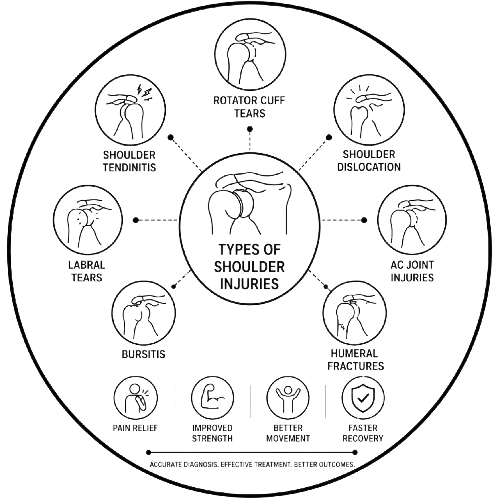
Shoulder injuries can affect people of all ages, from athletes and manual workers to older adults experiencing age-related wear and tear. The shoulder is one of the body’s most mobile joints, making it vulnerable to injuries involving muscles, tendons, ligaments, cartilage, and bones. Common shoulder injuries include rotator cuff tears, shoulder dislocations, frozen shoulder, shoulder impingement, labral tears, fractures, bursitis, and tendonitis. Not every shoulder injury requires surgery. Many patients recover with rest, physiotherapy, medications, or activity modification. The most appropriate treatment depends on the type of injury, severity of symptoms, activity level, and overall shoulder function.

Common Types of Shoulder Injuries at a Glance

Shoulder Injury Primary Structures Affected Common Symptoms
Rotator Cuff Tear Rotator cuff tendons Pain, weakness, difficulty lifting the arm
Shoulder Dislocation Shoulder joint Severe pain, deformity, inability to move the shoulder
Frozen Shoulder Joint capsule Progressive stiffness and reduced movement
Shoulder Impingement Rotator cuff tendons and surrounding tissues Pain while lifting the arm or reaching overhead
Labral Tear Shoulder cartilage (labrum) Shoulder instability, clicking, deep joint pain
Shoulder Fracture Clavicle, humerus, or shoulder blade Severe pain, swelling, bruising
Shoulder Bursitis Bursa Pain, tenderness, swelling
Shoulder Tendonitis Shoulder tendons Pain during movement and repetitive activities
A detailed clinical examination and imaging studies help determine the exact type of shoulder injury and the most appropriate treatment.

Rotator Cuff Tear

A rotator cuff tear occurs when one or more of the tendons surrounding the shoulder become partially or completely torn. These injuries may develop gradually because of age-related degeneration or suddenly following a fall, heavy lifting, or sports injury.

Common Symptoms

  • Pain while lifting the arm
  • Shoulder weakness
  • Difficulty reaching overhead
  • Night pain when lying on the affected shoulder
  • Clicking or catching during movement

Common Causes

  • Age-related tendon wear
  • Repetitive overhead activities
  • Sports injuries
  • Falls or direct trauma
  • Heavy lifting

Shoulder Dislocation

A shoulder dislocation occurs when the upper arm bone (humerus) comes out of the shoulder socket. It often results from falls, contact sports, road traffic accidents, or sudden high-impact injuries.

Common Symptoms

  • Sudden severe shoulder pain
  • Visible deformity
  • Inability to move the arm normally
  • Swelling and bruising
  • Numbness or tingling in some cases

Common Causes

  • Sports injuries
  • Falls
  • Road traffic accidents
  • Direct shoulder trauma
  • Previous shoulder instability

Frozen Shoulder

Frozen shoulder, also known as adhesive capsulitis, develops when the shoulder capsule becomes thickened and tight, leading to progressive stiffness and restricted movement. Symptoms usually develop gradually and may progress through different stages before improving over time.

Common Symptoms

  • Progressive shoulder stiffness
  • Pain during movement
  • Difficulty reaching behind the back
  • Limited overhead movement
  • Reduced range of motion

Common Causes

  • Diabetes
  • Prolonged shoulder immobilisation
  • Previous shoulder injury
  • Recovery after shoulder surgery
  • Certain medical conditions affecting connective tissues

Shoulder Impingement

Shoulder impingement develops when the rotator cuff tendons become compressed during shoulder movement. Repeated irritation may lead to inflammation and discomfort, particularly during overhead activities.

Common Symptoms

  • Pain while raising the arm
  • Pain reaching overhead
  • Shoulder weakness
  • Discomfort during repetitive activities
  • Pain when sleeping on the affected side

Common Causes

  • Repetitive overhead work
  • Sports involving throwing or swimming
  • Bone spurs
  • Poor shoulder mechanics
  • Rotator cuff inflammation

Labral Tear

The labrum is a ring of cartilage that helps stabilise the shoulder joint. A labral tear may occur following trauma, repetitive overhead activities, or shoulder dislocation.

Common Symptoms

  • Deep shoulder pain
  • Clicking or popping sensation
  • Feeling that the shoulder may slip out
  • Weakness during lifting
  • Reduced athletic performance

Common Causes

  • Shoulder dislocation
  • Repetitive throwing activities
  • Heavy lifting
  • Falls
  • Contact sports

Shoulder Fracture

Shoulder fractures most commonly involve the collarbone (clavicle), upper arm bone (proximal humerus), or shoulder blade (scapula). These injuries usually result from significant trauma.

Common Symptoms

  • Severe shoulder pain
  • Swelling and bruising
  • Visible deformity
  • Difficulty moving the arm
  • Tenderness over the injured bone

Common Causes

  • Falls
  • Road traffic accidents
  • Sports injuries
  • Direct impact
  • Osteoporosis-related fractures in older adults

Shoulder Bursitis

Bursitis occurs when the fluid-filled sac (bursa) that cushions the shoulder becomes inflamed. The condition often develops alongside rotator cuff disorders or repetitive shoulder use.

Common Symptoms

  • Localised shoulder pain
  • Tenderness around the joint
  • Mild swelling
  • Pain during overhead activities
  • Discomfort while lying on the shoulder

Common Causes

  • Repetitive shoulder movement
  • Rotator cuff disorders
  • Shoulder impingement
  • Overuse injuries
  • Direct pressure on the shoulder

Shoulder Tendonitis

Shoulder tendonitis refers to inflammation or irritation of the shoulder tendons, commonly affecting the rotator cuff or biceps tendon. It frequently develops because of repetitive movements or overuse.

Common Symptoms

  • Pain during shoulder movement
  • Morning stiffness
  • Tenderness around the shoulder
  • Pain while lifting objects
  • Reduced shoulder function

Common Causes

  • Repetitive overhead activities
  • Sports participation
  • Poor posture
  • Age-related tendon degeneration
  • Overuse during work or exercise

What Are the Common Symptoms of a Shoulder Injury?

The symptoms of a shoulder injury vary depending on the affected muscles, tendons, ligaments, cartilage, or bones. Some injuries develop suddenly after trauma, while others progress gradually because of repetitive strain or age-related changes. Common symptoms include:
  • Shoulder pain during movement or at rest
  • Difficulty lifting or reaching overhead
  • Shoulder stiffness
  • Weakness in the arm
  • Swelling or bruising
  • Clicking, popping, or grinding sensations
  • Feeling that the shoulder is unstable
  • Reduced range of motion
  • Difficulty sleeping on the affected shoulder

What Causes Shoulder Injuries?

Shoulder injuries can occur because of sudden trauma, repetitive overhead activities, sports participation, or gradual degeneration of the muscles and tendons. Identifying the underlying cause helps guide the most appropriate treatment.

Falls and Accidents

A fall onto the shoulder or an outstretched hand is one of the most common causes of fractures, dislocations, rotator cuff tears, and ligament injuries.

Sports Injuries

Activities involving repetitive throwing, swimming, racquet sports, cricket, volleyball, weightlifting, or contact sports place repeated stress on the shoulder joint and surrounding soft tissues.

Repetitive Overhead Activities

Frequent overhead movements during work or exercise can irritate the rotator cuff tendons and surrounding structures, increasing the risk of impingement, bursitis, and tendonitis.

Age-Related Degeneration

As people grow older, the tendons, cartilage, and other soft tissues gradually lose strength and flexibility, making them more susceptible to injury even after minor trauma.

Poor Posture and Muscle Imbalance

Long-term poor posture, weak shoulder muscles, and inadequate shoulder mechanics may increase strain on the joint and contribute to chronic shoulder pain.

Previous Shoulder Injuries

A history of shoulder dislocation, fractures, tendon injuries, or previous surgery may increase the likelihood of recurrent shoulder problems.

Who Is More Likely to Develop Shoulder Injuries?

Although shoulder injuries can affect anyone, certain factors increase the likelihood of developing shoulder pain or structural damage. People at increased risk include:
  • Adults over 40 years of age
  • Athletes participating in overhead sports
  • Manual labourers
  • Construction and factory workers
  • Weightlifters and gym enthusiasts
  • Individuals with diabetes
  • People with previous shoulder injuries
  • Individuals with poor posture
  • Older adults with osteoporosis
  • People performing repetitive overhead work

How Are Shoulder Injuries Diagnosed?

Accurate diagnosis begins with understanding your symptoms, examining shoulder movement, and identifying the structures involved. Imaging studies are recommended when needed to confirm the diagnosis and determine the severity of the injury. Investigations may include:
  • Medical history and symptom review
  • Physical examination
  • Range of motion assessment
  • Muscle strength testing
  • Digital X-rays
  • MRI scan
  • Ultrasound examination
  • CT scan for selected fractures
  • Additional investigations based on clinical findings

What Are the Treatment Options for Shoulder Injuries?

Treatment depends on the type of shoulder injury, severity of symptoms, age, activity level, and overall shoulder function. Many patients improve with conservative treatment, while surgery may be considered for selected injuries.

Non-Surgical Treatment

Many shoulder injuries can be successfully managed without surgery, particularly when diagnosed early. Treatment may include:
  • Activity modification
  • Rest and temporary immobilisation
  • Pain-relieving medicines
  • Physiotherapy and rehabilitation
  • Ice application during the acute phase
  • Corticosteroid injections in selected patients
  • Gradual strengthening and flexibility exercises

Surgical Treatment

Surgery may be considered when significant structural damage is present or when symptoms continue despite appropriate conservative treatment. Depending on the diagnosis, procedures may include:
  • Arthroscopic shoulder surgery
  • Rotator cuff repair
  • Shoulder stabilisation surgery
  • Labral repair
  • Fracture fixation
  • Shoulder replacement surgery for advanced joint damage
The most appropriate treatment is determined after a detailed clinical examination and imaging evaluation.

Can Shoulder Injuries Be Prevented?

Although not every shoulder injury can be prevented, healthy habits may help reduce the risk of injury and support long-term shoulder function. You can help protect your shoulders by:
  • Performing regular shoulder strengthening exercises
  • Warming up before sports or exercise
  • Using proper lifting techniques
  • Maintaining good posture
  • Avoiding repetitive overhead strain whenever possible
  • Taking regular breaks during repetitive work
  • Treating minor shoulder injuries early
  • Following rehabilitation programmes completely after an injury

Discuss Your Shoulder Symptoms

Persistent shoulder pain, weakness, stiffness, or difficulty lifting your arm should not be ignored. Early assessment helps identify the underlying injury and allows treatment to begin before symptoms interfere with daily activities or become more complex. Patients who want to learn more about specific shoulder conditions may also find information on Frozen Shoulder Treatment in Bangalore, and Arthroscopic Shoulder Surgery in Bangalore helpful before their consultation.

Why Choose Trustwell Hospitals for Shoulder Injury Treatment?

Shoulder injuries require accurate diagnosis, timely treatment, and structured rehabilitation to restore strength, movement, and function. Trustwell Hospitals provides comprehensive shoulder care, helping patients receive personalised treatment based on the type of injury, activity level, and long-term recovery goals.

10+ Years of Orthopaedic Experience

With over 10+ years of orthopaedic experience, the department manages rotator cuff tears, shoulder instability, frozen shoulder, fractures, sports injuries, and other complex shoulder disorders using evidence-based treatment approaches.

Thousands of Orthopaedic Patients Treated

The orthopaedic team has successfully treated thousands of patients with shoulder, knee, hip, spine, fracture, and sports-related conditions through personalised treatment plans.

90%+ Patient Satisfaction

More than 90% patient satisfaction reflects the department’s commitment to patient-centred care, clear communication, and comprehensive rehabilitation.

Advanced Diagnostic and Imaging Support

Digital X-rays, MRI scans, ultrasound, CT scans, and detailed clinical examinations help accurately diagnose shoulder injuries and determine the most appropriate treatment plan.

Expertise in Non-Surgical and Arthroscopic Shoulder Treatment

The shoulder specialists provide comprehensive care ranging from medications and physiotherapy to arthroscopic shoulder surgery, rotator cuff repair, shoulder stabilisation procedures, fracture management, and shoulder replacement surgery when clinically indicated.

Hundreds of Complex Orthopaedic Procedures Performed

The department has performed hundreds of complex orthopaedic procedures, including arthroscopy, fracture fixation, joint replacement, sports injury treatment, and trauma surgery.

Cashless Insurance Assistance

Dedicated patient coordinators assist with insurance verification, pre-authorisation, documentation, cashless approvals, reimbursement guidance, and discharge formalities.

NABH 6th Edition Certified Hospital

Trustwell Hospitals is NABH 6th Edition Certified and maintains a 4.3 Google Rating, reflecting its commitment to recognised standards of patient safety and quality healthcare. Call 8045666777

Frequently Asked Questions About Shoulder Injuries

Which shoulder injury is the most common?

Rotator cuff injuries, shoulder impingement, frozen shoulder, tendonitis, and shoulder dislocations are among the most frequently diagnosed shoulder conditions. The exact diagnosis depends on clinical examination and imaging studies.

Can shoulder injuries heal without surgery?

Yes. Many shoulder injuries improve with rest, physiotherapy, medications, and activity modification. Surgery is generally considered only when conservative treatment does not provide adequate improvement or when significant structural damage is present.

How do I know if my shoulder injury is serious?

Persistent pain, weakness, inability to lift the arm, visible deformity, recurrent shoulder dislocations, numbness, or symptoms following significant trauma should be evaluated by an orthopaedic specialist.

What is the difference between a rotator cuff tear and shoulder impingement?

A rotator cuff tear involves damage to one or more shoulder tendons, whereas shoulder impingement occurs when these tendons become compressed during shoulder movement. Both conditions may produce similar symptoms but require different treatment approaches.

When is shoulder arthroscopy recommended?

Shoulder arthroscopy may be considered for selected conditions such as rotator cuff tears, shoulder instability, labral tears, impingement syndrome, and certain cartilage or ligament injuries after detailed evaluation.

How long does recovery from a shoulder injury take?

Recovery varies depending on the type of injury, severity, treatment provided, and participation in rehabilitation. Minor injuries may recover within weeks, while more complex injuries or surgery may require several months.

Can shoulder injuries come back after treatment?

Some shoulder injuries may recur, particularly if rehabilitation is incomplete or repetitive strain continues. Following your rehabilitation programme and maintaining shoulder strength may help reduce the risk of recurrence.

When should I see a shoulder specialist?

Consult a specialist if shoulder pain lasts for several weeks, limits movement, affects sleep, causes weakness or instability, or develops after a fall, sports injury, or accident.
Book an Appointment