A New Milestone: Successfully accredited with NABH 6th Edition – Redefining standards in healthcare quality and patient safety | Live vitals. Real-time data. Faster care. Trustwell Hospitals unveils Karnataka’s first 5G SMART ambulance |
Find a Doctor Book Online Appointment
Knee Replacement Recovery Timeline: What to Expect Week by Week

Knee Replacement Recovery Timeline: What to Expect Week by Week

Knee Replacement Recovery Timeline: What to Expect Week by Week

knee replacement recovery timeline

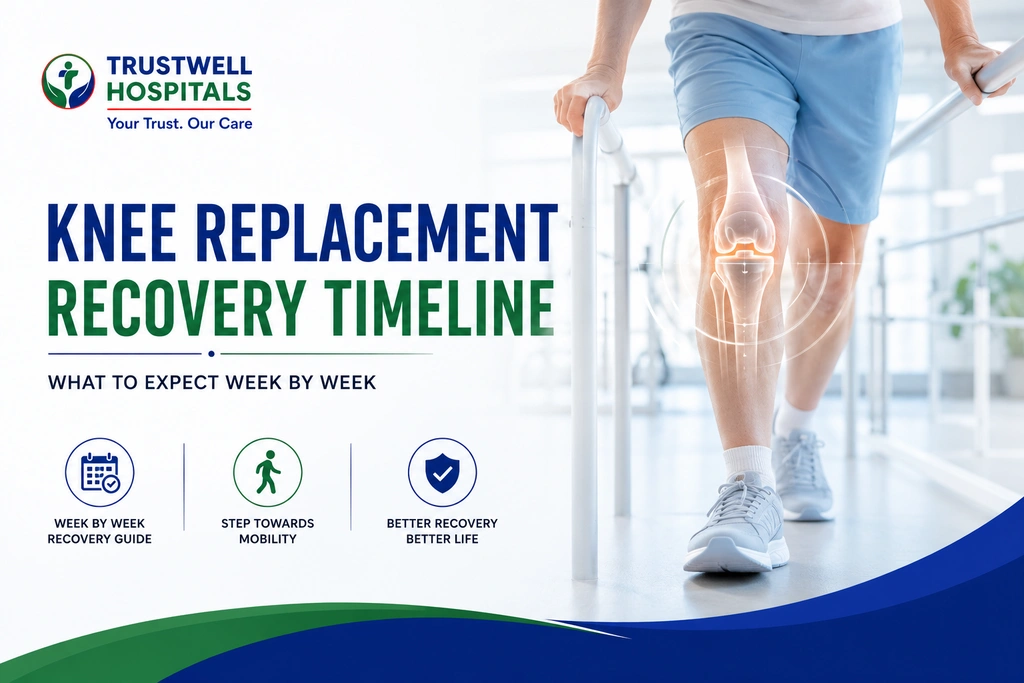
Recovery after knee replacement surgery is a gradual process that varies for every patient. Most people begin standing and walking within a day of surgery, followed by structured physiotherapy to restore movement, strength, and confidence. While many daily activities become easier within a few weeks, complete recovery may continue for six months to one year depending on age, overall health, rehabilitation, and the type of knee replacement performed. Understanding what typically happens during each stage of recovery can help patients prepare realistic expectations and actively participate in their rehabilitation programme.

Knee Replacement Recovery Timeline at a Glance

Recovery Stage What You Can Typically Expect
Day 1 Standing, short walks, and gentle knee exercises begin
Days 2–7 Walking with support, improving knee movement, hospital discharge for most patients
Week 2 Pain and swelling gradually reduce, physiotherapy continues
Weeks 3–4 Improved walking, greater independence with daily activities
Weeks 5–6 Better strength, increased knee flexibility, longer walking distances
Months 2–3 Return to many routine activities with continued rehabilitation
Months 4–6 Improved endurance, balance, and confidence during movement
Months 6–12 Continued strengthening and gradual improvement in overall knee function
Recovery timelines are approximate and vary between individuals. Your orthopaedic surgeon and physiotherapist will monitor your progress and personalise your rehabilitation programme.

Day 1 After Knee Replacement Surgery

Recovery usually begins within hours of surgery. Under the guidance of the healthcare team, many patients are encouraged to stand and take a few steps with the help of a walker or other walking aid once it is medically safe. During this stage, the focus is on pain control, preventing complications, improving circulation, and beginning gentle knee movement.

What Usually Happens?

  • Vital signs are monitored regularly.
  • Pain management begins.
  • Gentle ankle and knee exercises are introduced.
  • Standing and short-distance walking may begin with assistance.
  • The physiotherapy team explains the initial rehabilitation programme.
Although the knee may feel swollen and stiff, early movement plays an important role in supporting recovery.

Days 2–7: The First Week

During the first week, patients gradually increase their walking distance while continuing supervised physiotherapy. Knee bending and straightening exercises become an important part of the rehabilitation programme. Many patients are discharged from the hospital during this period once they are medically stable and able to walk safely with support.

Recovery Goals During Week 1

  • Walk short distances with a walker or walking aid.
  • Improve knee bending and straightening.
  • Reduce swelling through elevation and ice application when advised.
  • Learn home exercises from the physiotherapy team.
  • Safely perform basic activities such as sitting, standing, and using the bathroom.
It is normal to experience discomfort, bruising, swelling, and temporary stiffness during the early stages of recovery.

Week 2

By the second week, many patients notice gradual improvement in mobility. Swelling and pain often begin to decrease, although they may still be present after exercise or prolonged activity. Physiotherapy continues to focus on restoring knee movement, improving muscle strength, and encouraging safe walking.

Recovery Goals During Week 2

  • Increase walking distance gradually.
  • Improve knee flexibility.
  • Continue prescribed strengthening exercises.
  • Perform more daily activities independently.
  • Attend scheduled follow-up appointments.
Patients should continue following medication instructions and avoid overexerting the knee during this period.

Weeks 3–4

During the third and fourth weeks, walking generally becomes more comfortable as strength and confidence improve. Many patients begin relying less on walking aids, depending on their individual progress and their surgeon’s advice. Routine household activities often become easier, although high-impact movements should still be avoided.

Recovery Goals During Weeks 3–4

  • Improve balance and walking pattern.
  • Increase knee bending through physiotherapy.
  • Strengthen the thigh and calf muscles.
  • Walk longer distances with improved confidence.
  • Resume light household activities where appropriate.
Every patient’s recovery progresses at a different pace, so comparing progress with others is rarely helpful.

Weeks 5–6

By six weeks after surgery, many patients experience noticeable improvements in mobility, strength, and independence. Walking longer distances often becomes easier, and daily activities usually require less assistance. Physiotherapy remains an important part of recovery, helping improve endurance, flexibility, muscle control, and overall knee function.

Recovery Goals During Weeks 5–6

  • Continue improving walking endurance.
  • Build muscle strength around the knee.
  • Increase flexibility and joint movement.
  • Improve stair-climbing ability with guidance.
  • Prepare for a gradual return to more routine activities.
Although recovery continues to progress, the knee may still feel stiff after prolonged sitting or increased physical activity. Regular rehabilitation and follow-up appointments remain essential throughout this stage.

Months 2–3: Returning to Everyday Activities

By the second and third months, many patients notice significant improvements in knee function. Walking becomes smoother, muscle strength gradually increases, and everyday activities often become easier with continued physiotherapy. Although recovery progresses well during this stage, the new knee continues to adapt, making regular exercise and rehabilitation essential.

Recovery Goals During Months 2–3

  • Walk longer distances with greater confidence.
  • Continue strengthening the thigh, calf, and hip muscles.
  • Improve balance and coordination.
  • Climb stairs more comfortably.
  • Increase independence during everyday activities.
Depending on individual recovery and the surgeon’s advice, some patients may gradually return to driving, office-based work, or low-impact recreational activities during this period.

Months 4–6: Building Strength and Endurance

Between four and six months, many patients experience continued improvements in mobility and overall function. Daily activities usually become more comfortable, and endurance gradually increases as rehabilitation progresses. This stage focuses on restoring strength while protecting the knee implant during healing.

Recovery Goals During Months 4–6

  • Improve walking speed and endurance.
  • Increase lower-limb muscle strength.
  • Continue flexibility and balance exercises.
  • Return to more recreational activities with medical guidance.
  • Maintain a consistent home exercise programme.
Some patients may still notice occasional swelling or mild stiffness after prolonged activity. These symptoms often improve with continued rehabilitation and appropriate rest.

Months 6–12: Long-Term Recovery

Recovery continues well beyond the first few months. During this period, many patients experience ongoing improvements in strength, flexibility, confidence, and overall knee function. Although most daily activities can usually be performed comfortably, maintaining an active lifestyle and following your physiotherapy programme remain important for long-term success.

Recovery Goals During Months 6–12

  • Maintain healthy joint mobility.
  • Build long-term muscle strength.
  • Improve overall fitness.
  • Continue low-impact exercise.
  • Attend scheduled follow-up appointments when advised.
Many patients achieve their maximum functional improvement between six months and one year after surgery, although recovery varies from person to person.

What Factors Can Affect Recovery?

Every patient’s recovery journey is different. Several factors influence how quickly strength, mobility, and confidence return after knee replacement surgery.

Age and Overall Health

General health, medical conditions, and physical fitness before surgery can influence healing and rehabilitation progress.

Type of Knee Replacement

Recovery may vary depending on whether a patient undergoes total knee replacement, partial knee replacement, or robotic-assisted knee replacement.

Commitment to Physiotherapy

Regular physiotherapy and home exercises are among the most important contributors to successful long-term recovery.

Muscle Strength Before Surgery

Patients with better muscle strength before surgery may regain mobility more efficiently during rehabilitation.

Body Weight

Maintaining a healthy body weight helps reduce stress on the new knee joint and supports long-term implant function.

Following Medical Advice

Attending follow-up appointments, taking medications as prescribed, and following activity recommendations all contribute to a smoother recovery.

Tips for a Successful Recovery

Small daily habits can make a meaningful difference during rehabilitation and help patients regain confidence in their new knee.

✔ Attend Every Physiotherapy Session

Physiotherapy improves strength, flexibility, walking ability, balance, and overall knee function throughout recovery.

✔ Perform Home Exercises Regularly

Following the prescribed home exercise programme helps maintain progress between physiotherapy visits.

✔ Stay Active Without Overdoing It

Gradually increasing activity levels supports recovery, but excessive walking or strenuous exercise too early may delay healing.

✔ Manage Swelling

Elevating the leg, using ice packs when recommended, and following your rehabilitation programme may help reduce swelling after activity.

✔ Eat a Balanced Diet

Adequate protein, vitamins, minerals, and hydration support tissue healing and muscle recovery.

✔ Prevent Falls

Wear supportive footwear, remove household trip hazards, and use walking aids until your healthcare team advises otherwise.

When Should You Contact Your Doctor?

Some discomfort, swelling, and stiffness are expected after surgery. However, certain symptoms require prompt medical attention. Contact your healthcare team if you experience:
  • Increasing pain that does not improve with prescribed medication.
  • Persistent or worsening swelling.
  • Redness, warmth, or discharge around the incision.
  • Fever or chills.
  • Sudden calf pain or significant leg swelling.
  • Chest pain or difficulty breathing (seek emergency medical care immediately).
  • Difficulty moving the operated leg after initial improvement.
Early communication with your orthopaedic team helps identify potential problems before they become more serious.

Continue Your Recovery With Specialist Guidance

Regular follow-up appointments allow your surgeon to monitor healing, assess knee function, review X-rays when required, and adjust your rehabilitation programme. Patients who want to better understand different recovery experiences may also find information on Knee Replacement Symptoms, Robotic vs Traditional Knee Replacement, and Total Knee Replacement vs Partial Knee Replacement helpful during their recovery journey.

Why Choose Trustwell Hospitals for Knee Replacement Surgery?

Successful recovery after knee replacement depends on more than the surgery itself. Accurate diagnosis, experienced orthopaedic surgeons, advanced surgical techniques, and a structured rehabilitation programme all play an important role in helping patients regain mobility and confidence. Trustwell Hospitals provides comprehensive care throughout every stage of the recovery journey.

10+ Years of Orthopaedic Experience

With over 10+ years of orthopaedic experience, the department manages advanced knee arthritis, complex joint disorders, revision knee replacement, and deformity correction using evidence-based treatment approaches.

Thousands of Orthopaedic Patients Treated

The orthopaedic team has successfully treated thousands of patients with knee, hip, shoulder, spine, fracture, and sports-related conditions through personalised treatment plans.

90%+ Patient Satisfaction

More than 90% patient satisfaction reflects the department’s commitment to personalised care, transparent communication, and structured rehabilitation before and after surgery.

Robotic and Conventional Knee Replacement Expertise

Trustwell Hospitals offers both robotic-assisted and conventional knee replacement surgery, allowing the surgical approach to be tailored according to each patient’s anatomy, arthritis severity, and functional requirements.

Comprehensive Rehabilitation Support

Recovery continues well after surgery. Dedicated physiotherapists guide patients through progressive rehabilitation programmes designed to improve strength, flexibility, walking ability, balance, and long-term knee function.

Hundreds of Joint Replacement Procedures Performed

The orthopaedic department has performed hundreds of joint replacement procedures, including total knee replacement, partial knee replacement, robotic-assisted surgery, and revision joint replacement.

Cashless Insurance Assistance

Dedicated patient coordinators assist with insurance verification, pre-authorisation, documentation, cashless approvals, reimbursement guidance, and discharge formalities.

NABH 6th Edition Certified Hospital

Trustwell Hospitals is NABH 6th Edition Certified and maintains a 4.3 Google Rating, reflecting its commitment to recognised standards of patient safety and quality healthcare. Call 8045666777

Frequently Asked Questions About Knee Replacement Recovery

How long does it take to recover from knee replacement surgery?

Most patients gradually return to many everyday activities within 6–12 weeks, while complete recovery and continued improvement in strength and function may take 6–12 months depending on individual healing and rehabilitation.

When can I walk without a walker?

Many patients gradually transition from a walker to a walking stick and eventually walk independently. The timing varies according to muscle strength, balance, confidence, and the surgeon’s recommendations.

When can I climb stairs normally?

Stair climbing usually becomes easier over the first few weeks of rehabilitation. Most patients continue improving their strength and technique through physiotherapy before comfortably using stairs without assistance.

Is swelling normal after knee replacement?

Yes. Mild to moderate swelling is common during the early months of recovery, particularly after increased activity. Swelling usually improves gradually with rehabilitation, elevation, and following your surgeon’s advice.

When can I drive after knee replacement?

Many patients return to driving once they regain adequate strength, mobility, and safe control of the operated leg. Your surgeon will advise when it is appropriate based on your recovery.

How long will I need physiotherapy?

The duration varies for every patient. Physiotherapy often continues for several weeks or months, depending on progress, muscle strength, mobility goals, and overall recovery.

What activities should I avoid after knee replacement?

High-impact activities such as running, jumping, and contact sports may place excessive stress on the implant. Low-impact activities are generally encouraged after discussing them with your orthopaedic specialist.

Is recovery faster after robotic knee replacement?

Recovery depends on several factors, including overall health, muscle strength, rehabilitation, and adherence to physiotherapy. The surgical approach is only one part of the overall recovery process.
Book an Appointment