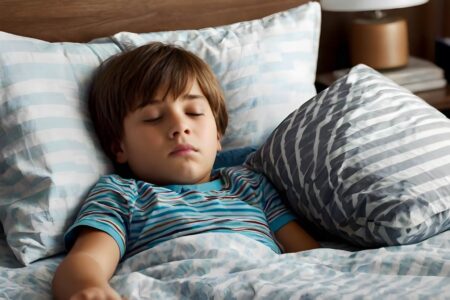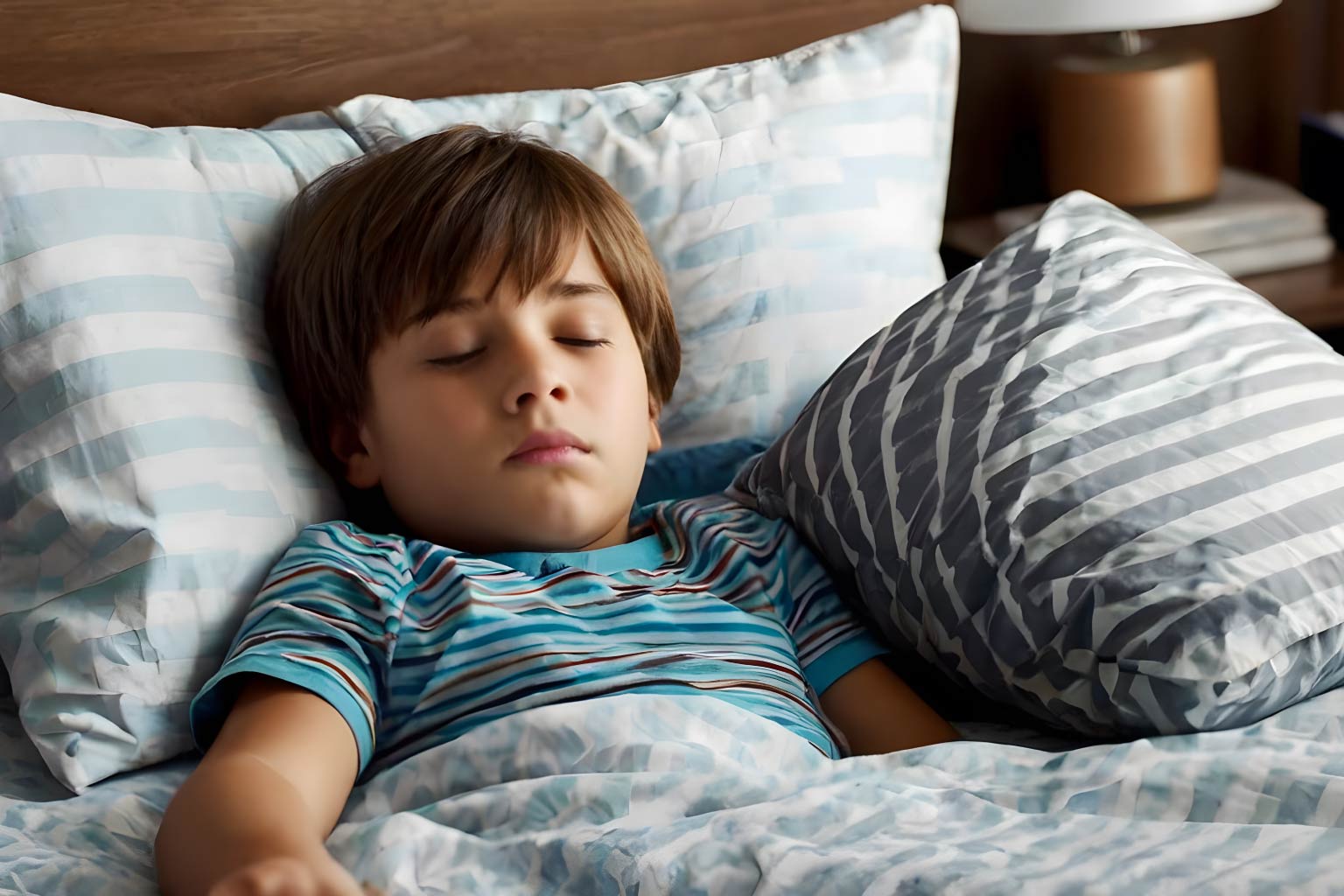
Children sometimes snore while sleeping, particularly when they have a cold or blocked nose. Occasional snoring does not always indicate a medical condition.
However, frequent loud snoring, breathing pauses and restless sleep may suggest an underlying sleep-related breathing problem.
One possible cause is
obstructive sleep apnea.
Sleep apnea in children can interrupt normal breathing during sleep and may affect attention, behaviour, learning and everyday functioning.
Understanding the warning signs can help parents recognise when their child may need medical evaluation.
What Is Sleep Apnea in Children?
Sleep apnea is a condition in which breathing repeatedly stops or becomes significantly reduced during sleep.
Obstructive sleep apnea occurs when the upper airway becomes partially or completely blocked.
During normal sleep, muscles surrounding the throat relax.
In some children,
enlarged tonsils, adenoids or other anatomical factors narrow the airway, making breathing difficult.
The child may briefly wake or move into a lighter stage of sleep as normal breathing resumes.
These interruptions can happen repeatedly without the child remembering them the next morning.
What Are the Common Symptoms of Sleep Apnea in Children?
Symptoms may appear during sleep or affect the child’s behaviour during the day.
1. Frequent Loud Snoring
Habitual snoring is a commonly recognised symptom.
Parents may notice loud breathing sounds on several nights each week.
However, not every child who snores has sleep apnea.
2. Pauses in Breathing During Sleep
Some parents observe moments when their child appears to stop breathing.
These pauses may be followed by gasping, snorting or sudden movement.
3. Restless Sleep
Children with breathing difficulties may frequently change positions, sweat excessively or appear unusually restless.
Some sleep with their neck extended or in unusual positions.
4. Mouth Breathing
Persistent mouth breathing may occur when enlarged adenoids, nasal obstruction or other conditions interfere with normal airflow.
5. Daytime Irritability
Children with disturbed sleep may become unusually irritable, impulsive or emotionally sensitive.
Unlike adults, children do not always appear sleepy when their sleep quality is affected.
6. Difficulty Concentrating
Some children experience problems with attention, memory or classroom behaviour.
Although several conditions can cause these symptoms, disrupted sleep may contribute.
7. Morning Headaches or Tiredness
A child may complain of headaches or difficulty waking despite spending sufficient time in bed.
These symptoms should be considered alongside other possible sleep disturbances.
What Causes Sleep Apnea in Children?
Several factors may contribute to airway obstruction.
Enlarged Tonsils and Adenoids
Enlarged tonsils and adenoids are common contributors to obstructive sleep apnea in children.
They can narrow the upper airway, especially when throat muscles relax during sleep.
Obesity
Excess tissue around the upper airway may increase the risk of obstruction.
However, children with a healthy body weight can also develop sleep apnea.
Persistent nasal congestion or certain structural conditions may interfere with normal breathing.
Craniofacial Conditions
Differences in jaw or facial structure can influence airway size.
Neuromuscular Conditions
Certain neurological or muscular disorders may affect the muscles responsible for maintaining an open airway.
The underlying cause varies between children.
How Is Sleep Apnea in Children Diagnosed?
A
paediatrician or ENT specialist usually begins by reviewing the child’s symptoms and sleep history.
Parents may be asked about:
- How often the child snores
- Whether breathing pauses occur
- Gasping or choking sounds
- Restless sleep or unusual positions
- Daytime behaviour and attention
- Existing medical conditions
The doctor may examine the nose, throat, tonsils and other relevant structures.
What Is a Sleep Study?
An overnight sleep study, called
polysomnography, is commonly used to confirm obstructive sleep apnea.
During the study, equipment records breathing patterns, oxygen levels, heart rate and other physiological measurements.
The results help determine whether sleep apnea is present and assess its severity.
Physical examination alone cannot reliably establish how severely breathing is affected during sleep.
What Are the Treatment Options for Sleep Apnea in Children?
Treatment depends on the underlying cause, severity and child’s overall health.
Tonsil and Adenoid Surgery
When enlarged tonsils or adenoids contribute significantly to obstruction, a doctor may recommend
adenotonsillectomy.
Not every child needs surgery, and symptoms may persist in some children after the procedure.
Positive Airway Pressure Therapy
Continuous positive airway pressure, or
CPAP, may be recommended for selected children.
It delivers air through a mask to help keep the upper airway open during sleep.
Managing Associated Conditions
Treatment may also involve addressing nasal allergies, weight-related factors or other medical conditions.
Follow-Up Monitoring
Some children require repeat assessment, particularly when symptoms continue after treatment or additional risk factors are present.
When Should Parents Seek Medical Attention?
Frequent loud snoring accompanied by breathing pauses, gasping or daytime behavioural changes should be discussed with a paediatrician.
Severe breathing difficulty, prolonged unresponsiveness or blue discolouration requires emergency care.
Conclusion
Sleep apnea in children can interfere with breathing and normal sleep quality.
Although snoring does not always indicate sleep apnea, repeated breathing pauses, restless sleep and daytime changes deserve medical attention.
Appropriate evaluation helps identify possible airway problems and determine whether further investigations or treatment are necessary.
Frequently Asked Questions
1. Is snoring normal in children?
Occasional snoring may occur during respiratory infections. Frequent loud snoring requires assessment, especially when other symptoms are present.
2. Can sleep apnea affect school performance?
Yes. Interrupted sleep may contribute to attention difficulties, behavioural changes and learning problems.
3. Do all children with sleep apnea need surgery?
No. Treatment depends on severity and underlying cause. Some children require other therapies or monitoring.
4. Can children outgrow sleep apnea?
Symptoms may improve in some children, but persistent sleep apnea should not be assumed to resolve without medical assessment.


 Neuro Sciences
 Gastro Sciences
 Kidney Diseases
 Orthopedics
 Transplantation
 ENT and Head-Neck Surgery
 Advanced Trauma Center
 Cardiology
 Interventional Pulmonology
 Hematology and Bone Marrow Transplant(BMT)
 Anesthesia
 Critical Care Excellence, Comprehensive Intensive Care Services in Bangalore
 Dental Surgery and Oral Implants
 Dermatology and Cosmetic Surgery
 Endocrinology and Diabetology
 Facial Plastic and Reconstructive Surgery
 Family Medicine
 Hepatopancreatobiliary Surgery
 Internal Medicine
 Microbiology
 Obstetrics and Gynaecology
 Oncology
 Ophthalmology
 Oral and Maxillofacial Surgery
 Pathology and Laboratory