A New Milestone: Successfully accredited with NABH 6th Edition – Redefining standards in healthcare quality and patient safety | Live vitals. Real-time data. Faster care. Trustwell Hospitals unveils Karnataka’s first 5G SMART ambulance |
Find a Doctor Book Online Appointment
Frozen Shoulder Treatment in Bangalore

Frozen Shoulder Treatment in Bangalore

Frozen Shoulder Treatment in Bangalore

Are You Experiencing These Symptoms?
frozen shoulder treatment in bangalore

Frozen shoulder can cause different symptoms depending on the stage of the condition, the severity of stiffness, and the degree of inflammation affecting the shoulder joint.

Shoulder Pain That Feels Worse at Night

Many patients first notice discomfort while sleeping, especially when lying on the affected side. Night pain can interfere with rest and gradually affect daily energy levels.

Difficulty Raising the Arm Overhead

Activities such as reaching a shelf, hanging clothes, or combing hair may become increasingly difficult as shoulder movement becomes restricted.

Trouble Getting Dressed

Simple tasks such as wearing a shirt, fastening clothing, or reaching behind the back may become challenging because of reduced shoulder mobility.

Difficulty Reaching Across While Driving

Turning the steering wheel, reaching for a seat belt, or making sudden arm movements can become uncomfortable when the shoulder stiffens.

Progressive Loss of Shoulder Movement

Many patients notice that shoulder movement gradually decreases over weeks or months. The arm may feel increasingly restricted despite attempts to stretch or exercise.

Sharp Pain During Certain Movements

Specific movements may trigger sudden pain, especially when reaching outward, upward, or behind the body.

Reduced Ability to Exercise

Gym activities, sports participation, swimming, and overhead exercises may become difficult because the shoulder cannot move through its normal range.

Weakness Due to Limited Use

As pain and stiffness increase, patients may use the arm less frequently. Reduced activity can contribute to muscle weakness over time.

Difficulty Carrying Everyday Items

Lifting grocery bags, carrying luggage, or moving household items may become uncomfortable due to restricted shoulder function.

Reduced Independence in Daily Activities

Persistent stiffness can affect work, self-care, recreation, and routine tasks, making everyday activities more frustrating.

Symptoms alone do not confirm frozen shoulder. A specialist consultation helps identify the underlying cause and recommend appropriate next steps.

How Is Frozen Shoulder Diagnosed?

Diagnostic findings help determine the severity of stiffness, rule out other shoulder conditions, and guide treatment planning.

Clinical Shoulder Examination

A specialist evaluates shoulder movement, pain patterns, strength, and functional limitations. Restricted motion in multiple directions is often an important clinical finding.

Digital X-Rays

X-rays help rule out arthritis, fractures, and other structural abnormalities that may contribute to shoulder symptoms.

MRI Scan

MRI provides detailed images of muscles, tendons, ligaments, and soft tissues. It helps identify associated shoulder problems that may influence treatment decisions.

Ultrasound Evaluation

Ultrasound allows real-time assessment of shoulder tendons and surrounding tissues. It may help evaluate inflammation and tendon-related disorders.

Blood Tests

Blood investigations may be recommended when inflammatory conditions or other medical problems are suspected.

Functional Movement Assessment

Evaluating daily activities and shoulder function helps determine how severely the condition affects mobility and quality of life.

Diagnostic findings help determine whether rehabilitation, injections, minimally invasive procedures, or surgery are most appropriate.

Why Do Patients Choose Trustwell Hospitals for Frozen Shoulder Treatment in Bangalore?

Choosing the right treatment centre involves more than finding a shoulder specialist. Patients often look for accurate diagnosis, personalised treatment planning, rehabilitation support, and long-term care.

Experience Managing Complex Shoulder Conditions

The orthopaedic team evaluates and manages a wide range of shoulder disorders, including frozen shoulder, rotator cuff injuries, arthritis, sports-related conditions, and long-standing mobility restrictions. Complex and recurrent cases requiring specialised assessment are also treated.

Comprehensive Diagnostic Assessment

Clinical evaluation is supported by advanced imaging and functional assessment. Understanding the exact cause of pain and stiffness helps determine whether rehabilitation, injections, or surgical intervention may be appropriate.

Complete Treatment Spectrum

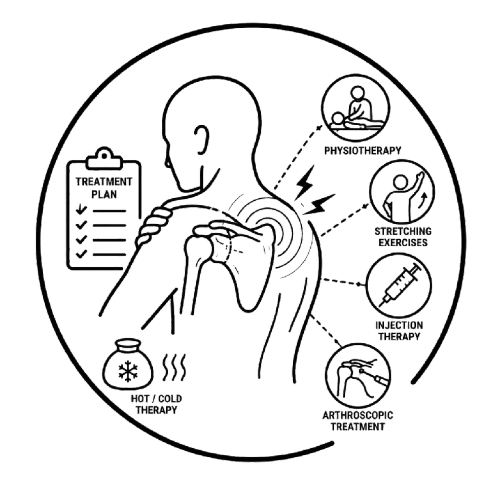
Treatment recommendations are tailored to the stage and severity of frozen shoulder. Options may include physiotherapy, medication, injections, manipulation under anaesthesia, arthroscopic procedures, or shoulder surgery when clinically required.

Personalised Guidance and Shared Decisions

Patients receive clear explanations regarding diagnosis, treatment choices, expected recovery timelines, and activity modifications. This helps reduce uncertainty and supports informed decision-making.

Focus on Restoring Function

The goal of treatment is not only pain control but also improving shoulder mobility, independence, and participation in daily activities. Individual outcomes vary.

Rehabilitation and Long-Term Follow-Up

Recovery from frozen shoulder often requires structured rehabilitation. Follow-up care focuses on improving movement, preventing stiffness from returning, and supporting long-term shoulder health.

Patients experiencing persistent shoulder pain and movement restrictions may also benefit from consulting our shoulder treatment specialists in Bangalore for comprehensive evaluation and management.

What Facilities Are Available for Frozen Shoulder Treatment at Trustwell Hospitals?

Diagnosis, treatment, rehabilitation, and recovery services are available under one roof to support patients throughout their treatment journey.

Advanced Imaging Services

Digital X-rays, MRI scans, and ultrasound evaluations help identify shoulder abnormalities and rule out other conditions that may mimic frozen shoulder symptoms.

Dedicated Orthopaedic Procedure Facilities

Modern orthopaedic treatment areas support both non-surgical and surgical management of shoulder conditions while maintaining patient safety standards.

In-House Diagnostic Support

Laboratory investigations and diagnostic services help specialists assess underlying medical conditions that may influence treatment decisions.

Recovery and Monitoring Area

Patients undergoing injections, procedures, or surgery receive post-treatment monitoring and nursing support during recovery.

Physiotherapy and Rehabilitation Services

Structured rehabilitation programmes focus on gradually restoring shoulder mobility, flexibility, strength, and functional movement.

Emergency Orthopaedic Care

The orthopaedic team also evaluates acute shoulder injuries, dislocations, fractures, and other musculoskeletal emergencies when required.

Who Are the Shoulder Specialists at Trustwell Hospitals?

The orthopaedic team manages frozen shoulder, rotator cuff disorders, shoulder arthritis, instability, sports injuries, and other conditions affecting shoulder function and mobility.

Dr. Ananya Puttaraju – Senior Consultant and HOD, Orthopaedics

Qualifications: MBBS, MRCS, FRCS (Tr & Ortho), CCBST – UK, Fellowship in Robotic Joint Replacement and Foot & Ankle Surgery Experience: 20+ Years Special Interests: Shoulder disorders, sports injuries, arthroscopy, joint preservation, and complex orthopaedic conditions.

Dr. Aditya H Kumar – Associate Consultant Orthopaedic Surgeon

Qualifications: MBBS, MS Orthopaedics, Fellowship in Limb Reconstruction, Fellowship in Arthroscopy and Arthroplasty Experience: 8+ Years Special Interests: Arthroscopic procedures, sports injuries, ligament reconstruction, shoulder disorders, and joint preservation.

Dr. Pavan Kumar G – Consultant Orthopaedic Surgeon

Qualifications: MBBS, MS Orthopaedics Experience: 10+ Years Special Interests: Trauma care, fracture management, and shoulder-related orthopaedic conditions.

What Frozen Shoulder Treatments Are Available at Trustwell Hospitals?

The most appropriate treatment depends on symptom severity, shoulder mobility, pain levels, response to previous treatment, and overall health.

Medication and Activity Modification

Approach: Medications may be used alongside activity modification and home-based exercises to help manage discomfort. Patient Benefit: Can improve comfort and support participation in rehabilitation. Typically Used For: Early-stage frozen shoulder and mild symptoms.

Physiotherapy and Rehabilitation

Approach: Structured stretching and mobility exercises help gradually improve shoulder movement and flexibility. Patient Benefit: Supports recovery of range of motion and function. Typically Used For: Most stages of frozen shoulder.

Injection Therapy

Approach: Anti-inflammatory medication may be injected into the shoulder joint when clinically appropriate. Patient Benefit: May reduce pain and improve participation in rehabilitation. Typically Used For: Persistent pain and restricted movement.

Manipulation Under Anaesthesia

Approach: The shoulder is gently moved while the patient is under anaesthesia to help improve mobility. Patient Benefit: Can increase shoulder movement in selected patients. Typically Used For: Significant stiffness that has not responded to conservative treatment.

Arthroscopic Release

Approach: A minimally invasive arthroscopic procedure is used to release tightened tissues inside the shoulder joint. Patient Benefit: May improve mobility and reduce long-standing stiffness. Typically Used For: Severe or persistent frozen shoulder not improving with non-surgical treatment.

Patients requiring minimally invasive procedures may also benefit from our arthroscopy services in Bangalore for advanced shoulder care.

Which Treatment Is Right for Your Condition?

The most suitable treatment depends on the severity of stiffness, duration of symptoms, shoulder mobility, pain levels, and response to previous treatment.

Condition Severity / Situation Commonly Recommended Treatment Typical Approach
Early Frozen Shoulder Medication and Physiotherapy Pain control and mobility exercises
Mild Movement Restriction Rehabilitation Programme Progressive stretching and strengthening
Moderate Stiffness Physiotherapy and Injection Therapy Combined pain relief and mobility improvement
Persistent Pain Injection Therapy Reduce inflammation and improve rehabilitation participation
Significant Movement Loss Manipulation Under Anaesthesia Improve shoulder mobility
Severe Frozen Shoulder Arthroscopic Release Minimally invasive surgical treatment
Recurrent Symptoms Individualised Treatment Plan Based on clinical assessment and imaging

A specialist reviewing examination findings and investigations can determine the most appropriate treatment approach for each patient.

What Should You Expect Before, During, and After Treatment?

The care team guides patients through every stage of diagnosis, treatment, and recovery.

Before Treatment

Patients typically undergo a clinical examination and any required imaging studies. Previous medical records, prescriptions, and investigation reports should be brought to the consultation whenever available.

During Treatment

Treatment may involve rehabilitation, injections, minimally invasive procedures, or surgery depending on the severity of symptoms and shoulder stiffness. Anaesthesia requirements vary according to the treatment being performed.

Recovery and Discharge

Recovery timelines vary by patient and treatment type. Physiotherapy, stretching exercises, and follow-up appointments are important components of restoring shoulder movement and function.

Is Frozen Shoulder Treatment Covered Under Health Insurance?

Frozen shoulder treatment may be covered under many health insurance plans, subject to policy terms, treatment type, and insurer approval.

Major Insurance Providers Accepted

Star Health Insurance HDFC ERGO Health Insurance ICICI Lombard Niva Bupa Health Insurance Care Health Insurance Aditya Birla Health Insurance Medi Assist TPA Other major insurance providers

Cashless Treatment Support

The insurance support team assists patients with eligibility verification, documentation, pre-authorisation requirements, claim coordination, and discharge-related processes to help simplify treatment.

What Happens Without Timely Treatment?

Not every patient requires surgery, but persistent symptoms deserve specialist evaluation.

Progressive Loss of Mobility

Shoulder movement can become increasingly restricted over time, making everyday activities more difficult.

Ongoing Sleep Disturbance

Persistent shoulder pain may continue to affect sleep quality and overall well-being.

Reduced Shoulder Function

Limited movement and discomfort can gradually reduce strength and arm usage during daily activities.

Longer Recovery Period

Delayed treatment may result in prolonged stiffness and a slower return to normal function.

Reduced Activity Levels

Patients may avoid exercise, sports, and recreational activities because of pain and restricted movement.

Early evaluation helps patients understand available treatment options and avoid unnecessary complications.

How Does Treatment Work at Trustwell Hospitals?

The process is designed to be clear and straightforward.

Book Your Appointment

Schedule a consultation with the orthopaedic team and discuss your symptoms, concerns, and treatment goals.

Consult and Assess

A detailed evaluation helps determine the severity of shoulder stiffness, mobility limitations, and possible underlying causes.

Diagnose and Plan Treatment

Clinical findings and investigations help guide treatment recommendations tailored to the patient’s condition.

Treat and Follow Up

Treatment is followed by rehabilitation, monitoring, and follow-up care designed to support recovery and long-term shoulder function.

Is Trustwell Hospitals Accredited and Recognised for Orthopaedic Care?

Trustwell Hospitals follows recognised quality and patient safety standards to support comprehensive orthopaedic care.

NABH 6th Edition Certified

NABH accreditation reflects adherence to established healthcare quality, patient safety, and clinical governance standards.

Where Is Trustwell Hospitals Located and When Can You Visit?

Trustwell Hospitals is conveniently located in central Bengaluru and provides orthopaedic consultations throughout the week.

Address

5, JC Rd, Vinobha Nagar, Sudhama Nagar, Bengaluru, Karnataka 560002

Phone

80 4566 6777

OPD Hours

10:00 AM to 4:00 PM

Parking Facilities

Available

Nearby Transportation and Landmarks

KSR Bengaluru Railway Station: Approximately 2.5 km away. Majestic Bus Station: Around 2 km from the hospital. Lalbagh Metro Station: Approximately 1.5 km away. Cubbon Park Metro Station: Around 2 km away. Lalbagh Botanical Garden: Approximately 1 km away. MG Road: Around 3 km from the hospital.

Patients Visit From

Patients regularly visit from Jayanagar, Basavanagudi, Wilson Garden, Rajajinagar, Indiranagar, Koramangala, Malleshwaram, and surrounding areas across Bengaluru.

Frequently Asked Questions About Frozen Shoulder Treatment

Can frozen shoulder go away on its own?

Yes, some cases may gradually improve over time. However, recovery can take months or even years, and treatment may help improve comfort and shoulder mobility during the process.

Is frozen shoulder more common in people with diabetes?

Yes. Frozen shoulder is seen more frequently in people with diabetes, although the exact reason is not completely understood.

Can I continue working with frozen shoulder?

Many patients can continue working, but certain tasks involving lifting, reaching, or repetitive shoulder movements may become difficult.

Is surgery required for every frozen shoulder patient?

No. Most patients improve with physiotherapy, rehabilitation, medications, and injections. Surgery is usually considered only when symptoms remain severe despite conservative treatment.

Can frozen shoulder affect both shoulders?

Yes. Some patients may experience frozen shoulder in the opposite shoulder at a different time, although both shoulders are not always affected simultaneously.

How long does frozen shoulder recovery usually take?

Recovery varies significantly between individuals. Some patients improve within months, while others may require a longer rehabilitation period.

Can I exercise if I have frozen shoulder?

Yes, but exercises should generally be performed under professional guidance to avoid aggravating symptoms or causing unnecessary discomfort.

Does frozen shoulder return after treatment?

Recurrence is uncommon but can occur in some patients. Follow-up care and rehabilitation may help maintain shoulder mobility.
Book an Appointment