Gallbladder Hospital in Bangalore for Safe and Effective Treatment
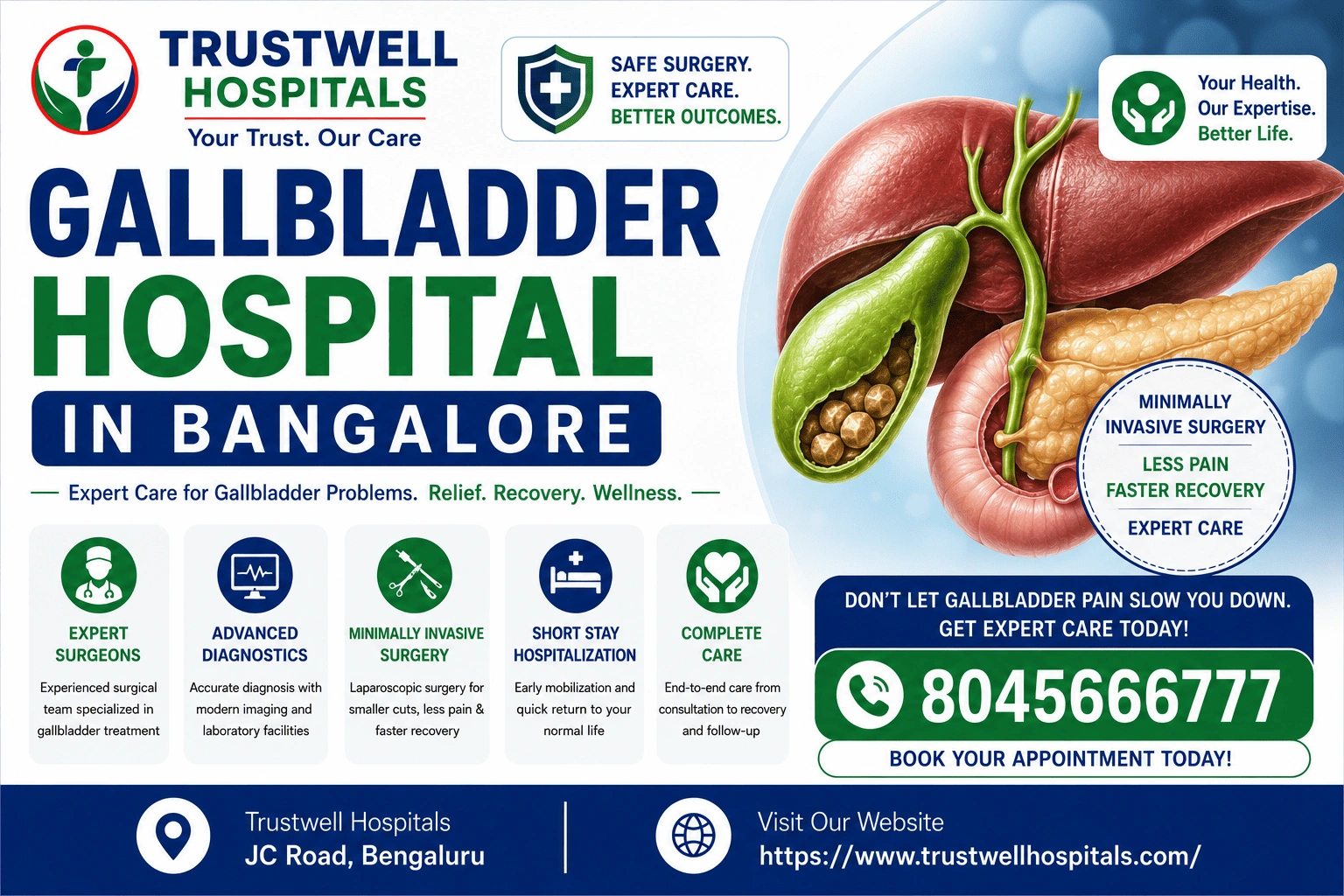
Pain below the right ribs, nausea after eating oily food, repeated bloating, or sudden abdominal attacks may be signs of gallbladder disease. Trustwell Hospitals provides expert diagnosis and personalised gallbladder treatment in Bangalore, including advanced laparoscopic gallbladder surgery for eligible patients.
✔ Experienced Gastroenterology Specialists
✔ Advanced Endoscopy & Diagnostic Facilities
✔ Comprehensive Medical & Surgical Digestive Care
✔ Cashless Insurance Assistance Available
✔ NABH Accredited Hospital
✔ Multidisciplinary Treatment Planning
Get Expert Digestive Care Today
Are You Experiencing These Symptoms?
Gallbladder problems can produce different symptoms depending on whether gallstones are present, the degree of inflammation and whether bile flow is affected. These symptoms can also resemble other digestive conditions, making proper evaluation important.
Pain Below the Right Rib Cage
Pain commonly develops in the upper right side of the abdomen, especially after eating heavy or fatty meals. It may last from several minutes to a few hours and can return repeatedly.
Discomfort After Fatty Foods
Meals containing fried or oily foods can trigger abdominal pain, bloating or nausea because the gallbladder contracts to release bile during digestion.
Persistent Nausea
Some patients experience frequent nausea even without vomiting. This may occur when gallbladder inflammation interferes with normal digestion.
Vomiting During Pain Episodes
Severe gallbladder attacks can be accompanied by vomiting, particularly when pain becomes intense or prolonged.
Frequent Bloating
Many people notice abdominal fullness or excessive gas after meals. While common in several digestive disorders, recurring bloating together with abdominal pain deserves medical assessment.
Fever with Abdominal Pain
Fever accompanied by upper abdominal pain may indicate infection or inflammation of the gallbladder and should be evaluated promptly.
Pain Spreading to the Back or Shoulder
Gallbladder pain sometimes radiates to the right shoulder blade or upper back because of shared nerve pathways.
Loss of Appetite
Ongoing digestive discomfort can reduce appetite and make eating less enjoyable, particularly during repeated episodes of pain.
Yellowing of the Eyes or Skin
If a gallstone blocks the bile duct, bile may build up in the body, causing jaundice. This symptom requires timely medical attention.
Sudden Severe Abdominal Attack
Some patients experience intense pain that begins suddenly and does not improve with rest. Specialist assessment helps identify whether gallstones or another abdominal condition is responsible.
These symptoms alone do not confirm gallbladder disease. A detailed examination and appropriate investigations help determine the underlying cause and guide the next steps.
How Is Gallbladder Disease Diagnosed?
The size, number and location of gallstones, along with the condition of the gallbladder, help determine the most suitable treatment approach.
Abdominal Ultrasound
Ultrasound is usually the first investigation for suspected gallbladder disease. It can identify gallstones, inflammation and changes in the gallbladder wall without exposing patients to radiation.
Blood Tests
Blood investigations help detect signs of infection, inflammation and liver function abnormalities. They also assist in identifying whether the bile ducts may be affected.
Liver Function Tests
These tests measure substances produced by the liver to assess how well bile is flowing. Abnormal results may suggest blockage caused by gallstones.
CT Scan
A CT scan provides detailed images of the abdomen when complications or alternative causes of pain need to be evaluated.
MRI with MRCP
Magnetic Resonance Cholangiopancreatography (MRCP) is a specialised MRI scan that clearly shows the bile ducts and helps detect stones that may not be visible on routine ultrasound.
Clinical Examination
Your specialist reviews symptoms, previous medical history and performs a physical examination to understand whether the pain is likely to originate from the gallbladder or another digestive organ.
Diagnostic findings help determine whether observation, medication or gallbladder surgery is the most appropriate treatment.
Why Do Patients Choose Trustwell Hospitals for Gallbladder Surgery in Bangalore?
Choosing the right hospital for gallbladder surgery is about more than removing the gallbladder. It requires an accurate diagnosis, careful surgical planning and continued support before and after treatment. At Trustwell Hospitals, patients benefit from evidence-based care designed to relieve symptoms while supporting a safe recovery.
Expertise in Complex Gallbladder Disease
Our surgical gastroenterology team has treated 2,000+ patients with gallbladder and biliary conditions, including symptomatic gallstones, acute cholecystitis, recurrent biliary colic and complex bile duct disorders. Every treatment plan is based on clinical findings and individual patient needs.
Comprehensive Diagnostic Evaluation
Gallbladder pain can resemble several digestive disorders. Using ultrasound, blood investigations, CT scans and MRCP when required, our specialists establish an accurate diagnosis before recommending treatment. This systematic approach helps avoid unnecessary procedures and supports better clinical decision-making.
Advanced Laparoscopic Gallbladder Surgery
For eligible patients, 90%+ of gallbladder surgeries are performed using minimally invasive laparoscopic techniques. Smaller incisions typically result in less postoperative discomfort, reduced scarring and a quicker return to everyday activities compared with conventional open surgery, although recovery varies between individuals.
Personalised Treatment Planning
Not every patient with gallstones requires immediate surgery. Each treatment recommendation is made after reviewing symptoms, imaging findings, medical history and overall health. This patient-focused approach has contributed to a 95%+ patient satisfaction rate, reflecting confidence in our communication and treatment planning.
Coordinated Surgical Care
From your first consultation through surgery and discharge, gastroenterologists, gastrointestinal surgeons, anaesthetists, radiologists and nursing teams work together to deliver seamless care. Every stage is carefully coordinated to help patients feel informed, prepared and supported throughout their treatment.
Recovery Support Beyond Surgery
Our commitment continues after the operation. Patients receive structured follow-up visits, wound assessment, dietary guidance and recovery advice to promote long-term digestive health. This focus on continued care has helped Trustwell Hospitals maintain a 4.3★ Google rating, demonstrating the trust placed in our surgical gastroenterology services.
What Facilities Are Available for Gallbladder Treatment at Trustwell Hospitals?
Trustwell Hospitals provides diagnosis, surgical treatment and postoperative care for gallbladder conditions under one roof, allowing patients to move through each stage of treatment without unnecessary delays.
Advanced Diagnostic Imaging
Ultrasound, CT scan and MRI-based imaging help identify gallstones, inflammation and bile duct abnormalities with greater accuracy. These findings assist specialists in selecting the most appropriate treatment.
In-House Laboratory Services
Blood investigations are performed to evaluate infection, liver function and overall health before surgery. Faster reporting supports timely clinical decisions.
Dedicated Laparoscopic Operation Theatre
Modern operation theatres are equipped for minimally invasive gastrointestinal procedures, including laparoscopic gallbladder removal, with a focus on precision and patient safety.
Recovery and Monitoring Area
Following surgery, patients are observed by experienced nursing and anaesthesia teams. Continuous monitoring helps assess pain control, recovery from anaesthesia and readiness for discharge.
Comprehensive Anaesthesia Support
Every patient undergoes a pre-anaesthesia evaluation to assess medical fitness and minimise surgical risks. The anaesthesia team remains involved throughout the procedure and recovery period.
Dietary and Follow-up Guidance
Patients receive practical advice on wound care, activity levels and dietary adjustments after gallbladder surgery to support a comfortable recovery at home.
Who Are the Gallblader Specialists at Trustwell Hospitals?
The Gastrointestinal Surgery team at Trustwell Hospitals offers comprehensive care for anal fistula, recurrent fistula, complex fistula-in-ano, and a wide range of colorectal and gastrointestinal disorders. The team specializes in minimally invasive, laparoscopic, laser, and robotic-assisted procedures where appropriate, providing individualized treatment plans that focus on complete healing, preserving continence, reducing pain, and enabling faster recovery.
Dr. Roopa Bhushan – Senior Consultant – Surgical Gastroenterology
Qualifications: MBBS, MS (General Surgery), DNB (Surgical Gastroenterology)
Experience: 20+ Years
Dr. Roopa Bhushan is one of the leading female Surgical Gastroenterologists at Trustwell Hospitals, providing specialized care for both men and women with gastrointestinal and colorectal disorders. Many women prefer consulting a female specialist for sensitive anorectal conditions such as fistula, piles, fissures, rectal bleeding, pelvic floor concerns, and bowel-related symptoms. She combines extensive surgical expertise with a compassionate, patient-centric approach to ensure privacy, comfort, and personalized treatment.
Areas of Expertise
- Female Colorectal & Anorectal Disorders
- Complex Anal Fistula Surgery
- Laser Treatment for Fistula, Piles & Fissures
- Colorectal Surgery
- Laparoscopic Gastrointestinal Surgery
- Gallbladder Surgery
- Hernia Surgery
- Upper & Lower GI Endoscopy
- Benign Gastrointestinal Disorders
Dr. Rohith M – Consultant – Surgical Gastroenterology & HPB Surgery
Qualifications: MBBS, MS (General Surgery), MCh (Surgical Gastroenterology), DrNB (Surgical Gastroenterology), FMAS
Areas of Expertise
- Complex Gastrointestinal Surgery
- Colorectal Surgery
- Minimally Invasive GI Surgery
- Liver, Pancreas & Biliary Surgery
- Gastrointestinal Cancer Surgery
- Advanced Laparoscopic Procedures
Dr. Sunil Kumar Alur – Senior Consultant – Robotic & Surgical Gastroenterology
Qualifications: MBBS, DNB, FMIS, FALS, FACRSI, FMAS, FIAGES, FACS
Experience: 15+ Years
Areas of Expertise
- Laser Treatment for Fistula, Piles & Fissures
- Complex Anal Fistula Management
- Colorectal Surgery
- Robotic Gastrointestinal Surgery
- Laparoscopic GI Surgery
- Bariatric & Metabolic Surgery
Dr. Nithin Kumar H N – Consultant – Medical Gastroenterology & Hepatology
Qualifications: MBBS, MD (General Medicine), DM (Gastroenterology & Hepatology), MRCP-ESEGH (UK), Fellowship in Advanced Endoscopy
Areas of Expertise
- Inflammatory Bowel Disease (IBD)
- Chronic Digestive Disorders
- Advanced Diagnostic & Therapeutic Endoscopy
- Liver Disease Management
- Pancreatic & Hepatobiliary Disorders
- GI Motility Disorders
- Acid Reflux, IBS & Digestive Health
What Gallbladder Treatments Are Available at Trustwell Hospitals?
The most suitable treatment depends on the severity of symptoms, the number and location of gallstones, evidence of infection and the patient’s overall health. After a thorough evaluation, our specialists recommend the treatment option that offers the best outcome for your condition. At Trustwell Hospitals, our Gallbladder Treatment specialists provide both non-surgical and advanced minimally invasive surgical care.
Conservative Management
Approach: Patients without symptoms or those with mild episodes may initially be managed with observation, dietary advice and medicines to control pain or inflammation when appropriate.
Patient Benefit: Avoids unnecessary intervention while symptoms remain stable.
Typically Used For: Selected patients with asymptomatic or mildly symptomatic gallstones.
Laparoscopic Cholecystectomy
Approach: The gallbladder is removed through a few small incisions using a camera and specialised instruments. This is the most commonly performed operation for symptomatic gallstones.
Patient Benefit: Smaller incisions, reduced postoperative discomfort and an earlier return to normal daily activities for many patients.
Typically Used For: Repeated gallbladder attacks, symptomatic gallstones and gallbladder inflammation using advanced Surgical Gastroenterology techniques.
Open Gallbladder Surgery
Approach: In some complex situations, a larger incision may be required to safely remove the gallbladder. The decision depends on surgical findings and patient-specific factors.
Patient Benefit: Allows safe management of difficult gallbladder disease when minimally invasive surgery is not appropriate.
Typically Used For: Severe inflammation, extensive scarring or selected complicated cases.
ERCP for Bile Duct Stones
Approach: Endoscopic Retrograde Cholangiopancreatography (ERCP) combines endoscopy with X-ray guidance to locate and remove stones from the common bile duct without making external incisions.
Patient Benefit: Relieves bile duct obstruction and improves bile flow while avoiding open surgery in suitable patients.
Typically Used For: Gallstones that have moved into the bile duct or caused blockage. Patients requiring comprehensive management of gallbladder disease are treated by our experienced Gallbladder specialists.
Which Treatment Is Right for Your Condition?
The ideal treatment depends on your symptoms, imaging findings, gallbladder function, associated complications and overall health. After reviewing your reports, your specialist will recommend the option most appropriate for your condition.
| Condition or Situation |
Commonly Recommended Treatment |
Typical Approach |
| Small stones without symptoms |
Observation |
Regular follow-up and lifestyle advice |
| Mild intermittent symptoms |
Medication with monitoring |
Symptom control and reassessment |
| Recurrent gallbladder attacks |
Laparoscopic cholecystectomy |
Planned minimally invasive surgery |
| Acute gallbladder inflammation |
Surgery after clinical evaluation |
Early treatment when appropriate |
| Stones blocking the bile duct |
ERCP followed by surgery if required |
Endoscopic stone removal with further management |
| Complicated gallbladder disease |
Individualised surgical plan |
Based on imaging and overall health |
Choosing the right treatment begins with an accurate diagnosis. A specialist consultation and imaging studies help determine the safest and most effective approach for each patient.
What Should You Expect Before, During, and After Gallbladder Surgery?
From your first consultation to your recovery at home, our team guides you through every stage of treatment so you know what to expect and can prepare with confidence.
Before the Procedure
Your surgeon reviews your medical history, medications and investigation reports before confirming the treatment plan. Blood tests, imaging and a pre-anaesthesia assessment are typically completed before surgery. You may also be advised to avoid food and drinks for a specified period before the procedure and to bring previous medical records on the day of admission.
During the Procedure
Gallbladder surgery is usually performed under general anaesthesia, meaning you remain asleep throughout the operation. In most patients, laparoscopic surgery is performed through a few small incisions using a camera and specialised instruments, although the surgical approach may vary depending on individual findings.
Recovery and Discharge
Many patients are encouraged to begin walking within a few hours after surgery, depending on their condition. Hospital stay, return to work and normal activities vary according to the type of surgery, overall health and recovery progress. Before discharge, patients receive guidance on wound care, diet, medications and follow-up appointments.
Is Gallbladder Surgery Covered Under Health Insurance?
Gallbladder surgery is covered under many health insurance policies when medically indicated, subject to your insurer’s terms, policy conditions and approval.
Accepted Insurance Providers
- Star Health Insurance
- HDFC ERGO
- ICICI Lombard
- Niva Bupa
- Care Health Insurance
- Aditya Birla Health Insurance
- Medi Assist Network
- Other major insurance providers
Cashless Support
Our insurance team assists patients with document verification, pre-authorisation, coordination with the insurance provider and discharge-related formalities to help simplify the cashless treatment process.
What Happens Without Timely Treatment?
Not every gallbladder condition requires immediate surgery, but persistent pain, repeated attacks or complications should be evaluated by a specialist rather than ignored.
Recurrent Pain Episodes
Gallstones can continue to trigger repeated attacks of abdominal pain, making routine activities and meals increasingly uncomfortable over time.
Gallbladder Infection
Untreated inflammation may progress to infection, causing severe pain, fever and increasing the need for urgent medical care.
Bile Duct Blockage
A gallstone can move into the bile duct and obstruct the normal flow of bile. This may lead to jaundice or require additional procedures before surgery.
Pancreatic Inflammation
Gallstones have been associated with pancreatitis, a condition in which the pancreas becomes inflamed and requires prompt medical treatment.
Progressive Gallbladder Damage
Repeated inflammation can gradually affect the gallbladder, making future surgery technically more challenging in some patients.
Early evaluation helps determine whether observation, medication or surgery is the most appropriate option while reducing the likelihood of avoidable complications.
How Does Treatment Work at Trustwell Hospitals?
Your treatment journey is designed to be simple, transparent and focused on helping you receive the right care at the right time.
Book Your Appointment
Contact our team by phone or online to schedule a consultation with a surgical gastroenterologist at a convenient time.
Consult and Assess
Your specialist discusses your symptoms, performs a clinical examination and reviews previous investigations to understand your condition thoroughly.
Diagnose and Plan Treatment
If additional tests are needed, they are arranged before explaining the diagnosis and recommending the most suitable treatment based on your reports and overall health.
Treat and Follow Up
After treatment, scheduled follow-up visits help monitor recovery, answer your questions and provide guidance on diet, activity and long-term digestive health.
Is Trustwell Hospitals Accredited and Recognised for Gallbladder Care?
Trustwell Hospitals is committed to delivering safe, evidence-based surgical care through established clinical protocols, experienced specialists and patient-focused treatment.
NABH Accredited Hospital
Trustwell Hospitals is an NABH Accredited Hospital, reflecting its commitment to quality standards, patient safety, infection control and continuous clinical improvement.
Comprehensive Surgical Gastroenterology Services
The hospital provides integrated diagnosis, laparoscopic surgery, anaesthesia support and postoperative care, enabling patients to receive coordinated treatment for gallbladder and other gastrointestinal conditions at one location.
Where Is Trustwell Hospitals Located and When Can You Visit?
Trustwell Hospitals is conveniently located in Sudhama Nagar, JC Road, Bangalore, making it easily accessible from different parts of the city through road, metro and public transport.
Address:
5, JC Rd, Vinobha Nagar, Sudhama Nagar, Bengaluru, Karnataka 560002
Phone:
80 4566 6777
OPD Hours:
10:00 AM to 4:00 PM
Parking Facilities:
Parking is available for patients and attendants.
Nearby Transportation and Landmarks
- KSR Bengaluru City Railway Station: Approximately 4 km away and easily accessible by taxi, auto or BMTC bus.
- Kempegowda Bus Station (Majestic): Around 4 km from the hospital with frequent city bus connectivity.
- Lalbagh Metro Station: Located about 1.5 km away, offering convenient access from many parts of Bangalore.
- Cubbon Park Metro Station: Approximately 2.5 km away and connected through the Namma Metro network.
- Kempegowda International Airport: Approximately 38 km away via Airport Expressway and city roads.
- Lalbagh Botanical Garden: A well-known landmark situated close to the hospital, helping visitors identify the location easily.
- Bangalore City Civil Court Complex: Located nearby on JC Road, making the hospital easy to locate.
- JC Road: One of Bangalore’s major connecting roads with convenient access by taxi, bus and private vehicle.
Patients Visit Us From Nearby Areas
Patients regularly visit Trustwell Hospitals for gallbladder treatment from:
✔ Sudhama Nagar
✔ Richmond Town
✔ Basavanagudi
✔ Jayanagar
✔ Wilson Garden
✔ Chamrajpet
✔ Shanti Nagar
✔ Koramangala
✔ Rajajinagar
✔ Vijayanagar
✔ Banashankari
✔ Indiranagar
✔ Electronic City
✔ Other Parts of Bangalore
The hospital is easily reachable by metro, BMTC buses, taxis and private vehicles, with parking available for added convenience.
Frequently Asked Questions About Gallbladder Surgery at Trustwell Hospitals
Which doctor should I consult for gallbladder stones?
Gallbladder stones are usually treated by a surgical gastroenterologist or a gastrointestinal surgeon. They evaluate your symptoms, review imaging reports and recommend the most appropriate treatment based on your condition.
What are the earliest signs of gallbladder disease?
Early symptoms often include pain after fatty meals, bloating, nausea, discomfort in the upper right abdomen and occasional indigestion. Some people may have gallstones without any symptoms.
Can gallstones disappear without surgery?
Most gallstones do not disappear on their own. If they are causing repeated pain, infection or other complications, your specialist may recommend gallbladder removal rather than simply treating the stones.
Is laparoscopic gallbladder surgery available?
Yes. Laparoscopic gallbladder removal is commonly performed for suitable patients. The procedure uses small incisions and is generally associated with less postoperative discomfort than traditional open surgery.
How much does gallbladder surgery cost in Bangalore?
The overall cost depends on investigations, the surgical approach, hospital stay, room category and insurance coverage. A personalised estimate is provided after your consultation.
Is laparoscopic surgery the preferred treatment?
For most patients with symptomatic gallstones, laparoscopic cholecystectomy is considered the standard surgical treatment. However, the final recommendation depends on your medical condition and imaging findings.
Does health insurance cover gallbladder surgery?
Many insurance policies provide coverage for medically necessary gallbladder surgery, subject to policy terms, exclusions and insurer approval.
Can gallstones return after the gallbladder is removed?
No. Once the gallbladder has been removed, new gallstones cannot form inside it. However, maintaining a balanced diet and healthy lifestyle continues to support overall digestive health.
What should I bring for my first consultation?
Please carry previous prescriptions, ultrasound or scan reports, blood test results, current medications, identification documents and insurance details if applicable.
Can I receive a cost estimate before surgery?
Yes. After evaluating your condition and reviewing your investigations, our team will explain the expected treatment plan and provide an estimated cost.
How soon can I return to normal activities?
Recovery varies from person to person. Many patients gradually resume light daily activities within a short period after laparoscopic surgery, while more strenuous activities may require additional time based on medical advice.
Can I delay surgery if the pain improves?
Temporary relief does not necessarily mean the underlying problem has resolved. If gallstones continue causing symptoms, specialist review helps determine whether treatment is still advisable.
Will I need to follow a special diet after surgery?
Most patients gradually return to their normal diet. Your doctor may recommend lighter meals during the initial recovery period while your digestive system adjusts.
Can I live normally without a gallbladder?
Yes. The liver continues producing bile after the gallbladder is removed. Most people adapt well and are able to return to their regular lifestyle following recovery.
How do I know if gallbladder surgery is the right option?
The decision depends on your symptoms, ultrasound findings, overall health and whether gallstones are causing repeated attacks or complications. Your surgeon will explain all suitable treatment options before making a recommendation.
If recurring gallbladder pain is affecting your daily life, timely specialist evaluation can help you choose the right treatment with confidence.


 Neuro Sciences
 Gastro Sciences
 Kidney Diseases
 Orthopedics
 Transplantation
 ENT and Head-Neck Surgery
 Advanced Trauma Center
 Cardiology
 Interventional Pulmonology
 Hematology and Bone Marrow Transplant(BMT)
 Anesthesia
 Critical Care Excellence, Comprehensive Intensive Care Services in Bangalore
 Dental Surgery and Oral Implants
 Dermatology and Cosmetic Surgery
 Endocrinology and Diabetology
 Facial Plastic and Reconstructive Surgery
 Family Medicine
 Internal Medicine
 Microbiology
 Obstetrics and Gynaecology
 Oncology
 Ophthalmology
 Oral and Maxillofacial Surgery
 Pathology and Laboratory
 Pediatrics