A New Milestone: Successfully accredited with NABH 6th Edition – Redefining standards in healthcare quality and patient safety |
Live vitals. Real-time data. Faster care. Trustwell Hospitals unveils Karnataka’s first 5G SMART ambulance |
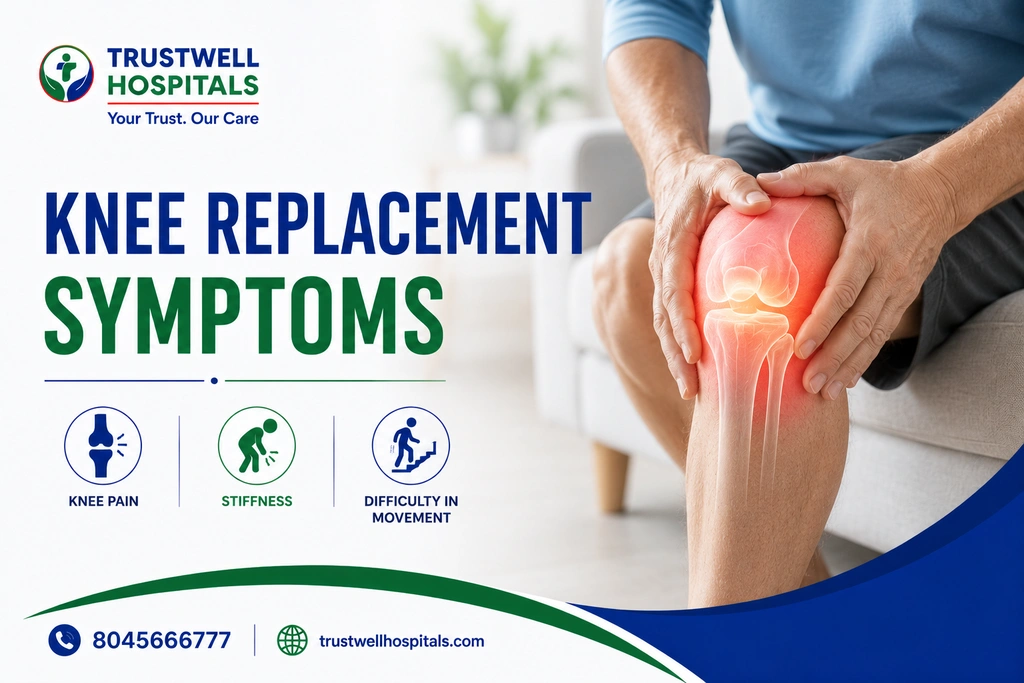
Persistent knee pain, stiffness, swelling, difficulty walking, and reduced knee movement are some of the most common symptoms that may indicate advanced knee arthritis. These symptoms often develop gradually and can become more noticeable as joint damage progresses. Not everyone with knee pain needs knee replacement surgery, and symptoms vary depending on the severity of arthritis and the underlying cause.Several knee conditions can produce similar symptoms, including ligament injuries, meniscus tears, bursitis, and inflammatory arthritis. A thorough evaluation by an orthopaedic specialist helps identify the exact cause and determine the most appropriate treatment.
Common Symptoms of Knee Replacement Candidates Include:
Persistent knee pain
Pain while walking or climbing stairs
Morning stiffness
Swelling around the knee
Reduced range of motion
Knee deformity (bow legs or knock knees)
Difficulty standing from a chair
Knee pain during rest or at night
Reduced walking distance
Difficulty performing everyday activities
Persistent Knee Pain
Ongoing knee pain is often the symptom that affects patients the most. The discomfort may begin during walking or climbing stairs and gradually become noticeable even during routine daily activities.As arthritis progresses, the pain may last longer, become more frequent, and interfere with work, exercise, and overall quality of life.
Pain While Walking or Climbing Stairs
Walking on uneven ground, climbing stairs, or getting up from a seated position places additional pressure on the knee joint. Damaged cartilage may make these movements increasingly uncomfortable.Many patients notice that longer walks become difficult because the knee feels painful, tired, or less stable than before.
Morning Stiffness
The knee may feel stiff after waking up or after sitting for an extended period. The first few steps are often the most uncomfortable before the joint gradually loosens with gentle movement.As arthritis advances, stiffness may last longer and make daily routines more challenging.
Swelling Around the Knee
Inflammation inside the joint may cause swelling that comes and goes or remains present for longer periods. Some patients also notice warmth, tightness, or a feeling of fullness around the knee.Swelling may become more noticeable after prolonged standing, walking, or physical activity.
Reduced Range of Motion
Patients may gradually find it difficult to fully bend or straighten the knee. Limited flexibility can affect simple activities such as sitting cross-legged, kneeling, squatting, or getting in and out of a car.Reduced movement often develops slowly and may become more noticeable over time.
Knee Deformity
Progressive arthritis may gradually change the alignment of the knee. Some patients develop bow-legged (varus) or knock-kneed (valgus) deformities as cartilage wears away unevenly.Changes in alignment can alter walking patterns and place additional stress on other parts of the joint.
Difficulty Standing From a Chair
Standing after prolonged sitting may become increasingly difficult because the knee feels stiff, weak, or painful during the initial movement.Many patients need extra support from their hands or nearby furniture before they feel comfortable walking.
Knee Pain During Rest or at Night
Early arthritis usually causes pain during activity. As joint damage becomes more advanced, discomfort may continue even while resting or trying to sleep.Night pain can affect sleep quality and leave patients feeling tired during the day.
Reduced Walking Distance
Some people notice they can no longer walk the same distance they once could without needing frequent breaks because of knee pain or stiffness.This gradual reduction in mobility may affect shopping, travelling, exercise, and participation in social activities.
Difficulty Performing Everyday Activities
Advanced knee arthritis can make routine tasks more challenging, including household work, climbing stairs, dressing, gardening, or caring for family members.When symptoms begin limiting independence despite appropriate non-surgical treatment, an orthopaedic evaluation helps determine the underlying cause and discuss available management options.
Where Is Knee Pain Usually Felt?
Knee pain caused by advanced arthritis is usually felt deep inside the joint. It commonly affects the front, inner, or outer side of the knee, depending on which compartment is damaged. Some people also notice pain spreading towards the thigh or lower leg, especially after prolonged walking or standing. Symptoms may vary throughout the day and often become worse after weight-bearing activities.
What Causes Knee Replacement Symptoms?
Knee replacement symptoms usually develop when the cartilage that cushions the knee gradually wears away. As the protective cartilage becomes thinner, the bones move closer together, increasing friction during movement and leading to pain, stiffness, and reduced function.
Osteoarthritis
Osteoarthritis is the most common cause of advanced knee joint damage. Over time, cartilage gradually wears away, making movement less smooth and more painful.
Rheumatoid Arthritis
This autoimmune condition causes ongoing inflammation inside the knee joint. Persistent inflammation may damage cartilage and bone, leading to progressive joint deterioration.
Previous Knee Injury
Fractures, ligament injuries, or meniscus tears can increase the likelihood of developing arthritis years after the original injury, particularly if the joint remains unstable.
Knee Deformity
Bow-legged or knock-kneed alignment places uneven pressure on the knee joint. Over many years, this extra stress may accelerate cartilage wear in one part of the knee.
Excess Body Weight
Excess weight places additional pressure on the knee with every step. This increased load may contribute to faster cartilage breakdown and worsening arthritis symptoms.
Avascular Necrosis
Reduced blood supply to the bones around the knee can weaken the joint structure and eventually contribute to cartilage damage and joint degeneration.
Who Is More Likely to Develop Knee Replacement Symptoms?
Although anyone can develop knee arthritis, some people have a higher chance of experiencing symptoms that may eventually require specialist evaluation.People at increased risk include:
Adults over 50 years of age
Individuals with osteoarthritis or rheumatoid arthritis
People who are overweight or obese
Those with previous knee fractures or ligament injuries
Individuals with bow-legged or knock-kneed alignment
People whose jobs involve frequent kneeling, squatting, or heavy lifting
Athletes with repeated knee injuries
People with a family history of arthritis
Can Knee Replacement Symptoms Be Prevented?
Although knee arthritis cannot always be prevented, healthy lifestyle habits may help protect the joints and reduce the risk of worsening symptoms.You may help lower the risk by:
Maintaining a healthy body weight
Exercising regularly to strengthen the muscles around the knee
Choosing low-impact activities such as walking, cycling, or swimming
Preventing knee injuries by using proper techniques during sports and exercise
Managing medical conditions that affect joint health
Wearing supportive footwear during daily activities
Seeking early treatment for persistent knee pain or injuries
Following your doctor’s advice for arthritis management
Doctors diagnose the cause of persistent knee symptoms by combining your medical history, physical examination, and imaging studies. The tests recommended depend on your symptoms, the severity of joint damage, and other possible causes of knee pain.Investigations may include:
Medical history and symptom review
Physical examination of the knee
Standing X-rays
MRI scan (when additional soft tissue evaluation is required)
Blood tests to rule out inflammatory arthritis or infection
Joint fluid analysis in selected cases
Other investigations based on individual clinical findings
What Happens If Knee Replacement Symptoms Do Not Improve?
Some people respond well to conservative treatment, while others may require additional care if symptoms continue to interfere with daily life.Treatment may include:
Activity modification
Weight management
Pain-relieving medicines
Physiotherapy and strengthening exercises
Walking aids when appropriate
Knee injections for selected patients
Joint-preserving procedures in suitable cases
Knee replacement surgery when advanced arthritis significantly limits mobility
The most appropriate treatment depends on the underlying cause rather than the symptoms alone.
How Do Doctors Choose the Right Treatment?
There is no single treatment that works for everyone. Your orthopaedic specialist considers several factors before recommending a treatment plan, including:
Severity of knee pain
Extent of cartilage damage on imaging
Age and activity level
Overall health and medical conditions
Knee alignment and stability
Response to previous treatments
Personal mobility goals and lifestyle
The aim is to select the least invasive treatment that effectively improves pain, function, and quality of life.
How Much Does Treatment Cost?
The cost of treating knee arthritis varies depending on the severity of the condition, investigations required, type of treatment, hospital stay, rehabilitation needs, implants (if surgery is required), and individual medical circumstances. Exact treatment costs are confirmed after clinical evaluation
When Should You See a Doctor?
Mild knee pain does not always require urgent treatment, but certain symptoms should not be ignored.Seek medical evaluation if you experience:
Persistent knee pain lasting several weeks
Pain that interferes with walking or climbing stairs
Swelling that repeatedly returns or does not improve
Difficulty bending or straightening the knee
Knee deformity or increasing instability
Pain during rest or sleep
Reduced ability to perform everyday activities
Symptoms that continue despite medication or physiotherapy
📞 Call 804566 6777
Frequently Asked Questions About Knee Replacement Symptoms
Can knee replacement symptoms come and go?
Yes. Early arthritis symptoms may fluctuate, with some days feeling better than others. However, persistent or progressively worsening symptoms should be assessed by an orthopaedic specialist.
Does cold weather make knee symptoms worse?
Some people notice increased stiffness or discomfort during cold or damp weather. Although weather does not cause arthritis, it may temporarily influence how the joint feels.
Can I continue exercising if my knee hurts?
Low-impact activities such as walking, cycling, or swimming may remain suitable for many people. High-impact exercise should be discussed with your doctor if symptoms are severe.
Can knee arthritis affect both knees?
Yes. Arthritis may develop in one or both knees, although symptoms are not always equally severe on each side.
Is it normal for knee pain to disturb sleep?
Yes. As arthritis progresses, some people experience pain during rest or at night, which can interrupt normal sleep patterns.
Can delayed treatment make symptoms worse?
Persistent joint damage may gradually reduce mobility and increase stiffness over time. Early assessment helps identify appropriate treatment before symptoms become more limiting.
Can knee arthritis be mistaken for another condition?
Yes. Meniscus tears, ligament injuries, bursitis, tendon problems, inflammatory arthritis, and referred pain from the hip or spine can produce similar symptoms. A proper evaluation helps determine the exact cause.
Will every person with severe knee arthritis need knee replacement?
No. Treatment depends on the severity of symptoms, imaging findings, overall health, daily activity level, and response to conservative treatments. Surgery is considered only when clinically appropriate.
Conclusion
Persistent knee pain, stiffness, swelling, reduced movement, and difficulty performing everyday activities may indicate advanced knee arthritis, but these symptoms can also occur with several other knee conditions. A proper medical evaluation is essential to identify the underlying cause.Early diagnosis allows your orthopaedic specialist to recommend the most appropriate treatment, whether that involves lifestyle changes, physiotherapy, medications, joint-preserving procedures, or knee replacement surgery. Seeking timely medical advice may help improve mobility, reduce pain, and maintain your quality of life.