


 Neuro Sciences
 Gastro Sciences
 Kidney Diseases
 Orthopedics
 Transplantation
 ENT and Head-Neck Surgery
 Advanced Trauma Center
 Cardiology
 Interventional Pulmonology
 Hematology and Bone Marrow Transplant(BMT)
 Anesthesia
 Critical Care Excellence: Comprehensive Intensive Care Services in Bangalore
 Dental Surgery and Oral Implants
 Dermatology and Cosmetic Surgery
 Endocrinology and Diabetology
 Facial Plastic and Reconstructive Surgery
 Family Medicine
 Internal Medicine
 Microbiology
 Obstetrics and Gynaecology
 Oncology
 Ophthalmology
 Oral and Maxillofacial Surgery
 Pathology and Laboratory
 Pediatrics
Gallbladder Symptoms: Early Warning Signs, Causes, and When to See a Doctor
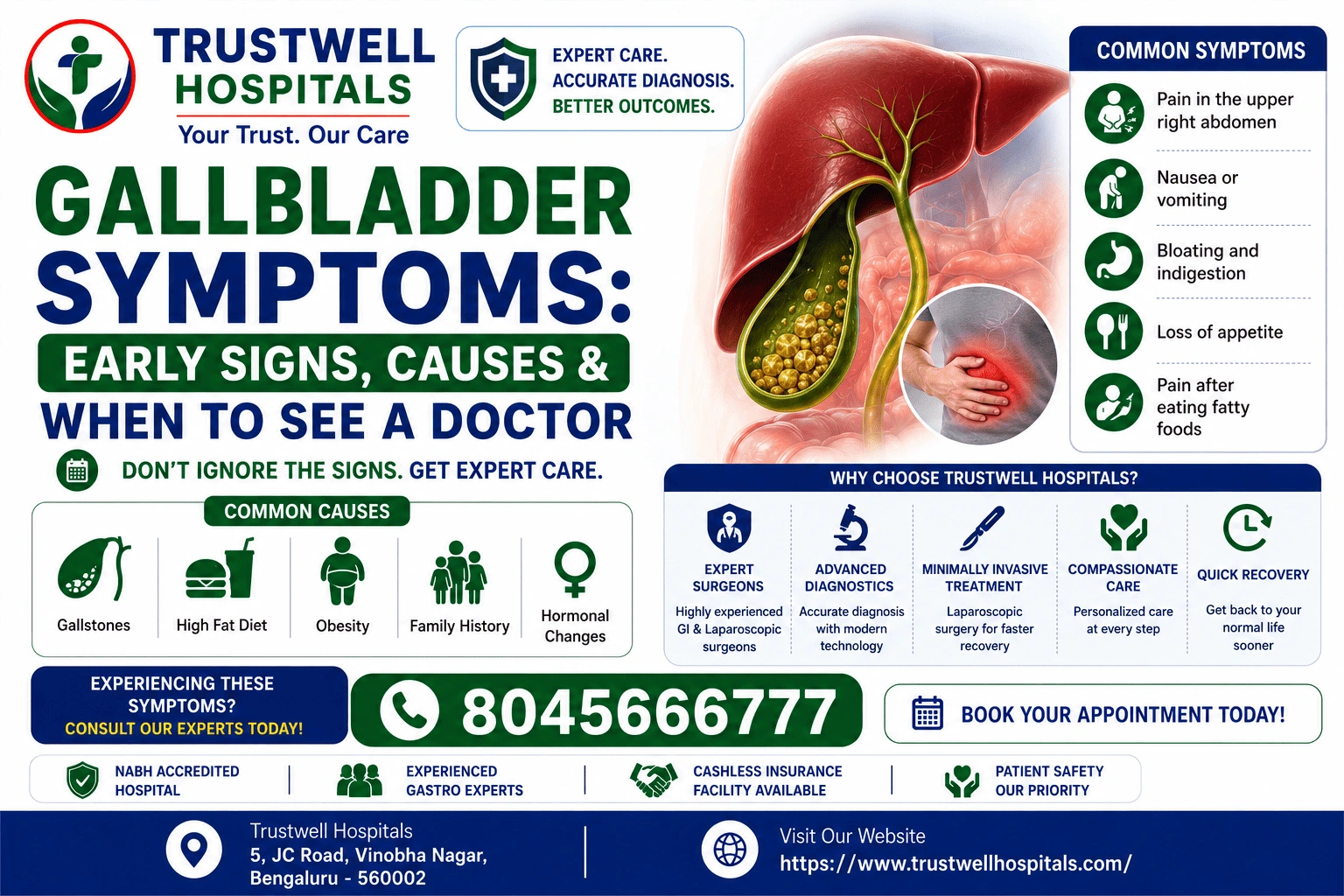
What Does the Gallbladder Do?
The gallbladder stores bile produced by the liver and releases it into the small intestine after meals, particularly when you eat fatty foods. Bile helps digest fats and supports the absorption of certain vitamins. When the gallbladder becomes inflamed or blocked by gallstones, the normal flow of bile is disrupted, leading to pain and digestive symptoms.Early Symptoms of Gallbladder Disease
Gallbladder problems often begin gradually, and symptoms may occur only occasionally in the early stages. Common early warning signs include:- Mild pain in the upper right abdomen
- Discomfort after eating fatty meals
- Bloating
- Indigestion
- Nausea
- Feeling unusually full after meals
Common Gallbladder Symptoms
As gallbladder disease progresses, symptoms usually become more noticeable and frequent.Upper Right Abdominal Pain
Pain in the upper right side of the abdomen is one of the most common symptoms of gallbladder disease. The pain may:- Develop suddenly
- Last from several minutes to several hours
- Worsen after fatty meals
- Spread to the back or right shoulder
- Recur periodically
Pain After Eating Fatty Foods
Many patients notice symptoms shortly after eating foods such as:- Fried foods
- Butter
- Cheese
- Fast food
- Cream-based dishes
Nausea and Vomiting
Gallbladder disease may also cause:- Persistent nausea
- Vomiting during painful episodes
- Loss of appetite
- Digestive discomfort
Bloating and Indigestion
Many patients report:- Feeling overly full after meals
- Excessive gas
- Abdominal bloating
- Frequent belching
- Difficulty digesting fatty foods
Symptoms of an Inflamed Gallbladder (Cholecystitis)
Acute cholecystitis develops when a gallstone blocks the gallbladder, leading to inflammation. Symptoms include:- Severe upper abdominal pain
- Fever
- Chills
- Persistent nausea
- Vomiting
- Tenderness when touching the abdomen
Symptoms of Gallstones
Not all gallstones produce symptoms. Many people have “silent gallstones” that are discovered incidentally during imaging studies. When symptoms occur, they commonly include:- Sudden episodes of abdominal pain
- Pain after eating fatty foods
- Pain radiating to the back
- Nausea
- Vomiting
- Recurrent attacks of biliary colic
What Causes Gallbladder Disease?
Several conditions can affect the gallbladder. Common causes include:- Gallstones
- Gallbladder inflammation
- Bile duct blockage
- Gallbladder polyps
- Infection
- Rarely, gallbladder cancer
Gallbladder Conditions and Their Typical Symptoms
Different gallbladder conditions can cause similar symptoms, but each has its own pattern. The table below provides a simple comparison to help you understand the possible causes of your symptoms. A proper medical evaluation is still necessary for an accurate diagnosis.
| Gallbladder Condition | Typical Symptoms | Common Cause | Medical Attention Needed |
|---|---|---|---|
| Gallstones (Cholelithiasis) | Sudden upper abdominal pain, pain after fatty meals, nausea, vomiting | Stones blocking the normal flow of bile | Consult a doctor if symptoms recur or become severe |
| Acute Cholecystitis | Severe, continuous upper abdominal pain, fever, chills, tenderness, vomiting | Inflammation caused by a blocked gallstone | Urgent medical evaluation is required |
| Bile Duct Blockage | Upper abdominal pain, jaundice, dark urine, pale stools, itching | Gallstone or blockage in the bile duct | Immediate medical attention is recommended |
| Gallbladder Polyps | Often no symptoms; occasionally abdominal discomfort | Small growths inside the gallbladder | Regular monitoring or surgery may be advised depending on size |
| Gallbladder Infection | Fever, severe abdominal pain, nausea, vomiting | Infection associated with gallbladder inflammation | Prompt medical treatment is necessary |
Who Is at Higher Risk?
Certain factors increase the likelihood of developing gallbladder problems. These include:- Women
- Adults over 40 years
- Obesity
- Pregnancy
- Rapid weight loss
- Family history
- High-fat diet
- Diabetes
When Should You See a Doctor?
Although occasional indigestion may not indicate gallbladder disease, persistent or recurrent symptoms should never be ignored. Consult a doctor if you experience:- Recurrent upper abdominal pain
- Pain after eating fatty meals
- Persistent nausea
- Vomiting
- Fever with abdominal pain
- Yellowing of the skin or eyes
- Pain lasting more than a few hours
Emergency Symptoms That Require Immediate Medical Attention
Some gallbladder conditions require urgent treatment. Seek emergency medical care if you develop:- Severe abdominal pain that does not improve
- High fever with chills
- Yellowing of the skin or eyes (jaundice)
- Persistent vomiting
- Confusion
- Severe abdominal tenderness
How Are Gallbladder Problems Diagnosed?
Diagnosing gallbladder disease begins with a detailed medical history and physical examination. Your doctor will ask about the location of your pain, whether it occurs after meals, the duration of symptoms, and any associated fever, nausea, or vomiting. To confirm the diagnosis and determine the underlying cause, several investigations may be recommended. Common diagnostic tests include:- Abdominal ultrasound
- Liver function tests
- Complete blood count (CBC)
- CT scan
- MRI or MRCP (Magnetic Resonance Cholangiopancreatography)
- HIDA scan in selected cases
Treatment Options for Gallbladder Disease
Treatment depends on the underlying cause, the severity of symptoms, and whether complications have developed.Lifestyle and Dietary Changes
Patients with mild symptoms may be advised to:- Eat smaller, more frequent meals
- Limit fatty and fried foods
- Maintain a healthy weight
- Stay hydrated
- Avoid rapid weight-loss diets
Medications
Medications may be used to:- Relieve pain
- Control nausea
- Treat infection if present
- Dissolve cholesterol gallstones in carefully selected patients
Gallbladder Surgery (Cholecystectomy)
For patients with recurrent gallstone attacks, acute cholecystitis, or other significant gallbladder disorders, surgical removal of the gallbladder (cholecystectomy) is the standard treatment. Today, many procedures are performed using minimally invasive techniques, allowing patients to recover more quickly than with traditional open surgery. Patients experiencing recurrent symptoms should consult specialists for Gallbladder Treatment bangalore to determine whether surgery is the most appropriate option.What Happens If Gallbladder Disease Is Left Untreated?
Ignoring recurrent gallbladder symptoms can increase the risk of serious complications. Potential complications include:- Acute cholecystitis
- Gallbladder infection
- Bile duct obstruction
- Jaundice
- Pancreatitis
- Gallbladder perforation
- Recurrent severe pain

