A New Milestone: Successfully accredited with NABH 6th Edition – Redefining standards in healthcare quality and patient safety | Live vitals. Real-time data. Faster care. Trustwell Hospitals unveils Karnataka’s first 5G SMART ambulance |
Find a Doctor Book Online Appointment

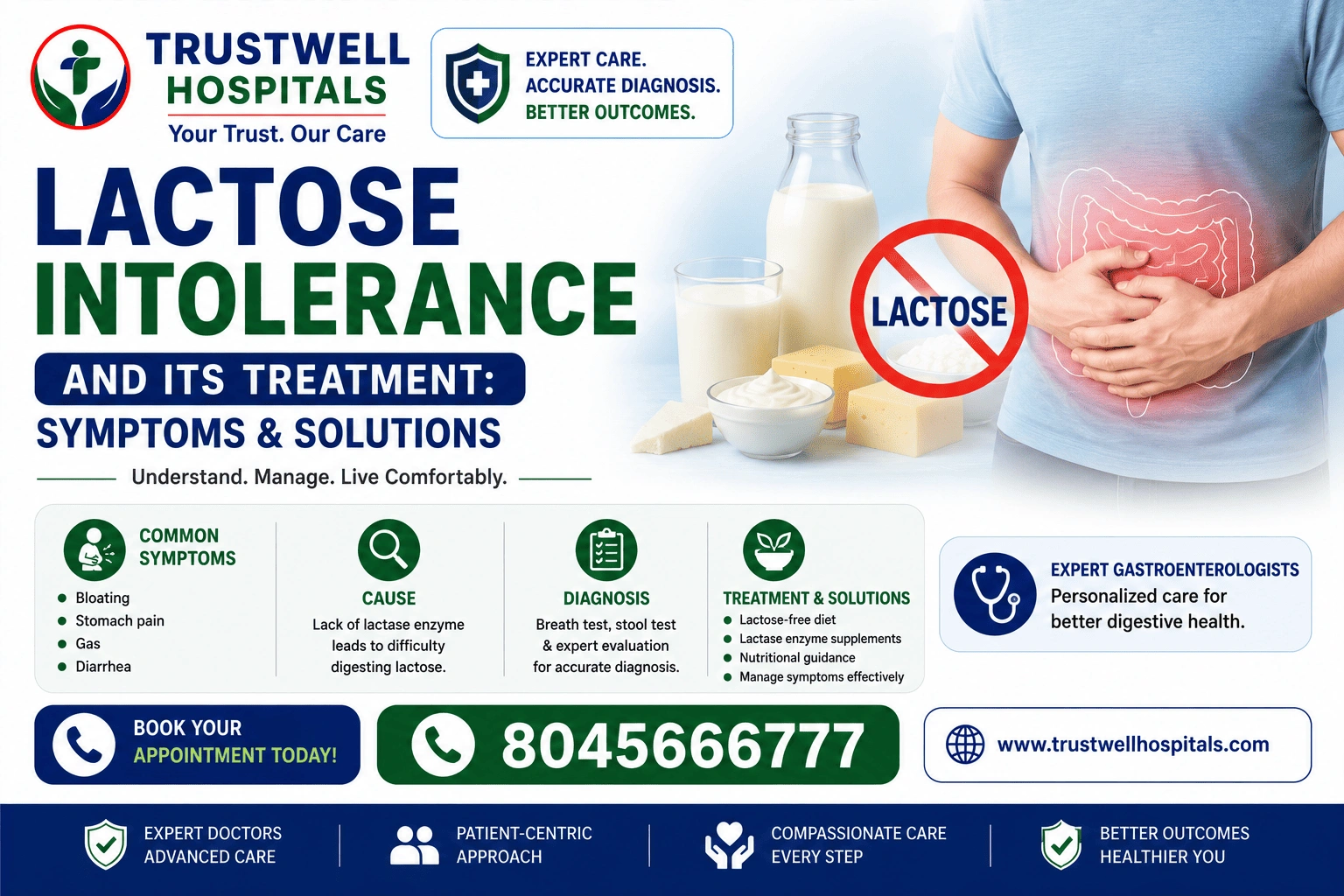
Lactose Intolerance and Its Treatment: Symptoms & Solutions

Lactose Intolerance and Its Solution

lactose intolerance and its treatment

Lactose intolerance is a digestive condition in which the body has difficulty digesting lactose, the natural sugar found in milk and many dairy products. When lactose is not adequately broken down in the small intestine, it can reach the colon, where gut bacteria ferment it and produce symptoms such as bloating, abdominal discomfort, gas, and diarrhoea. The condition can vary considerably between individuals. Some people tolerate small amounts of dairy without difficulty, while others develop symptoms after relatively small quantities. Finding the right approach therefore involves understanding your symptoms, identifying your tolerance level, and maintaining adequate nutrition rather than automatically eliminating every dairy product.

What Is Lactose Intolerance?

Lactose digestion depends on an enzyme called lactase, which is produced in the small intestine. Lactase breaks lactose into simpler sugars that can be absorbed by the body. When lactase production is insufficient, undigested lactose passes into the large intestine. Bacteria there ferment the lactose, producing gases and drawing water into the bowel. This can result in the characteristic symptoms associated with lactose intolerance. Lactose intolerance is different from a milk allergy. A milk allergy involves an immune reaction to proteins in milk, whereas lactose intolerance involves difficulty digesting lactose. Understanding this distinction is important because the dietary approach and medical implications are different.

What Are the Symptoms of Lactose Intolerance?

Symptoms usually develop after consuming milk or foods containing lactose. The timing and severity can differ depending on the amount consumed and the individual’s ability to digest lactose. Common symptoms include:
  • Bloating
  • Abdominal discomfort or cramps
  • Excessive gas
  • Loose stools or diarrhoea
  • Abdominal rumbling
  • Nausea in some people
  • A feeling of fullness after consuming dairy
Symptoms may appear within a few hours after consuming lactose-containing foods. A person may notice symptoms after drinking a glass of milk but tolerate yoghurt or a small amount of cheese. This difference can occur because lactose content varies between dairy products and because some products are digested differently.

Why Does Lactose Intolerance Develop?

Lactose intolerance can occur for several reasons.

Primary Lactose Intolerance

Lactase production naturally decreases in many people after childhood. This is the most common form and is influenced by genetic and population factors.

Secondary Lactose Intolerance

Damage or inflammation affecting the small intestine can temporarily reduce lactase production. Conditions affecting the intestinal lining may therefore result in lactose intolerance. In some cases, tolerance can improve when the underlying intestinal problem is treated.

Congenital Lactose Intolerance

Rarely, a baby is born with very low or absent lactase activity. This is different from the more common forms that develop later in life.

Temporary Lactose Intolerance

Some gastrointestinal illnesses can temporarily affect the intestinal lining and reduce lactose digestion. Tolerance may improve as the intestine recovers.

How Is Lactose Intolerance Diagnosed?

Symptoms alone do not always establish lactose intolerance because bloating, abdominal discomfort, diarrhoea, and gas can occur with many digestive conditions. A doctor may consider:

Medical and Dietary History

Your doctor may ask what dairy products you consume, how much you eat or drink, when symptoms develop, and whether symptoms improve when lactose intake is reduced.

Elimination and Reintroduction

In selected situations, temporarily reducing lactose followed by controlled reintroduction may help determine whether symptoms are related to lactose. This should be done carefully so that unnecessary dietary restriction is avoided.

Hydrogen Breath Test

A hydrogen breath test may be used in appropriate cases. After lactose is consumed, increased hydrogen in exhaled breath can indicate that lactose is not being adequately digested and absorbed. The appropriate diagnostic approach depends on your symptoms and clinical situation.

What Is the Solution for Lactose Intolerance?

There is no single solution that works for everyone. Management generally focuses on controlling symptoms while maintaining adequate nutrition.

Identify Your Personal Tolerance

Many people with lactose intolerance do not need to eliminate all dairy products. The amount of lactose that causes symptoms varies between individuals. Keeping track of which foods cause symptoms and the amount consumed can help identify your tolerance level.

Reduce Lactose Rather Than Automatically Eliminating All Dairy

Some people can continue consuming small portions of dairy without significant symptoms. Gradually identifying what you tolerate may provide a more flexible diet.

Choose Lactose-Free Alternatives

Lactose-free milk and other lactose-free dairy products can provide alternatives for people who experience symptoms with regular milk.

Consider Lactase Enzyme Products

Lactase enzyme products may help some people digest lactose. Their suitability and effectiveness can vary, so discuss their use with a healthcare professional if symptoms are frequent or significant.

Maintain Adequate Calcium and Vitamin D

Reducing dairy intake can lower calcium and vitamin D intake if alternative sources are not included. People who significantly restrict dairy should make sure their diet continues to provide these nutrients through suitable foods or supplements when recommended. For more information specifically focused on managing the condition, read Lactose Intolerance and Its Treatment.

How Can You Manage Lactose Intolerance in Everyday Life?

Managing lactose intolerance does not always mean giving up every dairy product. The most suitable approach depends on how much lactose you can tolerate and whether another gastrointestinal condition is contributing to your symptoms.

Start by Identifying Your Trigger Foods

Keep track of the dairy products you consume and the symptoms that follow. Note the type of product, approximate quantity, and when symptoms begin. This can help you recognise whether your symptoms occur consistently after particular foods or only after larger amounts.

Check Food Labels

Lactose can be present in more products than milk alone. Packaged foods, desserts, sauces, baked goods, and some processed foods may contain milk-derived ingredients. Reading ingredient labels can help you identify products that may contain lactose.

Consider Lactose-Free Dairy Products

Lactose-free milk and other specially prepared dairy products can provide an alternative to regular milk while still supplying nutrients such as protein and calcium. These products can be particularly useful for people who want to continue consuming dairy without experiencing the same symptoms.

Try Smaller Portions

Some people tolerate a small quantity of lactose better than a large serving. Instead of completely eliminating dairy, your doctor or dietitian may help you determine whether smaller portions can be included comfortably.

Consume Dairy With Other Foods

Some people find that consuming dairy as part of a meal is easier to tolerate than drinking a large quantity of milk by itself. Individual responses vary, so observe your own symptoms rather than assuming that one method will work for everyone.

Which Dairy Products May Be Easier to Tolerate?

Lactose content differs between dairy products, so people with lactose intolerance may respond differently to individual foods.

Yoghurt

Some yoghurts may be better tolerated than milk because bacterial cultures can break down part of the lactose during fermentation. However, tolerance varies between products and individuals.

Hard Cheese

Certain aged, hard cheeses contain relatively small amounts of lactose and may be tolerated by some people who cannot comfortably drink milk.

Lactose-Free Milk

Lactose-free milk contains the same milk proteins but has had lactose broken down or removed to make it easier to digest.

Regular Milk

Milk can contain a substantial amount of lactose, so people with significant lactose intolerance may develop symptoms after drinking it. The amount that causes symptoms varies from person to person. The goal is not necessarily to classify foods as universally “safe” or “unsafe.” Your personal tolerance and nutritional requirements should guide dietary choices.

What Nutrients Should You Watch When Reducing Dairy?

Removing or substantially reducing dairy without replacing its nutrients can create nutritional gaps.

Calcium

Calcium is important for maintaining bones and teeth. If you consume little or no dairy, consider other calcium-rich foods such as fortified plant-based beverages, certain leafy vegetables, tofu made with calcium salts, or other suitable sources.

Vitamin D

Vitamin D supports calcium absorption and bone health. Dietary sources and supplementation requirements vary, so discuss your needs with a healthcare professional if your dairy intake is significantly restricted.

Protein

Milk and dairy products can contribute protein to the diet. If you reduce them, include other suitable sources such as pulses, eggs, fish, poultry, soy products, nuts, and seeds according to your dietary preferences.

Overall Dietary Variety

A restrictive diet should still contain a broad range of nutritious foods. Avoid removing multiple food groups unless there is a clear medical reason.

Can Gut Health Affect Lactose Tolerance?

The digestion of lactose occurs primarily through the lactase enzyme in the small intestine, but microorganisms in the colon also influence what happens to undigested lactose after it reaches the large bowel. Gut bacteria ferment lactose and produce gases and other compounds. This fermentation contributes to symptoms such as bloating and abdominal discomfort in people who do not digest lactose effectively. The gut microbiome itself is influenced by diet, medications, lifestyle, and other factors. You can learn more about this relationship in Gut Microbiome and Health. However, changing the microbiome should not be considered a guaranteed way to eliminate lactose intolerance.

Can Stress Make Lactose-Related Symptoms Feel Worse?

Stress and anxiety can influence gastrointestinal function and the way digestive sensations are perceived. A person with lactose intolerance may therefore notice that bloating, abdominal discomfort, or changes in bowel habits become more noticeable during stressful periods. This does not mean that stress causes lactose intolerance. The underlying difficulty digesting lactose remains a separate issue. If you notice a connection between emotional stress and digestive symptoms, Stress, Anxiety and Gut Health provides further information about the gut-brain connection.

What Can You Expect During a Lactose Intolerance Evaluation?

A medical evaluation can help determine whether lactose is actually responsible for your symptoms. Bloating, diarrhoea, abdominal discomfort, and gas can also occur with other digestive conditions, so identifying the pattern is important before making long-term dietary changes.

Discussing Your Symptoms

The specialist may ask when your symptoms occur, how long they last, which dairy products you consume, and whether the severity changes with the amount eaten.

Reviewing Your Medical History

Previous gastrointestinal infections, intestinal conditions, medications, dietary restrictions, and other relevant health problems may be considered during the assessment.

Evaluating Your Diet

Your usual food intake can be reviewed to identify major sources of lactose and determine whether reducing certain foods could affect your nutritional intake.

Considering Diagnostic Testing

When appropriate, your doctor may recommend a hydrogen breath test or another method of assessment. The choice depends on your symptoms and clinical circumstances.

Excluding Other Causes

Symptoms attributed to lactose intolerance can sometimes be caused by other conditions. A proper assessment helps determine whether another gastrointestinal problem should be investigated.

How Can You Prevent Nutritional Deficiencies?

A lactose-restricted diet should still provide sufficient nutrients. This is particularly important for children, adolescents, pregnant women, older adults, and anyone with an existing nutritional concern.

Maintain Calcium Intake

If regular milk and dairy products are reduced, include other appropriate calcium sources. Fortified dairy alternatives can be useful depending on the product and individual dietary needs.

Check Vitamin D Intake

Vitamin D is important for calcium absorption and bone health. Your healthcare professional can advise whether dietary sources are sufficient or whether supplementation should be considered.

Include Protein-Rich Foods

If dairy products were a major source of protein, replace them with suitable alternatives such as pulses, eggs, fish, poultry, soy products, nuts, or seeds.

Avoid Unnecessary Restrictions

Eliminating dairy completely may not be necessary for everyone with lactose intolerance. Finding the amount you can tolerate can make the diet more varied and easier to maintain.

Is Lactose Intolerance the Same as a Milk Allergy?

No. These conditions involve different mechanisms. Lactose intolerance occurs because the body does not adequately digest lactose, the sugar in milk. Milk allergy involves an immune response to proteins in milk and can cause symptoms such as hives, swelling, wheezing, vomiting, or other allergic reactions. Someone with a milk allergy may need to avoid milk proteins entirely, whereas a person with lactose intolerance may be able to tolerate certain dairy products or lactose-free alternatives. If an allergic reaction is suspected, seek appropriate medical evaluation rather than assuming that the problem is lactose intolerance.

Can Lactose Intolerance Improve?

The answer depends on the underlying cause. Primary lactose intolerance is generally related to naturally reduced lactase production and tends to be long-term. Secondary lactose intolerance can sometimes improve when the underlying intestinal condition is treated and the intestinal lining recovers. Temporary changes in lactose tolerance can also occur after certain gastrointestinal illnesses. Because the underlying cause matters, persistent symptoms should be evaluated rather than assuming that lactose intolerance will remain unchanged indefinitely.

What Lifestyle Habits Can Support Better Digestive Comfort?

Diet is important, but digestive comfort can also be influenced by broader lifestyle habits.

Eat Slowly

Taking adequate time to eat may reduce the tendency to swallow excess air and can make meals more comfortable for some people.

Stay Physically Active

Regular movement can support normal bowel function and overall metabolic health. Choose activities that are appropriate for your fitness level.

Maintain Adequate Hydration

Drinking enough fluid supports normal bowel function. Individual requirements vary according to health, activity, climate, and other factors.

Manage Stress

Stress can influence gastrointestinal function and may make digestive sensations more noticeable. Building sustainable stress-management habits can support overall wellbeing.

Maintain a Consistent Routine

Regular meals, sufficient sleep, physical activity, and appropriate hydration can provide a more predictable routine for digestion. For broader information about diet and lifestyle habits that support metabolic and liver health, read Diet and Lifestyle Changes for Fatty Liver.

Frequently Asked Questions

Can lactose intolerance develop after a stomach infection?

Yes. Some gastrointestinal infections can temporarily affect the small intestine and reduce lactase activity. In such cases, lactose tolerance may improve as the intestinal lining recovers.

Can lactose intolerance occur after intestinal surgery?

It can occur in some circumstances if the small intestine is affected by a condition or procedure that alters its ability to digest lactose. The underlying cause should be assessed by a healthcare professional.

Can children have lactose intolerance?

Yes. Lactose intolerance can occur in children, although the cause and nutritional implications may differ from those in adults. Significant dairy restriction in children should be discussed with a paediatrician or qualified dietitian.

Can lactose intolerance cause dehydration?

Diarrhoea associated with lactose intolerance can contribute to fluid loss. If diarrhoea is frequent or severe, maintaining adequate hydration is important and medical advice may be necessary.

Can lactose intolerance cause weight loss?

Lactose intolerance itself does not usually cause unexplained weight loss. If you are losing weight without intending to, particularly alongside persistent digestive symptoms, seek medical evaluation rather than assuming lactose is responsible.

Can lactose intolerance cause constipation?

Lactose intolerance more commonly causes bloating, gas, abdominal discomfort, and diarrhoea. Constipation is not a typical feature, so persistent constipation may require assessment for another cause.

Can lactose intolerance cause headaches?

Headache is not considered a typical symptom of lactose intolerance. If headaches repeatedly occur after eating dairy products, discuss the pattern with a healthcare professional rather than assuming lactose is the cause.

Can lactose intolerance affect everyone who consumes the same amount of milk?

No. Lactose tolerance varies considerably between individuals. The amount of lactase produced, the quantity of lactose consumed, the type of dairy product, and other digestive factors can influence symptoms.

Is lactose intolerance permanent in every person?

No. Primary lactose intolerance tends to be long-term, whereas lactose intolerance caused by temporary intestinal injury or another underlying condition may improve when the underlying problem resolves.

Can I consume dairy again after avoiding it for several months?

Some people may tolerate certain amounts of lactose after a period of restriction, depending on the underlying cause and their individual tolerance. Reintroducing foods gradually and with appropriate professional guidance can help avoid unnecessary long-term restriction. Book an Appointment
Book an Appointment