


 Neuro Sciences
 Gastro Sciences
 Kidney Diseases
 Orthopedics
 Transplantation
 ENT and Head-Neck Surgery
 Advanced Trauma Center
 Cardiology
 Interventional Pulmonology
 Hematology and Bone Marrow Transplant(BMT)
 Anesthesia
 Critical Care Excellence, Comprehensive Intensive Care Services in Bangalore
 Dental Surgery and Oral Implants
 Dermatology and Cosmetic Surgery
 Endocrinology and Diabetology
 Facial Plastic and Reconstructive Surgery
 Family Medicine
 Hepatopancreatobiliary Surgery
 Internal Medicine
 Microbiology
 Obstetrics and Gynaecology
 Oncology
 Ophthalmology
 Oral and Maxillofacial Surgery
 Pathology and Laboratory
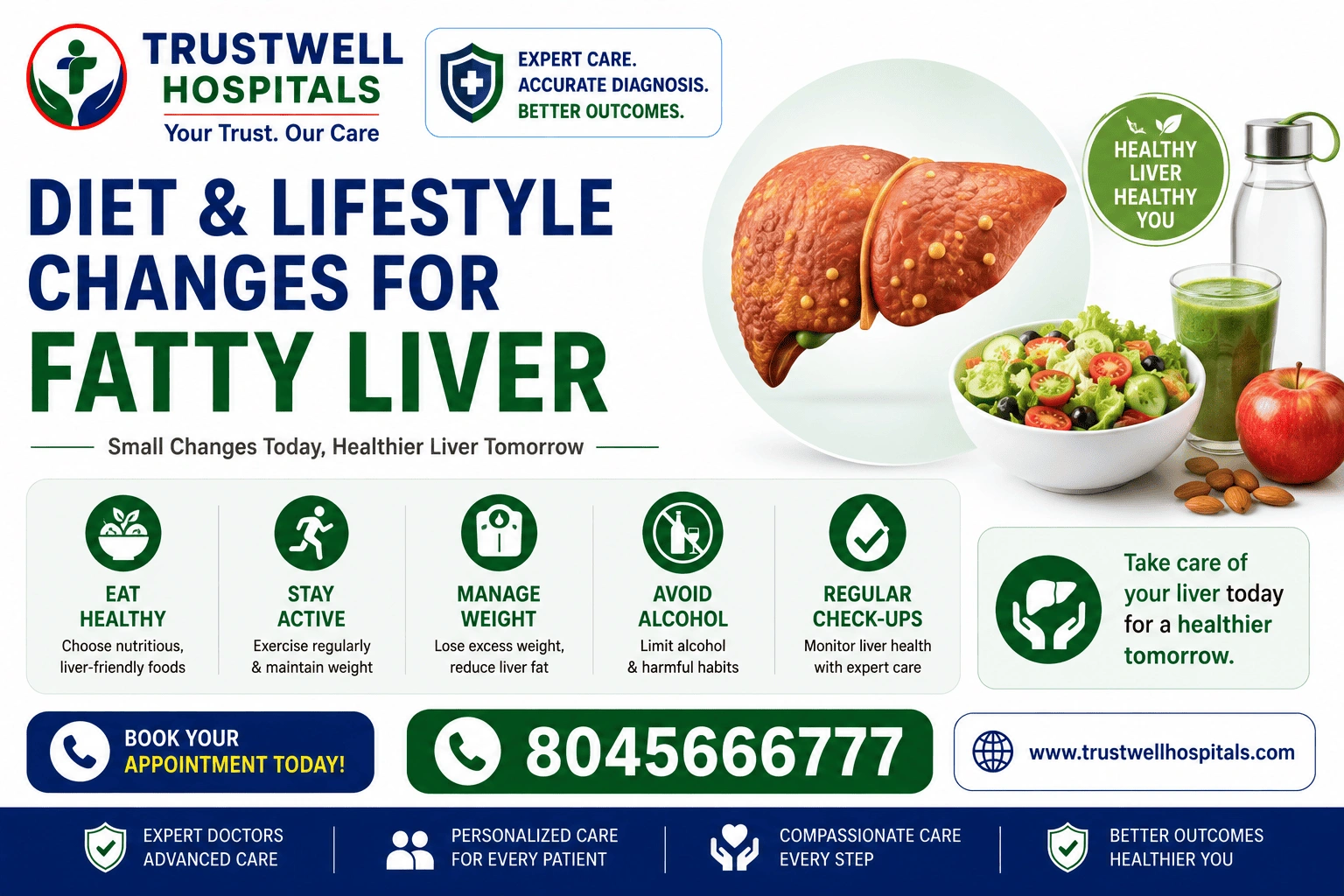
Diet and Lifestyle Changes for Fatty Liver
What Is Fatty Liver?
Fatty liver refers to an excessive accumulation of fat in the liver. It can occur for different reasons, including metabolic factors and alcohol consumption. Metabolic dysfunction-associated steatotic liver disease (MASLD) is one important form associated with conditions such as excess body weight, insulin resistance, type 2 diabetes, and abnormal cholesterol or triglyceride levels. Fatty liver may not always cause noticeable symptoms. Some people discover it during routine blood tests or abdominal imaging performed for another reason. Others may experience tiredness or discomfort in the upper-right abdomen, although these symptoms are not specific to fatty liver. Because the condition can have different causes and degrees of severity, lifestyle changes should complement appropriate medical evaluation rather than replace it.Which Diet Changes Can Support Liver Health?
There is no single food that removes liver fat. Instead, the overall pattern of eating matters. A sustainable diet should provide adequate nutrition while reducing excessive intake of foods associated with metabolic health problems.Choose More Vegetables and Fibre-Rich Foods
Vegetables, fruits, legumes, whole grains, and other fibre-rich foods can form an important part of a balanced eating pattern. They can also help improve overall diet quality and support healthy bowel function. Rather than making one food the focus of the diet, aim for variety across meals.Prefer Whole Grains
Replacing refined grains with whole-grain choices can increase dietary fibre. Options may include oats, brown rice, whole-wheat preparations, millets, and other minimally processed grains according to individual dietary preferences. Portion size still matters, particularly when managing overall calorie intake.Include Appropriate Protein Sources
Protein can be obtained from foods such as pulses, beans, lentils, eggs, fish, poultry, and other suitable sources. Choosing minimally processed protein foods can make meals more balanced. Vegetarian and non-vegetarian diets can both be adapted to support healthier eating patterns.Reduce Added Sugar
Regularly consuming sugary beverages, sweets, desserts, and other foods high in added sugars can contribute excess calories and may make metabolic health harder to manage. Water, unsweetened beverages, and whole foods can be preferable everyday choices.Limit Highly Processed Foods
Frequent consumption of highly processed foods can make it easier to consume excess calories, saturated fat, sodium, and added sugars. Reducing these foods can be a practical part of improving overall dietary quality.Choose Fats Carefully
Dietary fat does not need to be eliminated completely. Instead, focus on overall dietary quality and appropriate portions. Nuts, seeds, fish, and plant-based oils can provide unsaturated fats, while foods high in saturated and trans fats should generally be limited.Be Careful With Portion Sizes
Even nutritious foods can contribute substantial calories when consumed in large quantities. Portion awareness can therefore be useful, particularly for people who need to lose weight as part of fatty liver management.Can Physical Activity Help With Fatty Liver?
Yes. Regular physical activity can support metabolic health and may help reduce liver fat. Exercise can be useful even when substantial weight loss does not occur. A combination of aerobic activity and muscle-strengthening exercise can be incorporated according to fitness level, age, existing health conditions, and medical advice. Examples include:- Brisk walking
- Cycling
- Swimming
- Dancing
- Strength exercises
- Other enjoyable activities that can be performed consistently
How Does Weight Management Relate to Fatty Liver?
For people with overweight or obesity, gradual and sustainable weight loss may help reduce liver fat and improve metabolic health. The appropriate target varies from person to person and should take into account medical conditions, nutritional needs, medications, and lifestyle. Crash diets and extreme food restrictions are generally difficult to maintain. A better approach is often to make manageable changes to food portions, meal composition, physical activity, and other daily habits. Patients should discuss an appropriate weight-management plan with a qualified healthcare professional, particularly if they have diabetes, other chronic conditions, or are taking regular medication.Can Alcohol Affect Fatty Liver?
Alcohol intake is an important consideration when discussing liver health. Alcohol-related liver disease and metabolic fatty liver are not the same condition, although alcohol can contribute to liver injury. If you have been diagnosed with fatty liver, discuss your alcohol consumption with your doctor rather than assuming that a particular amount is appropriate for you. Depending on the underlying cause and degree of liver involvement, your doctor may recommend avoiding alcohol completely.What Foods Should You Limit With Fatty Liver?
Rather than following a highly restrictive diet, focus on reducing foods that can make it harder to maintain metabolic health.Sugary Drinks
Soft drinks, sweetened juices, energy drinks, flavoured beverages, and other drinks containing substantial amounts of added sugar can add calories without providing much nutritional value. Choosing water or unsweetened drinks more often can be a simple everyday change.Sweets and Desserts
Frequent consumption of sweets, cakes, pastries, biscuits, and other sugar-rich foods can increase overall calorie intake. These foods can be kept occasional rather than forming a regular part of the diet.Deep-Fried Foods
Fried snacks and heavily fried meals can be calorie-dense. Limiting them can help improve the overall quality of the diet.Processed Meat
Processed meats such as sausages and other heavily processed meat products can be limited in favour of less processed protein sources.Refined Carbohydrates
Large portions of refined carbohydrates such as white bread, refined flour products, and highly processed snack foods can make it more difficult to maintain a balanced dietary pattern.Excessive Saturated Fat
Foods particularly high in saturated fat should generally be consumed less frequently. Replacing some of these choices with sources of unsaturated fat can support a healthier overall dietary pattern.Does Coffee Have a Role in Liver Health?
Coffee is commonly studied in relation to liver health, and observational research has associated coffee consumption with several favourable liver outcomes. However, coffee should not be considered a treatment for fatty liver. If you already drink coffee, discuss the amount and preparation with your healthcare professional, particularly if caffeine worsens reflux, anxiety, sleep problems, or other symptoms.Can Gut Health Influence Overall Metabolic Health?
The digestive system and liver are closely connected through the gut-liver axis. The microorganisms living in the digestive tract interact with food, metabolism, immune responses, and other processes that can influence overall health. Dietary fibre from vegetables, fruits, legumes, and whole grains can support a diverse gut environment. For a broader explanation of this relationship, you can read Gut Microbiome and Health.Can Stress and Sleep Affect Lifestyle Management?
Stress can influence eating behaviour, physical activity, sleep, and the ability to maintain healthy routines. Poor sleep can also make it harder for some people to maintain consistent lifestyle habits. Managing stress does not directly replace treatment for fatty liver, but developing a sustainable routine can support broader metabolic health. If stress is affecting digestive symptoms or daily habits, stress, anxiety and gut health provides additional information on the relationship between mental wellbeing and digestive health.Build Sustainable Habits
Instead of changing everything at once, choose a few practical habits that can be maintained over time. For example:- Replace sugary drinks with water more often.
- Add vegetables to regular meals.
- Choose whole grains more frequently.
- Include an appropriate protein source with meals.
- Reduce frequent fried-food consumption.
- Schedule regular physical activity.
- Maintain a consistent sleep routine.
- Monitor alcohol intake with medical guidance.

