


 Neuro Sciences
 Gastro Sciences
 Kidney Diseases
 Orthopedics
 Transplantation
 ENT and Head-Neck Surgery
 Advanced Trauma Center
 Cardiology
 Interventional Pulmonology
 Hematology and Bone Marrow Transplant(BMT)
 Anesthesia
 Critical Care Excellence, Comprehensive Intensive Care Services in Bangalore
 Dental Surgery and Oral Implants
 Dermatology and Cosmetic Surgery
 Endocrinology and Diabetology
 Facial Plastic and Reconstructive Surgery
 Family Medicine
 Hepatopancreatobiliary Surgery
 Internal Medicine
 Microbiology
 Obstetrics and Gynaecology
 Oncology
 Ophthalmology
 Oral and Maxillofacial Surgery
 Pathology and Laboratory
Stress, Anxiety and Gut Health
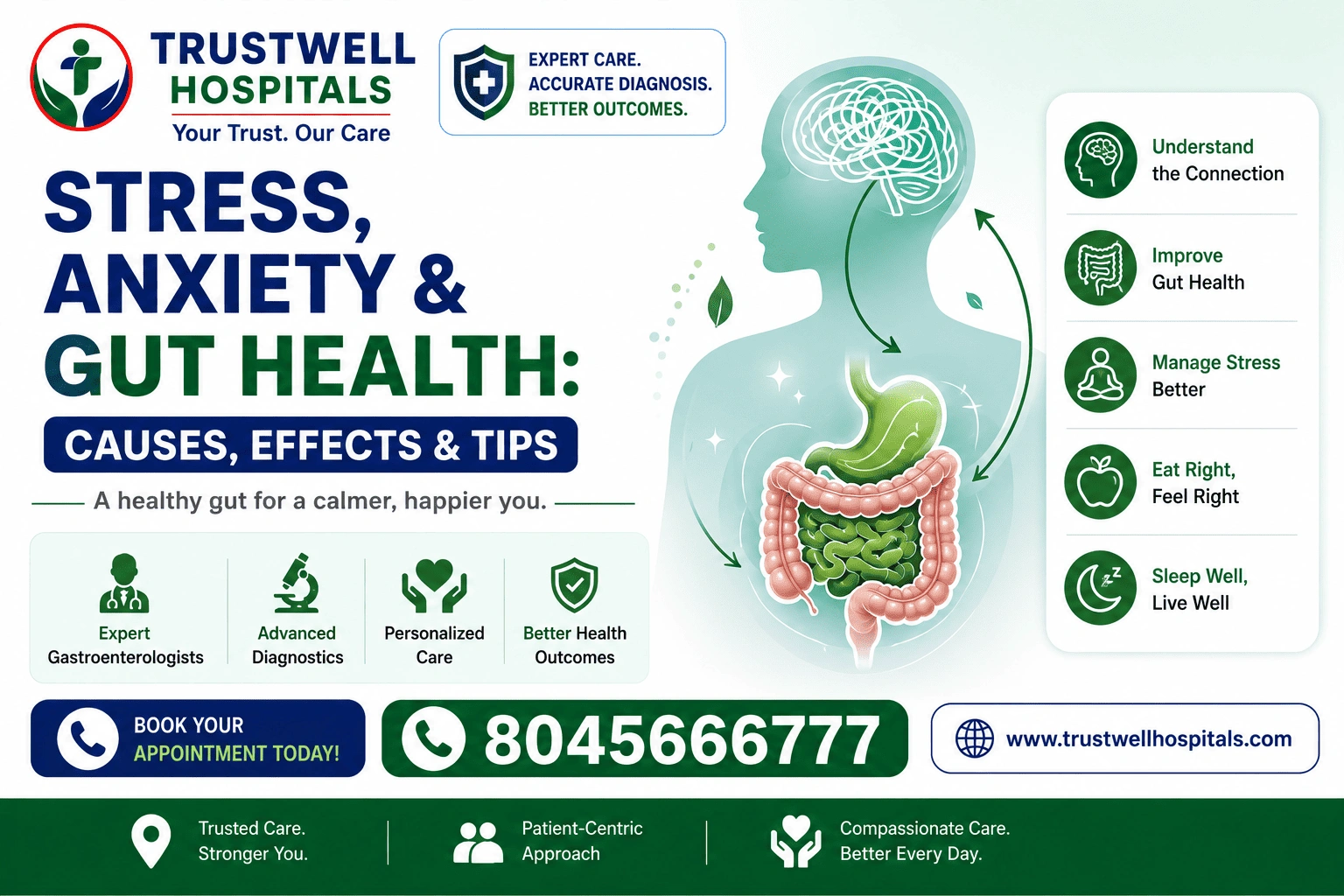
How Are Stress, Anxiety and the Gut Connected?
The brain and gastrointestinal tract communicate through several pathways involving the nervous system, hormones, immune responses, and signals from the gut environment. When you experience stress, the body responds by activating systems designed to help you deal with a perceived challenge. These responses can influence digestive activity. For example, stress may affect:- Movement of food through the digestive tract
- Intestinal sensitivity
- Appetite and eating patterns
- Bowel frequency
- Perception of abdominal discomfort
- Sleep quality
- The gut’s microbial environment
What Digestive Symptoms Can Stress Trigger?
Stress does not cause every gastrointestinal problem, but it can influence digestive function and may worsen symptoms in some people.Bloating
Some people notice increased bloating during stressful periods. Changes in eating speed, food choices, bowel habits, and intestinal sensitivity may all contribute.Abdominal Discomfort
Stress can alter how the nervous system processes signals from the digestive tract. As a result, sensations that might otherwise be less noticeable can feel more uncomfortable.Constipation
Changes in routine, reduced physical activity, altered eating patterns, and stress-related changes in bowel function can contribute to constipation in some people.Diarrhoea
Stress can accelerate intestinal movement in some individuals, potentially resulting in loose stools or more frequent bowel movements.Nausea
Anxiety can be accompanied by nausea or a feeling of uneasiness in the stomach. However, recurring nausea should not automatically be considered stress-related.Appetite Changes
Stress can affect appetite in different ways. Some people eat more frequently or crave certain foods, while others experience reduced appetite.What Is the Gut-Brain Axis?
The gut-brain axis refers to the two-way communication between the gastrointestinal system and the brain. Signals can travel through neural, hormonal, immune, and metabolic pathways. The vagus nerve is one important communication route between the brain and digestive tract. Other signals involve hormones and immune mediators. The gut microbiome is also being studied as part of this complex relationship. Microorganisms in the digestive tract interact with the intestinal environment and produce metabolites that may influence biological processes. For a broader explanation, read Gut Microbiome and Health.Can Anxiety Make Digestive Symptoms Feel Worse?
Yes, anxiety can influence how a person experiences gastrointestinal sensations. Increased attention to bodily sensations can make normal digestive activity feel more noticeable or uncomfortable. For someone already experiencing a gastrointestinal condition, anxiety may also make symptoms more difficult to manage. However, this does not mean that the symptoms are imaginary or that they should simply be ignored. The physical sensations are real, and persistent symptoms deserve appropriate attention.Can Lifestyle Habits Help Reduce Stress-Related Digestive Symptoms?
Stress management does not mean that every digestive symptom will disappear, but healthier daily routines may help some people manage symptoms and maintain more consistent digestive habits.Maintain Regular Meals
Skipping meals or eating irregularly during stressful periods can affect appetite and digestive routines. Try to maintain reasonably consistent meal times and choose balanced meals that provide adequate nutrition. Eating slowly and avoiding rushed meals may also make eating more comfortable.Stay Physically Active
Regular physical activity can support both mental and digestive wellbeing. Walking, cycling, swimming, yoga, strength training, or another activity you enjoy can be incorporated according to your fitness level and medical circumstances. Even shorter periods of movement during a busy day can be useful when prolonged sitting has become part of your routine.Prioritise Sleep
Stress and poor sleep can reinforce each other. Establishing a consistent sleep and wake schedule, limiting stimulating activities close to bedtime, and creating a comfortable sleeping environment may support better rest. Improving sleep can also make it easier to maintain regular meals and physical activity.Practise Relaxation Techniques
Different people respond to different approaches. Breathing exercises, meditation, yoga, progressive muscle relaxation, journaling, or quiet activities may help reduce stress for some individuals. The aim is not to eliminate all stress but to develop practical ways of responding to it.Stay Hydrated
Adequate fluid intake supports normal bowel function. Water can be a simple choice throughout the day, although individual fluid requirements vary depending on factors such as activity, climate, and health.Can Diet Influence Stress and Gut Health?
Diet can influence digestive function, while stress can affect eating behaviour. During stressful periods, some people may rely more heavily on highly processed foods, sugary drinks, or irregular meals. A varied diet containing vegetables, fruits, whole grains, legumes, nuts, and seeds can provide dietary fibre and other nutrients that support overall digestive health. For practical information about dietary habits and liver health, you can read Diet and Lifestyle Changes for Fatty Liver.Fibre-Rich Foods
Dietary fibre supports normal bowel function and provides substrates for fermentation by some gut microorganisms. Increase fibre gradually if your current intake is low, as a sudden increase can cause temporary bloating in some people.Fermented Foods
Certain fermented foods contain live microorganisms. Yoghurt and some traditionally fermented foods can be included when they are well tolerated. However, fermented foods should not be considered a universal treatment for stress-related digestive symptoms.Limit Excessive Caffeine
Caffeine can affect people differently. For some, large amounts may worsen anxiety, sleep problems, heartburn, or bowel symptoms. If you notice a connection between caffeinated drinks and your symptoms, discuss the pattern with a healthcare professional.Be Careful With Alcohol
Alcohol can affect sleep, mood, and gastrointestinal function. It can also be relevant to liver health. If you have a liver condition or regularly consume alcohol, discuss your intake with your doctor.Can the Gut Microbiome Be Affected by Stress?
Research suggests that stress can interact with the gut environment and the microorganisms living in the digestive tract. The relationship is complex and works in both directions. The microbiome can influence processes involving the gut and nervous system, while stress-related changes in hormones, immune activity, diet, and bowel function may influence the intestinal environment. This does not mean that stress creates a single type of “bad bacteria.” Gut microbiome composition varies naturally between individuals and changes in response to numerous factors. Supporting the microbiome is therefore better approached through overall dietary variety, adequate fibre, physical activity, sleep, and appropriate medical care rather than trying to eliminate individual microorganisms.What If Certain Foods Trigger Digestive Symptoms During Stress?
Keep track of recurring patterns instead of immediately removing multiple foods from your diet. You may note:- What you ate
- When symptoms began
- The type of symptoms experienced
- How long they lasted
- Whether the symptoms occurred during a stressful period
- Any recent medication or antibiotic use
- Changes in bowel habits
How Can You Build a Gut-Friendly Routine During Stressful Periods?
When stress becomes part of everyday life, maintaining basic routines can be more realistic than trying to make several major lifestyle changes at once. Consistency can help keep meals, sleep, movement, and bowel habits more predictable.Create a Simple Daily Structure
Work pressure, travel, deadlines, or personal responsibilities can disrupt normal routines. Having reasonably consistent times for meals, physical activity, and sleep can make healthy habits easier to maintain.Take Breaks During Long Work Periods
Long periods of uninterrupted work can encourage rushed meals, prolonged sitting, and reduced physical activity. Short breaks to walk, stretch, breathe, or step away from work can help introduce movement and relaxation into the day.Eat Without Rushing
Eating quickly while working or dealing with stressful situations can make it harder to notice hunger and fullness signals. When possible, give yourself enough time to eat without simultaneously dealing with work or other demanding tasks.Avoid Using Food as the Main Stress Response
Some people eat more when stressed, while others lose their appetite. Recognising your own pattern can help you identify when emotional stress is influencing food choices. If stress regularly affects eating, sleep, or daily functioning, addressing the underlying stress may be more useful than repeatedly changing your diet.Can Stress Worsen Existing Gastrointestinal Conditions?
Stress can influence symptoms in people who already have gastrointestinal conditions, although it is not necessarily the underlying cause of the disease. For example, people with functional gastrointestinal disorders may notice changes in abdominal discomfort or bowel habits during stressful periods. People with other digestive conditions may also experience fluctuations in symptoms. Stress management should therefore be considered alongside appropriate medical treatment rather than as a replacement for it.Irritable Bowel Syndrome
IBS is one condition in which communication between the brain and digestive tract is particularly relevant. Symptoms can include abdominal pain, bloating, constipation, diarrhoea, or changes between bowel patterns.Functional Dyspepsia
Some people experience recurring upper abdominal discomfort, early fullness, or indigestion without an obvious structural explanation. Stress and psychological factors may influence symptom severity in some individuals.Other Gastrointestinal Conditions
People with inflammatory bowel disease, reflux, food intolerance, or other digestive conditions may also notice changes in symptoms during periods of stress. The underlying condition still requires appropriate evaluation and management.What Is the Difference Between Stress-Related Symptoms and a Digestive Disorder?
It is not always possible to distinguish them based on symptoms alone. A digestive symptom that appears during a stressful period may still have a physical cause. Conversely, stress can influence genuine gastrointestinal symptoms without being the only underlying factor. A healthcare professional may consider:- How long the symptoms have been present
- Whether they occur repeatedly
- Their relationship with meals
- Changes in bowel habits
- Medication use
- Previous gastrointestinal conditions
- Family medical history
- Other symptoms occurring at the same time
When Should You Seek Medical Advice for Digestive Symptoms?
Occasional digestive discomfort may settle without medical intervention. However, persistent, recurring, or unexplained symptoms should be discussed with a healthcare professional. Seek appropriate medical assessment if you experience symptoms such as:- Persistent or worsening abdominal pain
- Repeated vomiting
- Blood in the stool
- Black or tar-like stools
- Unexplained weight loss
- Ongoing difficulty swallowing
- Persistent diarrhoea
- Continuing constipation that does not improve
- Significant changes in your usual bowel pattern
- Symptoms that repeatedly wake you from sleep

