


 Neuro Sciences
 Gastro Sciences
 Kidney Diseases
 Orthopedics
 Transplantation
 ENT and Head-Neck Surgery
 Advanced Trauma Center
 Cardiology
 Interventional Pulmonology
 Hematology and Bone Marrow Transplant(BMT)
 Anesthesia
 Critical Care Excellence: Comprehensive Intensive Care Services in Bangalore
 Dental Surgery and Oral Implants
 Dermatology and Cosmetic Surgery
 Endocrinology and Diabetology
 Facial Plastic and Reconstructive Surgery
 Family Medicine
 Internal Medicine
 Microbiology
 Obstetrics and Gynaecology
 Oncology
 Ophthalmology
 Oral and Maxillofacial Surgery
 Pathology and Laboratory
 Pediatrics
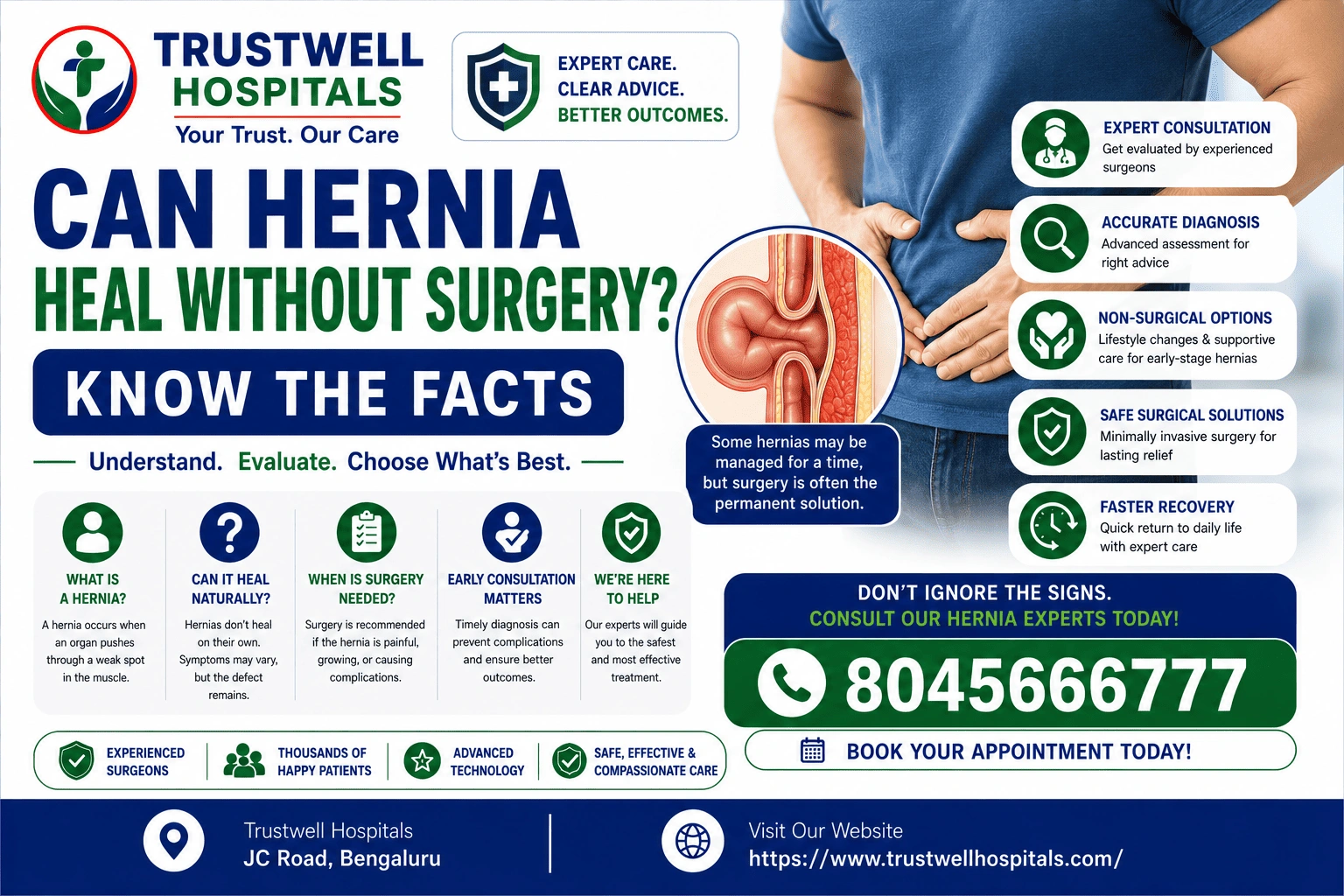
Can Hernia Heal Without Surgery? Understanding Your Treatment Options
What Is a Hernia?
A hernia develops when part of an internal organ or tissue protrudes through a weak area in the muscle or connective tissue that normally holds it in place. Hernias can occur in different parts of the body, but they most commonly affect the abdominal wall. The most common types include:- Inguinal hernia
- Femoral hernia
- Umbilical hernia
- Incisional hernia
- Hiatal hernia
What Causes a Hernia?
A hernia usually develops because of increased pressure inside the abdomen combined with weakness in the abdominal wall. Common risk factors include:- Heavy lifting
- Chronic coughing
- Obesity
- Pregnancy
- Chronic constipation
- Aging
- Previous abdominal surgery
- Family history
- Smoking
Common Symptoms of a Hernia
Symptoms vary depending on the type and size of the hernia. Many patients notice:- A visible bulge
- Swelling that becomes more noticeable while standing
- Pain or discomfort when lifting heavy objects
- Pressure in the groin or abdomen
- Burning or aching sensation
- Pain after prolonged standing
- Increasing discomfort during physical activity
Can a Hernia Heal on Its Own?
The simple answer is no. Unlike muscle strains or minor injuries, a hernia does not heal naturally because the weakness in the abdominal wall does not repair itself. Once tissue has pushed through the weakened muscle, the opening usually remains unless it is surgically repaired. Although symptoms may temporarily improve with rest or activity modification, the underlying defect remains present.Can Medicines Cure a Hernia?
No medication can permanently repair a hernia. Doctors may prescribe medicines to help control symptoms associated with certain types of hernias. For example:- Pain relievers may reduce discomfort.
- Acid-reducing medications may help patients with hiatal hernias.
- Stool softeners may reduce straining in patients with abdominal wall hernias.
Can Lifestyle Changes Help?
Lifestyle changes cannot cure a hernia, but they may reduce symptoms and slow progression in some patients. Doctors often recommend:- Maintaining a healthy weight
- Avoiding heavy lifting
- Preventing constipation
- Eating a fiber-rich diet
- Quitting smoking
- Treating chronic cough
- Exercising safely under medical guidance
What About Hernia Belts or Trusses?
Some patients use abdominal binders or hernia belts to temporarily support the weakened area. These devices may:- Reduce discomfort during daily activities
- Help support the hernia temporarily
- Improve comfort before surgery
When Is Surgery Recommended?
Surgery is generally recommended because it is the only treatment that permanently repairs the weakened abdominal wall. Doctors commonly advise surgery when patients experience:- Increasing pain
- Enlarging hernia
- Difficulty performing daily activities
- Recurrent discomfort
- Hernia that cannot be pushed back inside
- Signs of bowel obstruction
- Complications such as strangulation
Watchful Waiting vs Hernia Surgery
Not every hernia requires immediate surgery. In some cases, your doctor may recommend regular monitoring, while in others, surgery is the safest and most effective option.
| Situation | Watchful Waiting May Be Suitable | Surgery Is Usually Recommended |
|---|---|---|
| Symptoms | Mild or no symptoms | Persistent pain, discomfort, or worsening symptoms |
| Hernia Size | Small and stable | Enlarging or noticeable increase in size |
| Daily Activities | No limitation in normal activities | Hernia affects work, exercise, or daily routine |
| Risk of Complications | Low risk based on medical assessment | Increased risk of incarceration or strangulation |
| Pain Level | Occasional mild discomfort | Frequent or severe pain |
| Medical Follow-up | Regular check-ups are essential | Surgical evaluation and treatment planning are needed |
| Long-Term Outcome | Hernia remains but is monitored | Hernia is repaired by strengthening the weakened abdominal wall |
What Happens If You Delay Hernia Surgery?
Some hernias remain stable for months or even years, while others gradually become larger. Delaying treatment may increase the risk of complications such as:- Enlargement of the hernia
- Persistent pain
- Difficulty reducing the hernia
- Intestinal obstruction
- Incarcerated hernia
- Strangulated hernia requiring emergency surgery
What Is Laparoscopic Hernia Surgery?
Today, many hernias can be repaired using minimally invasive techniques. During Laparoscopic Hernia Surgery in Bangalore, the surgeon repairs the weakened abdominal wall through small incisions using specialized instruments and a camera. Compared with open surgery, laparoscopic repair offers several advantages:- Smaller incisions
- Less postoperative pain
- Faster recovery
- Shorter hospital stay
- Reduced risk of wound complications
- Earlier return to normal activities
Can Every Hernia Be Managed Without Surgery?
Although some patients with very small, minimally symptomatic hernias may be monitored under medical supervision, observation does not mean the hernia has healed. Regular follow-up allows doctors to monitor changes in size or symptoms and determine the right time for surgical repair if needed. For most abdominal wall hernias, surgery remains the only definitive treatment because it repairs the underlying weakness rather than simply relieving symptoms.Recovery After Hernia Surgery
Recovery varies depending on the type of hernia, the surgical technique used, and your overall health. Most patients who undergo laparoscopic hernia repair experience less discomfort and recover more quickly than those who have traditional open surgery. After surgery, your doctor may advise you to:- Walk regularly to improve circulation.
- Avoid heavy lifting for several weeks.
- Keep the surgical wound clean and dry.
- Eat a balanced, fiber-rich diet to prevent constipation.
- Stay well hydrated.
- Attend scheduled follow-up appointments.
- Gradually return to normal physical activities as recommended.
Can a Hernia Come Back After Surgery?
Modern hernia repair techniques have excellent success rates, but no procedure can completely eliminate the possibility of recurrence. Factors that may increase the risk of a recurrent hernia include:- Obesity
- Smoking
- Chronic coughing
- Heavy lifting before complete healing
- Poor wound healing
- Uncontrolled diabetes
- Chronic constipation
When Is a Hernia a Medical Emergency?
Most hernias develop gradually, but some can become life-threatening if the blood supply to the trapped tissue is interrupted. Seek immediate medical attention if you experience:- Sudden severe abdominal or groin pain
- A painful bulge that cannot be pushed back
- Redness or discoloration over the swelling
- Fever
- Persistent nausea or vomiting
- Abdominal swelling
- Inability to pass stools or gas
Conditions That Can Be Mistaken for a Hernia
Not every lump or abdominal pain is caused by a hernia. Several digestive and abdominal conditions can produce similar symptoms. These include:- Gallstones
- Appendicitis
- Enlarged lymph nodes
- Lipomas
- Muscle strains
- Gastrointestinal disorders
- Ovarian conditions in women

