


 Neuro Sciences
 Gastro Sciences
 Kidney Diseases
 Orthopedics
 Transplantation
 ENT and Head-Neck Surgery
 Advanced Trauma Center
 Cardiology
 Interventional Pulmonology
 Hematology and Bone Marrow Transplant(BMT)
 Anesthesia
 Critical Care Excellence: Comprehensive Intensive Care Services in Bangalore
 Dental Surgery and Oral Implants
 Dermatology and Cosmetic Surgery
 Endocrinology and Diabetology
 Facial Plastic and Reconstructive Surgery
 Family Medicine
 Internal Medicine
 Microbiology
 Obstetrics and Gynaecology
 Oncology
 Ophthalmology
 Oral and Maxillofacial Surgery
 Pathology and Laboratory
 Pediatrics
GERD Symptoms: Early Warning Signs You Should Never Ignore
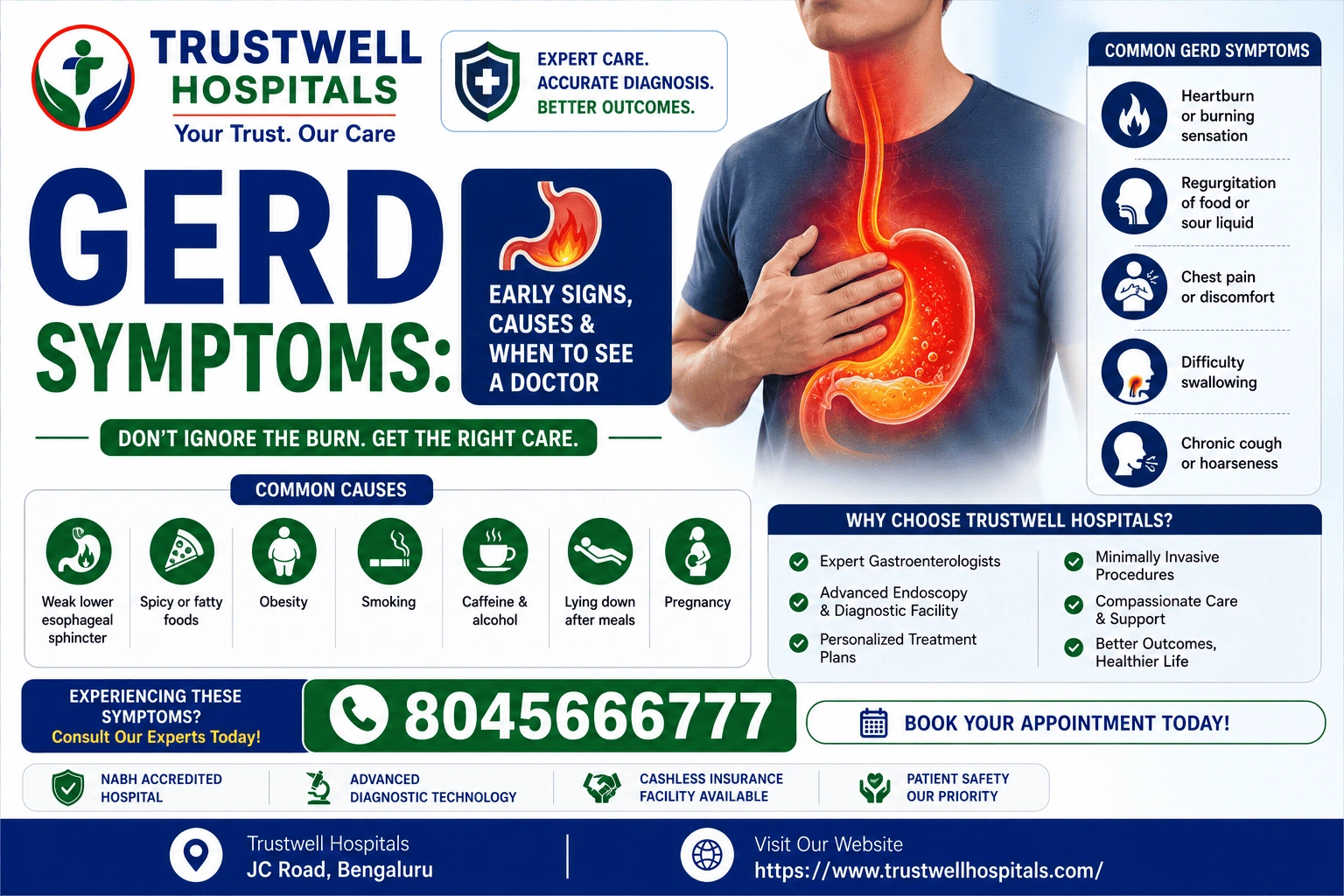
What Is GERD?
GERD (Gastroesophageal Reflux Disease) is a long-term condition that occurs when stomach acid repeatedly flows backward into the esophagus. This happens when the lower esophageal sphincter (LES)—the valve between the esophagus and stomach—becomes weak or relaxes inappropriately. While occasional acid reflux is common, GERD is diagnosed when reflux becomes frequent, causes troublesome symptoms, or damages the lining of the esophagus. Without appropriate treatment, GERD can become a chronic condition requiring lifestyle modifications, medication, or, in selected cases, surgery.Acid Reflux vs GERD: What’s the Difference?
| Feature | Occasional Acid Reflux | GERD (Gastroesophageal Reflux Disease) |
|---|---|---|
| How often does it occur? | Occasionally, usually after a heavy or spicy meal | More than twice a week or frequently over several weeks |
| Duration | Lasts for a short time and improves on its own | Symptoms keep returning and may become chronic |
| Common Symptoms | Heartburn, mild acid reflux | Heartburn, acid regurgitation, chest discomfort, chronic cough, sore throat, hoarseness, difficulty swallowing |
| Triggers | Large meals, spicy foods, lying down after eating | Triggered by food but also caused by a weakened lower esophageal sphincter (LES) |
| Impact on Daily Life | Usually does not affect daily activities | May interfere with sleep, eating, work, and overall quality of life |
| Risk of Complications | Very low | Can lead to esophagitis, ulcers, Barrett’s esophagus, narrowing of the esophagus, and other complications if left untreated |
| Treatment | Lifestyle changes or occasional antacids | Lifestyle modifications, prescribed medications, and in some cases, surgery |
| When to See a Doctor | If symptoms become frequent or severe | Prompt medical evaluation is recommended for persistent or worsening symptoms |
Common GERD Symptoms
GERD symptoms vary from person to person. Some patients experience classic heartburn, while others develop throat, respiratory, or chest-related symptoms. The most common symptoms include:Heartburn
Heartburn is the hallmark symptom of GERD. It is typically described as a burning sensation behind the breastbone that may worsen:- After eating
- While lying down
- At night
- After bending forward
- Following large or fatty meals
Acid Regurgitation
Many GERD patients experience acid or partially digested food flowing back into the mouth or throat. This may cause:- A sour taste
- Bitter fluid in the mouth
- Unpleasant breath
- Burning in the throat
Chest Pain
GERD may cause chest discomfort that closely resembles heart-related pain. Although reflux-related chest pain is usually associated with meals or lying down, any sudden or severe chest pain should always be evaluated immediately to rule out a cardiac emergency.Difficulty Swallowing
Long-standing GERD may lead to inflammation and narrowing of the esophagus. Patients may notice:- Food sticking while swallowing
- Pain during swallowing
- Difficulty swallowing solid foods
- A sensation of food getting lodged in the chest
Less Common GERD Symptoms
GERD does not always present with typical digestive complaints. Many patients experience symptoms involving the throat, voice, or respiratory system. These include:Chronic Cough
A persistent cough without an obvious lung infection may be caused by acid irritating the throat or airways.Sore Throat
Repeated exposure to stomach acid can inflame the throat, causing:- Persistent soreness
- Frequent throat clearing
- Irritation
- Discomfort while speaking
Hoarseness
Many people wake up with a hoarse voice due to acid reflux occurring overnight. Professional voice users often notice worsening symptoms in the morning.Feeling of a Lump in the Throat
Some patients experience the sensation that something is stuck in the throat, even though swallowing remains normal. This symptom, known as globus sensation, is frequently associated with chronic GERD.Bad Breath
Persistent acid reflux may contribute to chronic bad breath because stomach contents repeatedly reach the mouth and throat.Symptoms That May Worsen at Night
Nighttime GERD is common because lying flat makes it easier for stomach acid to travel into the esophagus. Patients may experience:- Nighttime heartburn
- Interrupted sleep
- Chronic coughing
- Choking sensation
- Regurgitation during sleep
- Morning sore throat
- Hoarseness upon waking
Who Is at Risk of Developing GERD?
Several lifestyle and medical factors increase the likelihood of developing GERD. Risk factors include:- Obesity
- Pregnancy
- Smoking
- Alcohol consumption
- Hiatal hernia
- Frequent consumption of fatty or spicy foods
- Large meals
- Certain medications
- Delayed stomach emptying
When Should You See a Doctor?
Many people self-medicate with over-the-counter antacids, but persistent symptoms should always be evaluated by a specialist. You should seek medical attention if you experience:- Heartburn more than twice a week
- Difficulty swallowing
- Persistent vomiting
- Unexplained weight loss
- Chronic cough
- Recurrent chest discomfort
- Blood in vomit
- Black stools
- Symptoms despite taking medications
Conditions That Can Mimic GERD
Not every episode of heartburn or upper abdominal discomfort is caused by GERD. Several digestive disorders produce similar symptoms, making an accurate diagnosis essential. These include:- Gastritis
- Peptic ulcers
- Gallstones
- Hiatal hernia
- Esophageal motility disorders
- Functional dyspepsia
- Cardiac conditions
How Is GERD Diagnosed?
Diagnosing GERD begins with a detailed discussion of your symptoms, medical history, eating habits, and lifestyle. In many cases, typical symptoms such as frequent heartburn and acid regurgitation strongly suggest GERD. However, if symptoms are severe, persistent, or accompanied by warning signs like difficulty swallowing or unexplained weight loss, your doctor may recommend further investigations. Common diagnostic tests include:- Upper gastrointestinal endoscopy
- Esophageal pH monitoring
- Esophageal manometry
- Barium swallow study
- Blood tests when indicated
Complications of Untreated GERD
Ignoring persistent GERD symptoms can lead to long-term damage to the esophagus and significantly affect quality of life. Continuous exposure to stomach acid causes inflammation, which may worsen over time if left untreated. Possible complications include:- Esophagitis (inflammation of the esophagus)
- Esophageal ulcers
- Esophageal strictures (narrowing)
- Barrett’s esophagus
- Increased risk of esophageal cancer
- Chronic cough
- Dental enamel erosion
- Sleep disturbances
Treatment Options for GERD
The treatment approach depends on the severity of symptoms, the extent of esophageal damage, and the patient’s overall health.Lifestyle Modifications
For many patients, simple lifestyle changes provide significant relief. Doctors commonly recommend:- Eating smaller, more frequent meals
- Avoiding spicy, fried, and fatty foods
- Limiting caffeine and alcohol
- Maintaining a healthy weight
- Quitting smoking
- Avoiding meals within two to three hours of bedtime
- Elevating the head of the bed
- Wearing loose-fitting clothing
Medications
Several medications are available to reduce acid production and relieve symptoms, including:- Antacids
- H2 receptor blockers
- Proton pump inhibitors (PPIs)
- Prokinetic medications in selected cases

