


 Neuro Sciences
 Gastro Sciences
 Kidney Diseases
 Orthopedics
 Transplantation
 ENT and Head-Neck Surgery
 Advanced Trauma Center
 Cardiology
 Interventional Pulmonology
 Hematology and Bone Marrow Transplant(BMT)
 Anesthesia
 Critical Care Excellence: Comprehensive Intensive Care Services in Bangalore
 Dental Surgery and Oral Implants
 Dermatology and Cosmetic Surgery
 Endocrinology and Diabetology
 Facial Plastic and Reconstructive Surgery
 Family Medicine
 Internal Medicine
 Microbiology
 Obstetrics and Gynaecology
 Oncology
 Ophthalmology
 Oral and Maxillofacial Surgery
 Pathology and Laboratory
 Pediatrics
Piles: Medicine vs Surgery – Which Treatment Is Right for You?
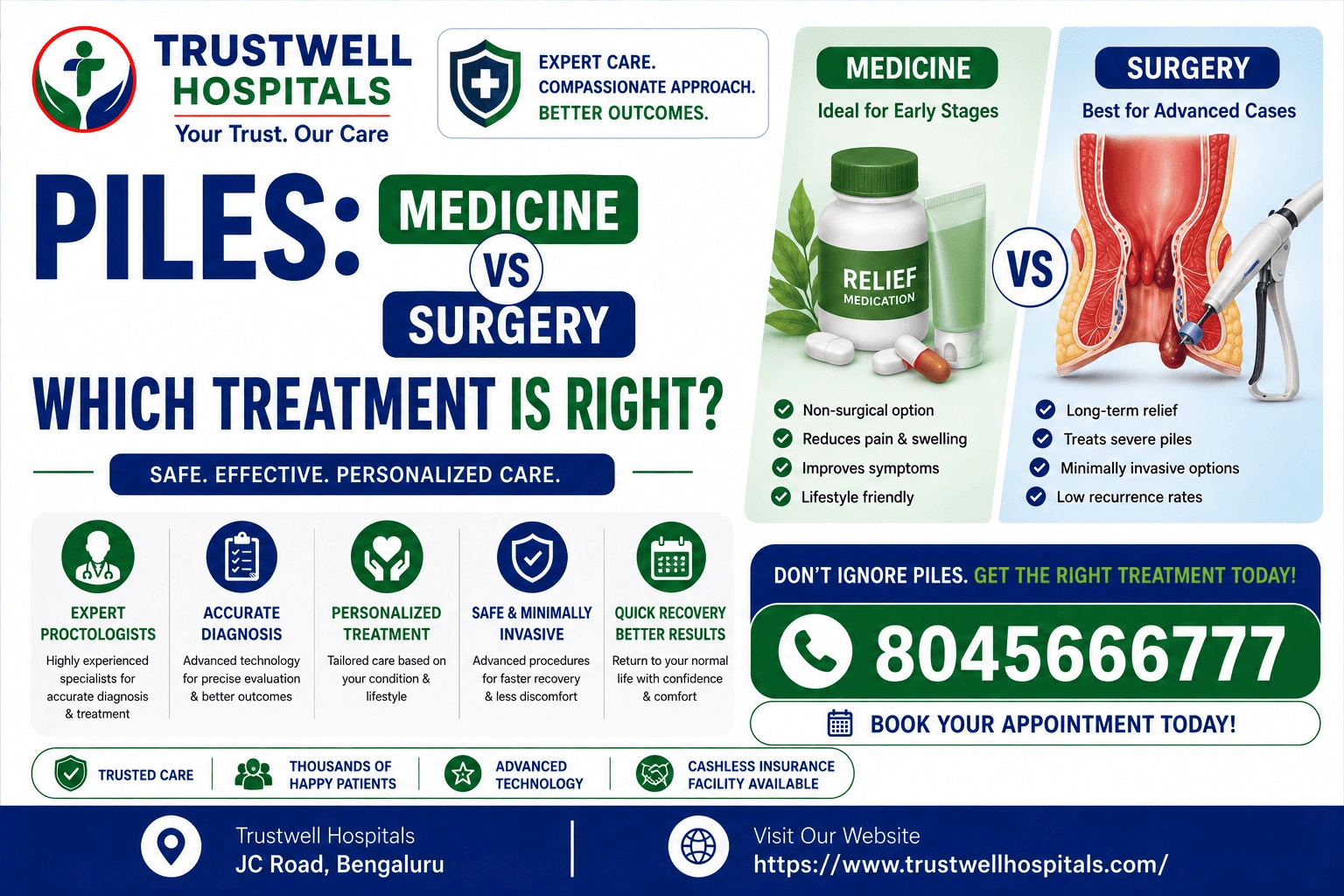
Understanding Piles
Piles are enlarged blood vessels located inside the rectum (internal hemorrhoids) or around the anus (external hemorrhoids). Increased pressure on these veins causes them to swell and become symptomatic. Several factors contribute to the development of piles, including:- Chronic constipation
- Frequent straining during bowel movements
- Low-fiber diet
- Obesity
- Pregnancy
- Prolonged sitting
- Chronic diarrhea
- Increasing age
- Bright red bleeding during bowel movements
- Pain around the anus
- Itching or irritation
- Swelling
- A lump near the anal opening
- Mucus discharge
- Difficulty maintaining hygiene
When Can Medicines Treat Piles?
Medications are usually the first line of treatment for early-stage hemorrhoids, particularly Grade I and Grade II piles. Their primary goal is to relieve symptoms rather than permanently remove hemorrhoids. Doctors may recommend medicines if:- Symptoms are mild
- Bleeding is occasional
- There is minimal prolapse
- Pain is manageable
- The hemorrhoids are newly diagnosed
Common Medicines Used for Piles
Several medications may be prescribed depending on your symptoms.Oral Medications
Doctors may prescribe oral medications that help improve vein function, reduce swelling, and relieve discomfort. These medications may:- Reduce inflammation
- Improve blood circulation
- Decrease bleeding
- Relieve swelling
Topical Creams and Ointments
Medicated creams help relieve local symptoms such as:- Pain
- Burning
- Itching
- Swelling
Stool Softeners
Constipation is one of the biggest contributors to piles. Stool softeners make bowel movements easier and reduce straining, allowing inflamed hemorrhoids to heal.Pain Relievers
Short-term pain medications may be recommended when hemorrhoids become inflamed or thrombosed.Benefits of Treating Piles with Medicines
Medical management offers several advantages for patients with mild hemorrhoids. These include:- Non-invasive treatment
- No hospitalization
- Minimal recovery time
- Lower initial cost
- Symptom relief within a few days
- Suitable for early-stage disease
Limitations of Medicines
Although medicines can effectively relieve symptoms, they do not remove enlarged hemorrhoidal tissue. As a result:- Symptoms may return
- Large hemorrhoids remain untreated
- Advanced piles continue to progress
- Long-term medication may be required
- Recurrence is common if lifestyle habits remain unchanged
When Is Surgery Recommended?
Surgery becomes the preferred treatment when conservative measures no longer provide adequate relief or when hemorrhoids become advanced. Doctors commonly recommend surgery for:- Grade III hemorrhoids
- Grade IV hemorrhoids
- Large prolapsing hemorrhoids
- Persistent bleeding
- Severe pain
- Recurrent hemorrhoids
- Thrombosed external hemorrhoids
- Failure of medical treatment
Types of Piles Surgery
Several surgical options are available today, depending on the size and grade of the hemorrhoids. Common procedures include:- Conventional hemorrhoidectomy
- Stapled hemorrhoidopexy
- Laser piles surgery
- Doppler-guided hemorrhoidal artery ligation (HAL-RAR)
- Rubber band ligation
- Infrared coagulation
- Sclerotherapy
Benefits of Surgery
Unlike medications, surgery addresses the underlying hemorrhoids rather than simply controlling symptoms. Some major advantages include:- Long-term relief
- Lower recurrence rates
- Effective treatment for advanced piles
- Improved quality of life
- Reduced bleeding
- Relief from prolapse
- Better hygiene
- Definitive treatment for severe hemorrhoids
Are Modern Piles Surgeries Painful?
One of the biggest misconceptions about hemorrhoid surgery is that it is always extremely painful. In reality, advances in surgical techniques and anesthesia have made treatment considerably more comfortable. Procedures such as laser surgery, stapled hemorrhoidopexy, and HAL-RAR are associated with less postoperative discomfort than conventional hemorrhoidectomy in appropriately selected patients. The most suitable procedure depends on the grade of hemorrhoids, symptom severity, and your surgeon’s assessment.Medicine vs Surgery: A Quick Comparison
Both treatment approaches have an important role in managing piles, but they are suitable for different stages of the disease.| Feature | Medicines | Surgery |
| Best for | Grade I–II piles | Grade III–IV piles |
| Relieves symptoms | Yes | Yes |
| Removes hemorrhoids | No | Yes |
| Risk of recurrence | Higher | Lower |
| Recovery | Immediate | Few days to several weeks |
| Hospital stay | Usually not required | Depends on the procedure |
| Long-term solution | Limited | Yes in most cases |
How Do Doctors Decide Between Medicine and Surgery?
The decision to treat piles with medicines or surgery is based on several factors rather than symptoms alone. During the consultation, your doctor evaluates the severity of hemorrhoids, how long you have been experiencing symptoms, and whether previous treatments have been effective. Some of the key factors considered include:- Grade of the hemorrhoids
- Frequency of bleeding
- Size of prolapsed hemorrhoids
- Presence of severe pain or thrombosis
- Impact on daily activities
- Response to medications and lifestyle changes
- Overall health and existing medical conditions
Recovery After Medicine and Surgery
Recovery differs significantly depending on the chosen treatment. Patients treated with medications generally notice symptom relief within a few days if they also improve their diet and bowel habits. However, medications require ongoing lifestyle modifications to reduce the chances of recurrence. Recovery after surgery depends on the type of procedure performed. Minimally invasive treatments such as laser piles surgery, rubber band ligation, and Doppler-guided hemorrhoidal artery ligation (HAL-RAR) usually allow patients to resume normal activities within a few days. Conventional hemorrhoidectomy may require a longer healing period but remains one of the most effective treatments for advanced hemorrhoids. Regardless of the treatment method, following your doctor’s advice is essential for achieving the best outcomes.Lifestyle Changes That Improve Treatment Success
Whether you choose medicines or surgery, healthy lifestyle habits play a crucial role in preventing recurrence. Doctors commonly recommend:- Eating a high-fiber diet with fruits, vegetables, and whole grains
- Drinking plenty of water throughout the day
- Avoiding prolonged straining during bowel movements
- Exercising regularly
- Maintaining a healthy body weight
- Responding promptly to the urge to pass stools
- Limiting prolonged sitting, especially on the toilet
- Following prescribed medications and follow-up appointments
Can Piles Return After Treatment?
Yes. Hemorrhoids can recur even after successful treatment if the underlying causes are not addressed. Common reasons for recurrence include:- Chronic constipation
- Low-fiber diet
- Obesity
- Pregnancy
- Sedentary lifestyle
- Frequent heavy lifting
- Persistent straining during bowel movements
Conditions That May Be Mistaken for Piles
Many anorectal conditions produce symptoms similar to hemorrhoids. Self-diagnosis can delay appropriate treatment, making a medical evaluation important, especially if symptoms persist. Conditions that may resemble piles include:- Anal fissures
- Anal fistulas
- Colon polyps
- Inflammatory bowel disease
- Colorectal cancer

