


 Neuro Sciences
 Gastro Sciences
 Kidney Diseases
 Orthopedics
 Transplantation
 ENT and Head-Neck Surgery
 Advanced Trauma Center
 Cardiology
 Interventional Pulmonology
 Hematology and Bone Marrow Transplant(BMT)
 Anesthesia
 Critical Care Excellence: Comprehensive Intensive Care Services in Bangalore
 Dental Surgery and Oral Implants
 Dermatology and Cosmetic Surgery
 Endocrinology and Diabetology
 Facial Plastic and Reconstructive Surgery
 Family Medicine
 Internal Medicine
 Microbiology
 Obstetrics and Gynaecology
 Oncology
 Ophthalmology
 Oral and Maxillofacial Surgery
 Pathology and Laboratory
 Pediatrics
GERD vs Gastritis: Understanding the Difference in Symptoms, Causes, Diagnosis, and Treatment
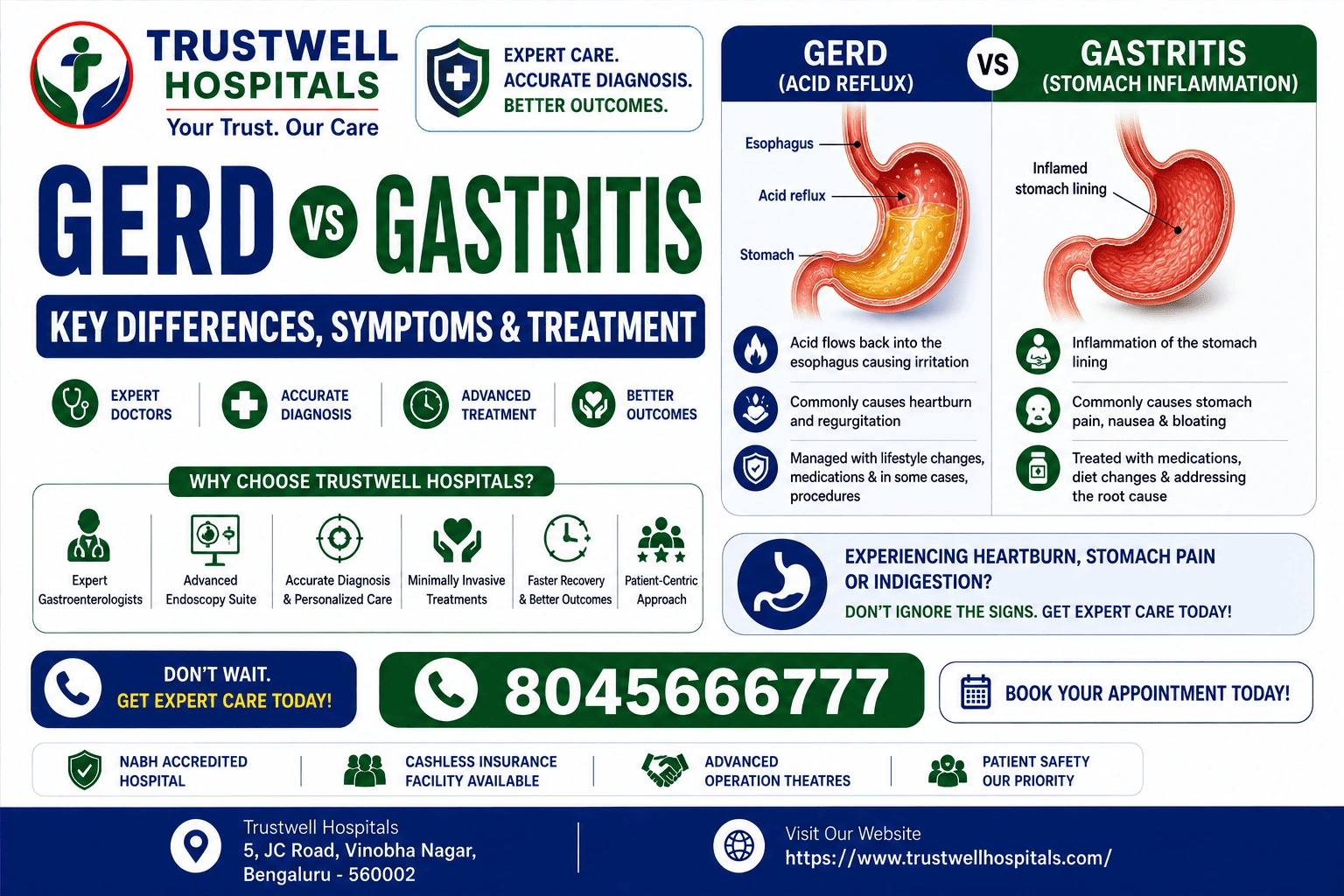
What Is GERD?
Gastroesophageal Reflux Disease (GERD) is a chronic condition in which stomach acid frequently flows backward into the esophagus due to weakness or improper relaxation of the lower esophageal sphincter (LES). Repeated acid exposure irritates the esophageal lining and may lead to inflammation, ulcers, or other complications if left untreated. People with GERD often experience symptoms after eating, while lying down, or during the night. For a detailed overview of warning signs, read our guide on GERD Symptoms, which explains the early indicators that should not be ignored.What Is Gastritis?
Gastritis is the inflammation of the stomach lining. It may develop suddenly (acute gastritis) or gradually over time (chronic gastritis). Common causes include:- Helicobacter pylori infection
- Long-term use of pain-relieving medications (NSAIDs)
- Excessive alcohol consumption
- Smoking
- Autoimmune disorders
- Severe stress due to illness or surgery
GERD vs Gastritis: Key Differences
Although both conditions affect the upper digestive tract, they differ in their underlying cause, symptoms, and affected organs.| Feature | GERD | Gastritis |
| Affected organ | Esophagus | Stomach lining |
| Primary problem | Acid reflux | Inflammation |
| Main symptom | Heartburn | Upper stomach pain |
| Pain location | Behind the breastbone | Upper abdomen |
| Acid regurgitation | Common | Rare |
| Nausea | Sometimes | Common |
| Vomiting | Less common | More common |
| Worsens after lying down | Often | Usually not |
| Triggered by fatty foods | Frequently | Sometimes |
Symptoms of GERD
GERD symptoms are primarily caused by stomach acid repeatedly entering the esophagus. Common symptoms include:- Heartburn
- Acid regurgitation
- Sour taste in the mouth
- Chest discomfort
- Difficulty swallowing
- Chronic cough
- Hoarseness
- Sore throat
- Bad breath
- Feeling of a lump in the throat
Symptoms of Gastritis
Gastritis produces symptoms related to inflammation of the stomach lining. These commonly include:- Burning pain in the upper abdomen
- Nausea
- Vomiting
- Bloating
- Loss of appetite
- Feeling full quickly
- Indigestion
- Belching
Can GERD and Gastritis Occur Together?
Yes. Some patients have both GERD and gastritis simultaneously. For example:- A patient with chronic acid reflux may also develop stomach inflammation.
- H. pylori infection may coexist with GERD.
- Long-term medication use may contribute to both conditions.
What Causes GERD?
GERD develops when the lower esophageal sphincter becomes weak or relaxes too frequently, allowing stomach acid to flow backward. Risk factors include:- Obesity
- Pregnancy
- Smoking
- Alcohol consumption
- Hiatal hernia
- Large meals
- Fatty foods
- Late-night eating
- Certain medications
What Causes Gastritis?
Several factors may damage the stomach lining and cause gastritis. These include:- H. pylori infection
- NSAID medications
- Alcohol
- Smoking
- Stress-related illness
- Autoimmune disorders
- Bile reflux
- Certain infections
When Should You See a Doctor?
Occasional indigestion is common, but persistent digestive symptoms should never be ignored. You should seek medical attention if you experience:- Frequent heartburn
- Difficulty swallowing
- Persistent vomiting
- Blood in vomit
- Black stools
- Unexplained weight loss
- Severe abdominal pain
- Symptoms lasting more than two weeks
- Symptoms that do not improve with medication
When Are GERD or Gastritis Symptoms an Emergency?
While many cases of GERD and gastritis can be managed with lifestyle changes and medications, certain symptoms may indicate a serious complication that requires immediate medical attention.
| Symptom | Possible Cause | Recommended Action |
|---|---|---|
| Frequent heartburn after meals | GERD | Schedule an appointment with a gastroenterologist |
| Burning pain in the upper abdomen | Gastritis or acid-related stomach inflammation | Seek medical evaluation if symptoms persist or recur |
| Difficulty swallowing | Esophageal inflammation or narrowing due to GERD | Consult a doctor promptly |
| Persistent nausea or vomiting | Gastritis, ulcer disease, or another digestive disorder | Medical evaluation is recommended |
| Vomiting blood | Bleeding ulcer or severe gastritis | Seek emergency medical care immediately |
| Black, tarry stools | Upper gastrointestinal bleeding | Visit the emergency department immediately |
| Severe chest pain with sweating or breathlessness | Heart condition or severe esophageal disease | Call emergency medical services immediately to rule out a cardiac emergency |
| Unexplained weight loss or persistent symptoms despite treatment | Chronic digestive disease requiring further evaluation | Arrange specialist consultation and diagnostic testing |
Other Conditions That Can Mimic GERD or Gastritis
Upper abdominal pain and indigestion are not always caused by GERD or gastritis. Several digestive disorders produce similar symptoms. These include:- Gallstones
- Peptic ulcers
- Hiatal hernia
- Pancreatitis
- Liver disease
- Functional dyspepsia
How Are GERD and Gastritis Diagnosed?
Although GERD and gastritis can cause similar symptoms, identifying the correct condition is essential because their treatment strategies differ. Doctors begin with a detailed medical history, symptom assessment, dietary habits, medication review, and physical examination. Depending on your symptoms, one or more diagnostic tests may be recommended. Common investigations include:- Upper gastrointestinal endoscopy
- Helicobacter pylori testing
- Blood tests
- Stool tests
- Esophageal pH monitoring
- Esophageal manometry
- Biopsy (when indicated)
Treatment for GERD
Treatment focuses on reducing acid reflux, healing the esophagus, and preventing future episodes.Lifestyle Changes
Many patients experience significant improvement by making healthy lifestyle modifications, such as:- Eating smaller, more frequent meals
- Avoiding spicy, fried, and fatty foods
- Reducing caffeine and alcohol intake
- Maintaining a healthy weight
- Stopping smoking
- Avoiding meals close to bedtime
- Elevating the head while sleeping
Medications
Doctors may prescribe:- Antacids
- H2 receptor blockers
- Proton pump inhibitors (PPIs)
- Prokinetic medications in selected cases
Treatment for Gastritis
The treatment of gastritis depends on its underlying cause. Common treatment options include:- Eradication therapy for H. pylori infection
- Acid-suppressing medications
- Avoiding NSAIDs when possible
- Limiting alcohol consumption
- Dietary modifications
- Treatment of underlying medical conditions
Complications of Untreated GERD and Gastritis
Ignoring persistent digestive symptoms can result in serious complications.Possible GERD Complications
- Esophagitis
- Esophageal ulcers
- Esophageal strictures
- Barrett’s esophagus
- Increased risk of esophageal cancer
- Chronic cough
- Sleep disturbances
Possible Gastritis Complications
- Stomach ulcers
- Gastrointestinal bleeding
- Chronic anemia
- Vitamin B12 deficiency
- Gastric atrophy
- Increased risk of stomach cancer in selected chronic cases

