


 Neuro Sciences
 Gastro Sciences
 Kidney Diseases
 Orthopedics
 Transplantation
 ENT and Head-Neck Surgery
 Advanced Trauma Center
 Cardiology
 Interventional Pulmonology
 Hematology and Bone Marrow Transplant(BMT)
 Anesthesia
 Critical Care Excellence: Comprehensive Intensive Care Services in Bangalore
 Dental Surgery and Oral Implants
 Dermatology and Cosmetic Surgery
 Endocrinology and Diabetology
 Facial Plastic and Reconstructive Surgery
 Family Medicine
 Internal Medicine
 Microbiology
 Obstetrics and Gynaecology
 Oncology
 Ophthalmology
 Oral and Maxillofacial Surgery
 Pathology and Laboratory
 Pediatrics
Hernia vs Appendix: How to Tell the Difference Between a Hernia and Appendicitis
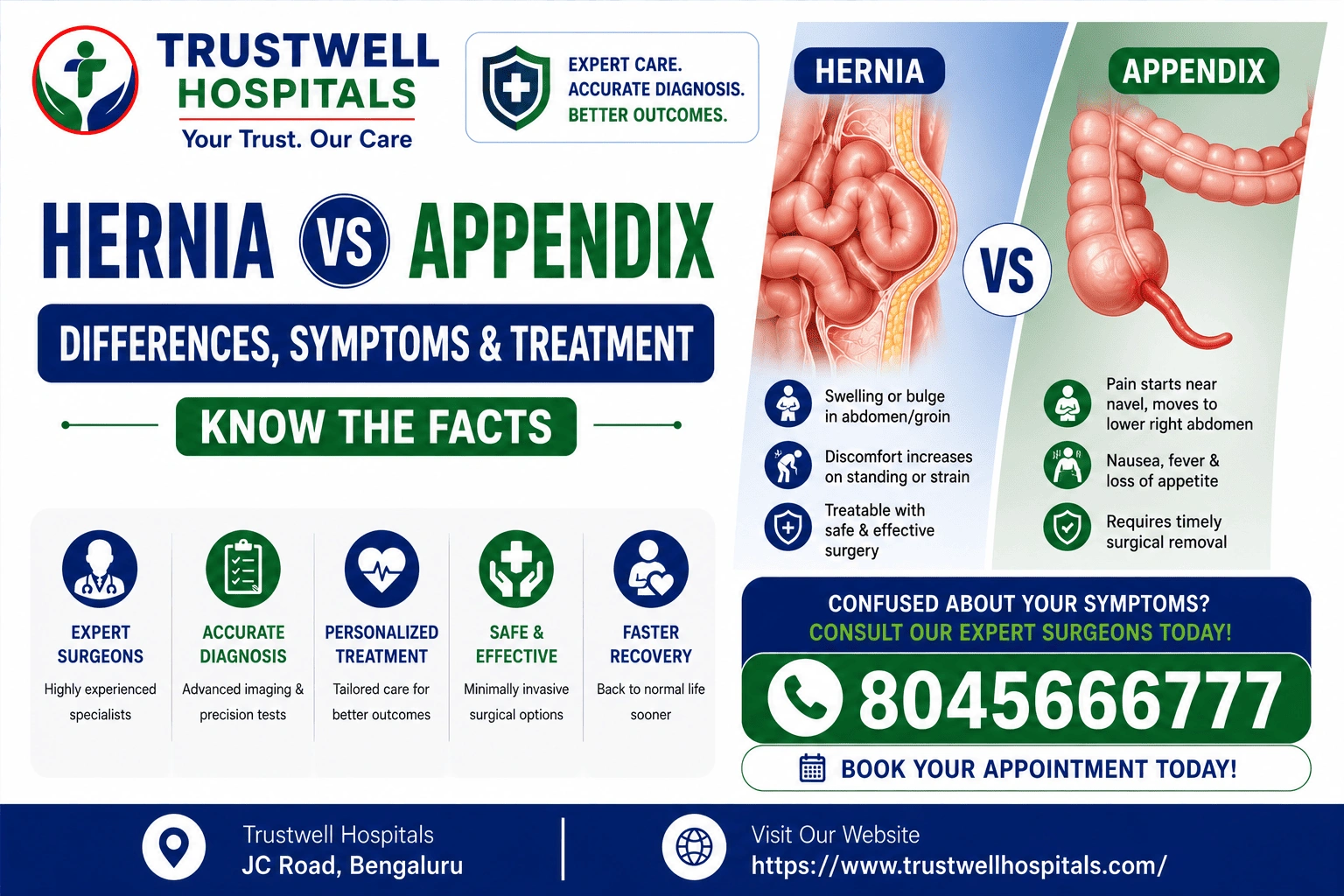
What Is a Hernia?
A hernia occurs when part of the intestine, fatty tissue, or another abdominal structure protrudes through a weak area in the muscle or connective tissue. Common types include:- Inguinal hernia
- Femoral hernia
- Umbilical hernia
- Incisional hernia
- Hiatal hernia
What Is Appendicitis?
Appendicitis is inflammation of the appendix, a small finger-shaped organ located in the lower right side of the abdomen. The condition usually develops when the appendix becomes blocked by stool, swollen lymphatic tissue, or, less commonly, a growth. The blockage allows bacteria to multiply, leading to inflammation and infection. Unlike many hernias, appendicitis develops rapidly and often requires emergency surgery to prevent rupture. Patients with suspected appendicitis should seek immediate evaluation through Appendix Treatment in Bangalore rather than attempting self-treatment at home.Hernia vs Appendix: Key Differences
Although both conditions affect the abdomen, they differ significantly in their cause, symptoms, and urgency.| Feature | Hernia | Appendicitis |
| Cause | Weakness in the abdominal wall | Inflammation of the appendix |
| Onset | Usually gradual | Usually sudden |
| Visible bulge | Often present | Absent |
| Pain location | Groin or abdominal wall | Lower right abdomen |
| Pain progression | Slowly worsens | Rapidly worsens over hours |
| Fever | Rare unless complicated | Common |
| Vomiting | Uncommon | Frequently occurs |
| Emergency | Usually not immediate unless strangulated | Medical emergency |
Symptoms of a Hernia
Hernia symptoms depend on the type and size of the hernia. Common symptoms include:- Visible lump or swelling
- Groin discomfort
- Burning sensation
- Feeling of heaviness
- Pain while lifting heavy objects
- Swelling that becomes more noticeable when standing
- Bulge that may reduce when lying down
Symptoms of Appendicitis
Appendicitis typically develops much more quickly than a hernia. Classic symptoms include:- Sudden abdominal pain
- Pain that begins near the belly button
- Pain moving to the lower right abdomen
- Fever
- Nausea
- Vomiting
- Loss of appetite
- Pain that worsens while walking or coughing
Can a Hernia Feel Like Appendicitis?
Yes. In some cases, especially with incarcerated inguinal or femoral hernias, patients may experience severe lower abdominal pain that resembles appendicitis. However, there are important differences. A hernia often produces:- A noticeable swelling
- Pain related to movement or lifting
- Symptoms that may improve while lying down
- Constant worsening pain
- Fever
- Nausea
- Tenderness in the lower right abdomen
- No visible bulge
What Causes These Conditions?
Although they may produce similar pain, the underlying causes are completely different.Causes of Hernia
A hernia develops because of weakness in the abdominal wall combined with increased pressure inside the abdomen. Risk factors include:- Heavy lifting
- Chronic coughing
- Obesity
- Pregnancy
- Aging
- Previous abdominal surgery
- Chronic constipation
Causes of Appendicitis
Appendicitis is commonly caused by blockage of the appendix due to:- Hardened stool
- Enlarged lymphatic tissue
- Infection
- Rarely, tumors
When Should You Seek Emergency Care?
While many uncomplicated hernias can be evaluated through scheduled outpatient appointments, certain symptoms require immediate medical attention. Seek emergency care if you experience:- Sudden severe abdominal pain
- Persistent vomiting
- Fever with abdominal pain
- A painful hernia that cannot be pushed back
- Redness over a hernia
- Severe right lower abdominal pain
- Pain worsening over several hours
- Inability to pass stools or gas
How Are Hernia and Appendicitis Diagnosed?
Although the symptoms of a hernia and appendicitis may overlap, an experienced surgeon can usually differentiate between the two through a combination of medical history, physical examination, and imaging studies.Diagnosing a Hernia
Doctors evaluate:- The location of the swelling
- Whether the bulge becomes more prominent while coughing or standing
- Tenderness around the affected area
- Whether the hernia can be gently pushed back (reducible hernia)
- Ultrasound
- CT scan
- MRI scan (in selected cases)
Diagnosing Appendicitis
Appendicitis requires prompt evaluation because delaying treatment increases the risk of rupture. Common diagnostic methods include:- Physical examination
- Blood tests to detect infection
- Urine analysis
- Ultrasound
- CT scan
Treatment: Hernia vs Appendicitis
Although both conditions may require surgery, the treatment approach differs significantly.Hernia Treatment
A hernia does not heal on its own because the weakness in the abdominal wall remains present. While small, minimally symptomatic hernias may be monitored, surgery is the only definitive treatment. Treatment options include:- Observation for selected patients
- Open hernia repair
- Mesh repair
- Laparoscopic Hernia Surgery
- Robotic-assisted repair in selected cases
Appendix Treatment
Appendicitis is usually treated with an appendectomy, which involves removing the inflamed appendix before it ruptures. Depending on the patient’s condition, surgery may be performed using:- Laparoscopic appendectomy
- Open appendectomy
What Happens If These Conditions Are Left Untreated?
Ignoring either condition can lead to serious health consequences.Untreated Hernia
Possible complications include:- Enlargement of the hernia
- Persistent pain
- Incarcerated hernia
- Strangulated hernia
- Intestinal obstruction
- Emergency surgery
Untreated Appendicitis
Without prompt treatment, appendicitis may result in:- Ruptured appendix
- Abdominal abscess
- Peritonitis
- Severe infection (sepsis)
- Life-threatening complications

