


 Neuro Sciences
 Gastro Sciences
 Kidney Diseases
 Orthopedics
 Transplantation
 ENT and Head-Neck Surgery
 Advanced Trauma Center
 Cardiology
 Interventional Pulmonology
 Hematology and Bone Marrow Transplant(BMT)
 Anesthesia
 Critical Care Excellence: Comprehensive Intensive Care Services in Bangalore
 Dental Surgery and Oral Implants
 Dermatology and Cosmetic Surgery
 Endocrinology and Diabetology
 Facial Plastic and Reconstructive Surgery
 Family Medicine
 Internal Medicine
 Microbiology
 Obstetrics and Gynaecology
 Oncology
 Ophthalmology
 Oral and Maxillofacial Surgery
 Pathology and Laboratory
 Pediatrics
Endoscopy vs Colonoscopy: What’s the Difference and Which One Do You Need?
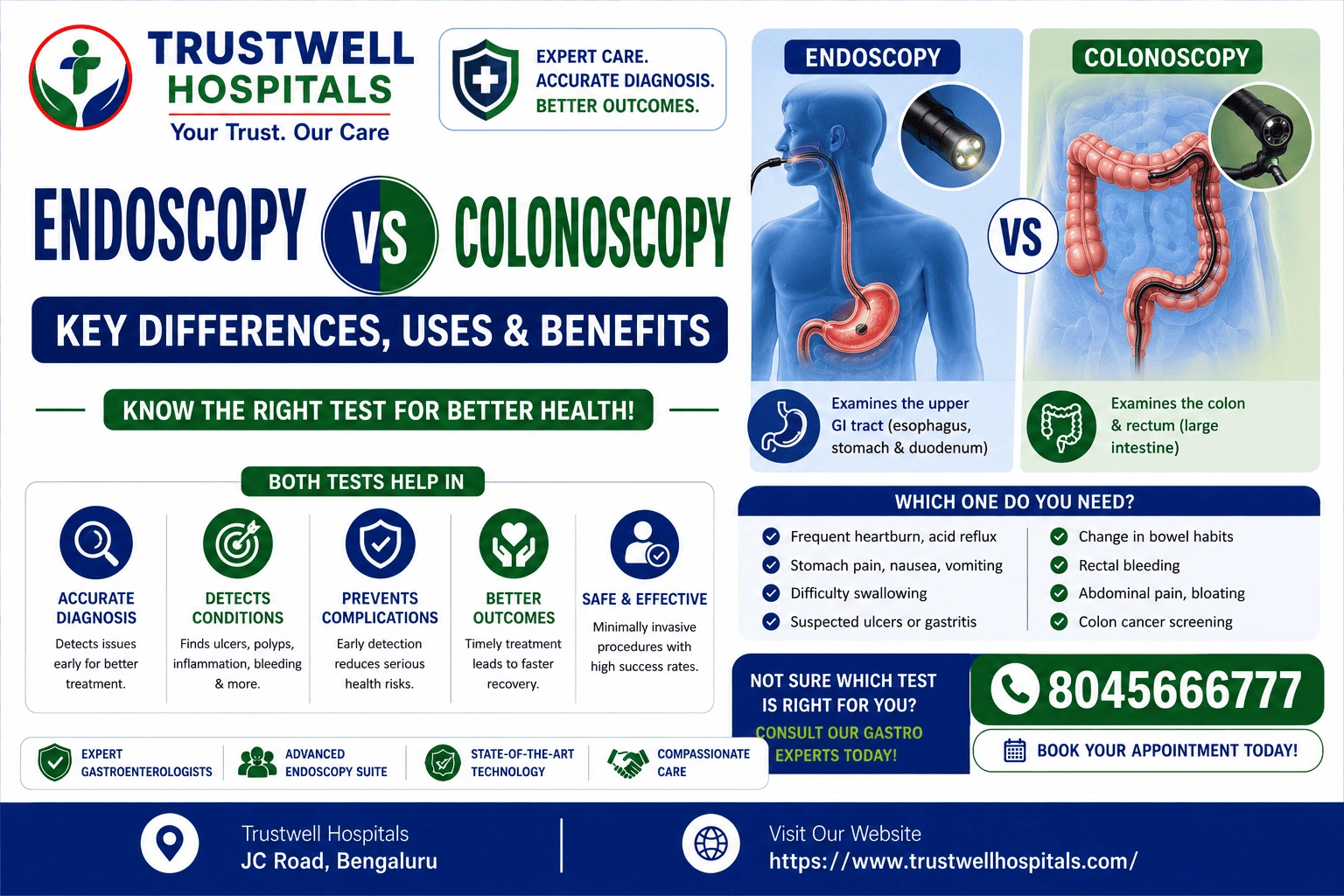
What Is an Endoscopy?
An endoscopy, also known as an upper gastrointestinal (GI) endoscopy, is a diagnostic procedure that allows doctors to examine the upper digestive tract using a thin, flexible tube with a camera attached to its tip. The endoscope is gently passed through the mouth to visualize the:- Esophagus
- Stomach
- Duodenum (the first part of the small intestine)
What Is a Colonoscopy?
A colonoscopy is a procedure used to examine the lower digestive tract. During this test, a long flexible tube called a colonoscope is inserted through the rectum to inspect the large intestine (colon) and rectum. The colonoscope contains a high-definition camera that allows doctors to identify abnormalities such as inflammation, ulcers, bleeding, polyps, and colorectal cancer. Unlike endoscopy, colonoscopy focuses only on the lower gastrointestinal tract and plays an important role in diagnosing bowel diseases and screening for colorectal cancer. Patients with persistent rectal bleeding, changes in bowel habits, chronic diarrhea, unexplained anemia, or a family history of colorectal cancer may be advised to undergo a Colonoscopy for accurate diagnosis.Endoscopy vs Colonoscopy: Key Differences
Although both procedures use a flexible camera to examine the digestive tract, they differ in several important ways.| Feature | Endoscopy | Colonoscopy |
| Examines | Upper digestive tract | Lower digestive tract |
| Entry point | Mouth | Rectum |
| Organs evaluated | Esophagus, stomach, duodenum | Colon and rectum |
| Common symptoms | Heartburn, vomiting, difficulty swallowing | Rectal bleeding, altered bowel habits, chronic diarrhea |
| Preparation | Fasting for several hours | Complete bowel cleansing before the procedure |
| Procedure time | Usually 15–30 minutes | Usually 30–60 minutes |
When Is an Endoscopy Recommended?
Doctors may recommend an endoscopy if you have symptoms affecting the upper digestive system, including:- Persistent acid reflux
- Difficulty swallowing
- Chronic heartburn
- Recurrent vomiting
- Upper abdominal pain
- Vomiting blood
- Black stools caused by upper GI bleeding
- Unexplained weight loss
- Persistent nausea
- Gastritis
- Peptic ulcers
- Esophagitis
- Barrett’s esophagus
- Esophageal strictures
- Stomach polyps
- Upper GI cancers
When Is a Colonoscopy Recommended?
A colonoscopy is generally recommended when symptoms suggest disease in the colon or rectum. Common reasons include:- Rectal bleeding
- Blood in stools
- Chronic constipation
- Persistent diarrhea
- Changes in bowel habits
- Iron-deficiency anemia
- Abdominal pain
- Unexplained weight loss
- Positive stool blood test
- Screening for colorectal cancer
Can Endoscopy and Colonoscopy Diagnose Cancer?
Yes. Both procedures play an important role in the early detection of gastrointestinal cancers. During an endoscopy, doctors can identify abnormal growths in the esophagus, stomach, or upper small intestine and collect tissue samples (biopsies) for laboratory examination. Similarly, colonoscopy allows doctors to detect precancerous polyps, colorectal tumors, and inflammatory bowel diseases. If suspicious tissue is found, a biopsy can be taken immediately without requiring another procedure. Early diagnosis significantly improves treatment outcomes, which is why doctors often recommend these procedures when symptoms persist or when patients have a higher risk of gastrointestinal cancers.Can Biopsies Be Performed During Both Procedures?
Yes. One of the major advantages of both endoscopy and colonoscopy is that they allow doctors to obtain tissue samples during the same procedure. A biopsy may be performed to evaluate:- Infections
- Inflammation
- Ulcers
- Polyps
- Barrett’s esophagus
- Celiac disease
- Precancerous changes
- Cancer
Which Procedure Is More Comfortable?
Both endoscopy and colonoscopy are generally well tolerated. Most patients receive sedation or anesthesia, allowing them to remain comfortable throughout the examination. An upper endoscopy usually takes less time because it examines a shorter portion of the digestive tract. Colonoscopy may take slightly longer due to the need for careful examination of the entire colon and, if necessary, removal of polyps or tissue sampling. For either procedure, patients are typically discharged on the same day after a short observation period, provided no complications occur.How to Prepare for an Endoscopy
Proper preparation helps ensure clear visibility of the upper digestive tract and improves the accuracy of the examination. Before an endoscopy, your doctor may advise you to:- Avoid eating or drinking for 6 to 8 hours before the procedure.
- Inform your doctor about any medications, allergies, or existing medical conditions.
- Discuss blood-thinning medications if you are taking them.
- Arrange for someone to accompany you home if sedation is used.
How to Prepare for a Colonoscopy
Colonoscopy requires more extensive preparation because the colon must be completely clean for accurate visualization. Preparation typically includes:- Following a low-fiber diet one or two days before the procedure.
- Consuming only clear liquids on the day before the test, if instructed.
- Taking a prescribed bowel-cleansing solution.
- Avoiding certain medications based on your doctor’s advice.
- Fasting for the recommended duration before the procedure.
Are Endoscopy and Colonoscopy Safe?
Both procedures are considered very safe when performed by experienced specialists. Serious complications are uncommon, and most patients return home on the same day. Although rare, potential risks include:- Bleeding, especially after biopsy or polyp removal
- Infection
- Reaction to sedation
- Perforation (a small tear in the digestive tract)
- Temporary bloating or abdominal discomfort
Recovery After the Procedure
Recovery from both procedures is usually quick. After an endoscopy, patients may experience:- Mild throat discomfort
- Temporary bloating
- Drowsiness from sedation
- Mild abdominal cramping
- Temporary bloating due to air introduced during the examination
- Passing gas as the air leaves the colon
Which Procedure Is Right for Your Symptoms?
The choice between an endoscopy and a colonoscopy depends primarily on where your symptoms originate. An endoscopy is usually recommended if you experience:- Persistent heartburn
- Difficulty swallowing
- Upper abdominal pain
- Frequent vomiting
- Suspected stomach ulcers
- Chronic acid reflux
- Rectal bleeding
- Blood in the stool
- Persistent constipation
- Chronic diarrhea
- Changes in bowel habits
- Suspected inflammatory bowel disease
- A need for colorectal cancer screening

