


 Neuro Sciences
 Gastro Sciences
 Kidney Diseases
 Orthopedics
 Transplantation
 ENT and Head-Neck Surgery
 Advanced Trauma Center
 Cardiology
 Interventional Pulmonology
 Hematology and Bone Marrow Transplant(BMT)
 Anesthesia
 Critical Care Excellence: Comprehensive Intensive Care Services in Bangalore
 Dental Surgery and Oral Implants
 Dermatology and Cosmetic Surgery
 Endocrinology and Diabetology
 Facial Plastic and Reconstructive Surgery
 Family Medicine
 Internal Medicine
 Microbiology
 Obstetrics and Gynaecology
 Oncology
 Ophthalmology
 Oral and Maxillofacial Surgery
 Pathology and Laboratory
 Pediatrics
Gallstones: Surgery vs Medicine – Which Treatment Is Right for You?
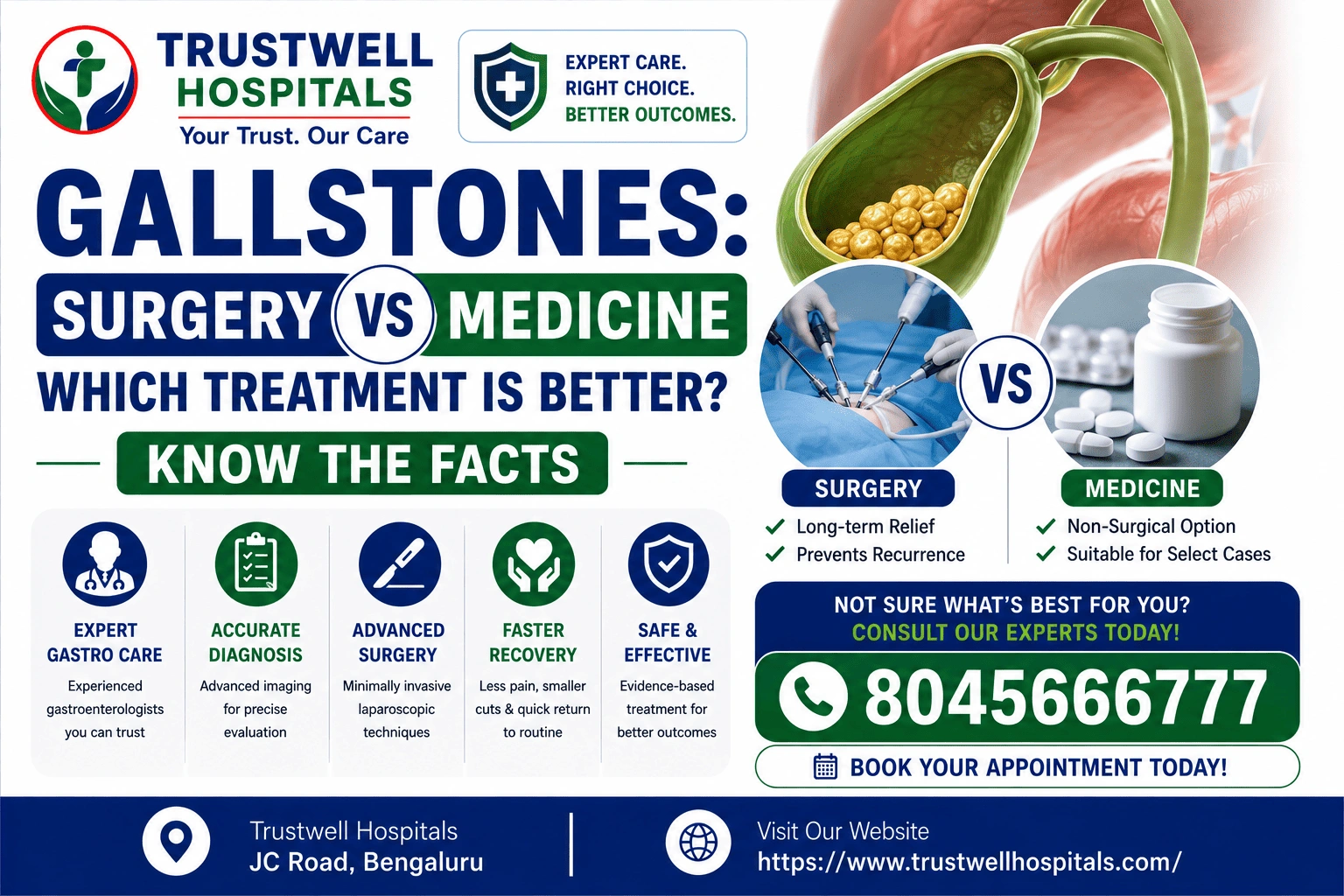
What Are Gallstones?
Gallstones are hardened deposits that form inside the gallbladder, a small organ located beneath the liver. The gallbladder stores bile, a digestive fluid produced by the liver that helps break down fats. Gallstones develop when substances in bile, such as cholesterol or bilirubin, become imbalanced and crystallize over time. There are two main types of gallstones:Cholesterol Gallstones
These are the most common type and are primarily made of hardened cholesterol. They account for the majority of gallstone cases.Pigment Gallstones
These stones are usually darker and develop due to excess bilirubin in the bile. They are more commonly associated with certain liver disorders and blood-related conditions. Patients experiencing symptoms of gallstones should consult specialists in Surgical Gastroenterology in bangalore for a comprehensive evaluation and personalized treatment plan.What Causes Gallstones?
Several factors increase the likelihood of developing gallstones, including:- High cholesterol levels
- Obesity
- Rapid weight loss
- Diabetes
- Pregnancy
- Family history
- Female gender
- Increasing age
- Liver disease
- Certain medications
What Are the Symptoms of Gallstones?
Many gallstones remain silent and cause no symptoms. However, when a stone blocks the flow of bile, symptoms can appear suddenly. Common symptoms include:- Severe pain in the upper right abdomen
- Pain after eating fatty meals
- Pain radiating to the back or right shoulder
- Nausea
- Vomiting
- Bloating
- Indigestion
- Fever if infection develops
- Jaundice if bile ducts become blocked
Can Gallstones Be Treated with Medicines?
Yes, but only in selected situations. Doctors may prescribe medications to dissolve cholesterol gallstones when surgery is not immediately suitable or when patients cannot undergo an operation due to other medical conditions. These medications gradually dissolve cholesterol stones by changing the composition of bile. However, medical treatment is recommended only for carefully selected patients because it has several limitations.When Are Medicines Recommended?
Medicines may be considered when:- Gallstones are small
- Stones are made primarily of cholesterol
- Symptoms are mild
- The gallbladder continues to function normally
- Surgery is temporarily unsuitable
Advantages of Medicines
Medical treatment offers several potential benefits for selected patients. These include:- Non-surgical treatment
- No hospitalization
- No surgical incision
- Suitable for patients who cannot undergo surgery
- May gradually dissolve small cholesterol stones
Limitations of Medicines
Despite these advantages, medications have significant drawbacks. These include:- Effective only for cholesterol gallstones
- Treatment may continue for months or years
- Stones may not dissolve completely
- Symptoms may continue during treatment
- High recurrence rate after stopping medication
- Not effective for large stones
- Not suitable for emergency situations
When Is Surgery Recommended?
Surgery is generally recommended when gallstones cause symptoms or complications. Doctors commonly advise surgery if patients experience:- Recurrent gallbladder attacks
- Persistent abdominal pain
- Acute gallbladder inflammation
- Gallstones blocking the bile duct
- Gallstone pancreatitis
- Infection
- Large symptomatic gallstones
- Reduced gallbladder function
What Is Gallbladder Surgery?
The standard surgical treatment for symptomatic gallstones is called cholecystectomy, which involves removing the gallbladder. Since the gallbladder is not an essential organ, most people continue to digest food normally after surgery. Today, gallbladder removal is most commonly performed using minimally invasive laparoscopic techniques. Compared with traditional open surgery, laparoscopic surgery offers:- Smaller incisions
- Less postoperative pain
- Shorter hospital stay
- Faster recovery
- Earlier return to work
- Lower risk of wound complications
Benefits of Surgery
Unlike medications, surgery removes the gallbladder entirely, eliminating the source of gallstone formation. Major advantages include:- Permanent treatment for symptomatic gallstones
- Very low recurrence risk
- Relief from recurrent pain
- Prevention of serious complications
- Improved quality of life
- Short recovery with minimally invasive techniques
Medicine vs Surgery: A Quick Comparison
Both medicines and surgery have an important role in treating gallstones, but they are recommended for different situations.| Feature | Medicines | Surgery |
| Best for | Selected cholesterol stones | Symptomatic gallstones |
| Removes existing stones | Sometimes | Yes |
| Prevents recurrence | No | Yes |
| Recovery time | No surgery required | Usually a few days to weeks |
| Treatment duration | Months to years | One-time procedure |
| Suitable for complications | No | Yes |
| Long-term success | Limited | Excellent |
How Do Doctors Decide Between Medicines and Surgery?
The decision to treat gallstones with medicines or surgery depends on several clinical factors. Your doctor will evaluate not only the presence of gallstones but also whether they are causing symptoms or complications. Some of the factors considered include:- Size and number of gallstones
- Type of gallstones
- Severity and frequency of symptoms
- Gallbladder function
- Presence of infection or inflammation
- Blockage of the bile ducts
- Overall health and fitness for surgery
What Happens If Gallstones Are Left Untreated?
Not every gallstone requires immediate treatment, but symptomatic gallstones should never be ignored. Delaying treatment can increase the risk of serious complications. Potential complications include:- Acute cholecystitis (gallbladder inflammation)
- Blocked bile ducts
- Jaundice
- Gallstone pancreatitis
- Gallbladder infection
- Abscess formation
- Rarely, gallbladder perforation
Recovery After Treatment
Recovery depends on the type of treatment received. Patients taking medications can usually continue their daily routine but need regular follow-up scans to monitor whether the stones are dissolving. Since treatment may continue for several months or longer, symptom relief is often gradual. Patients undergoing laparoscopic gallbladder surgery generally recover much faster. Most are discharged within a day, and many return to light activities within a week, depending on their overall health and the complexity of the surgery. Your surgeon will provide personalized advice regarding diet, activity levels, wound care, and follow-up visits to ensure a smooth recovery.Lifestyle Changes That Support Gallbladder Health
Although lifestyle changes cannot dissolve existing symptomatic gallstones, they can support overall digestive health and reduce the risk of future complications. Doctors commonly recommend:- Eating a balanced, fiber-rich diet
- Limiting high-fat and fried foods
- Maintaining a healthy body weight
- Avoiding rapid weight loss
- Exercising regularly
- Staying well hydrated
- Managing diabetes and cholesterol levels
- Following medical advice after surgery
Conditions That Can Mimic Gallstones
Pain in the upper abdomen is not always caused by gallstones. Several digestive disorders can produce similar symptoms, making an accurate diagnosis essential. Conditions that may resemble gallstones include:- Acid reflux disease
- Peptic ulcers
- Appendicitis
- Pancreatitis
- Liver disorders
- Hernias
- Functional digestive disorders

