


 Neuro Sciences
 Gastro Sciences
 Kidney Diseases
 Orthopedics
 Transplantation
 ENT and Head-Neck Surgery
 Advanced Trauma Center
 Cardiology
 Interventional Pulmonology
 Hematology and Bone Marrow Transplant(BMT)
 Anesthesia
 Critical Care Excellence: Comprehensive Intensive Care Services in Bangalore
 Dental Surgery and Oral Implants
 Dermatology and Cosmetic Surgery
 Endocrinology and Diabetology
 Facial Plastic and Reconstructive Surgery
 Family Medicine
 Internal Medicine
 Microbiology
 Obstetrics and Gynaecology
 Oncology
 Ophthalmology
 Oral and Maxillofacial Surgery
 Pathology and Laboratory
 Pediatrics
Hernia Symptoms: Early Warning Signs, Types, Causes, and When to See a Doctor
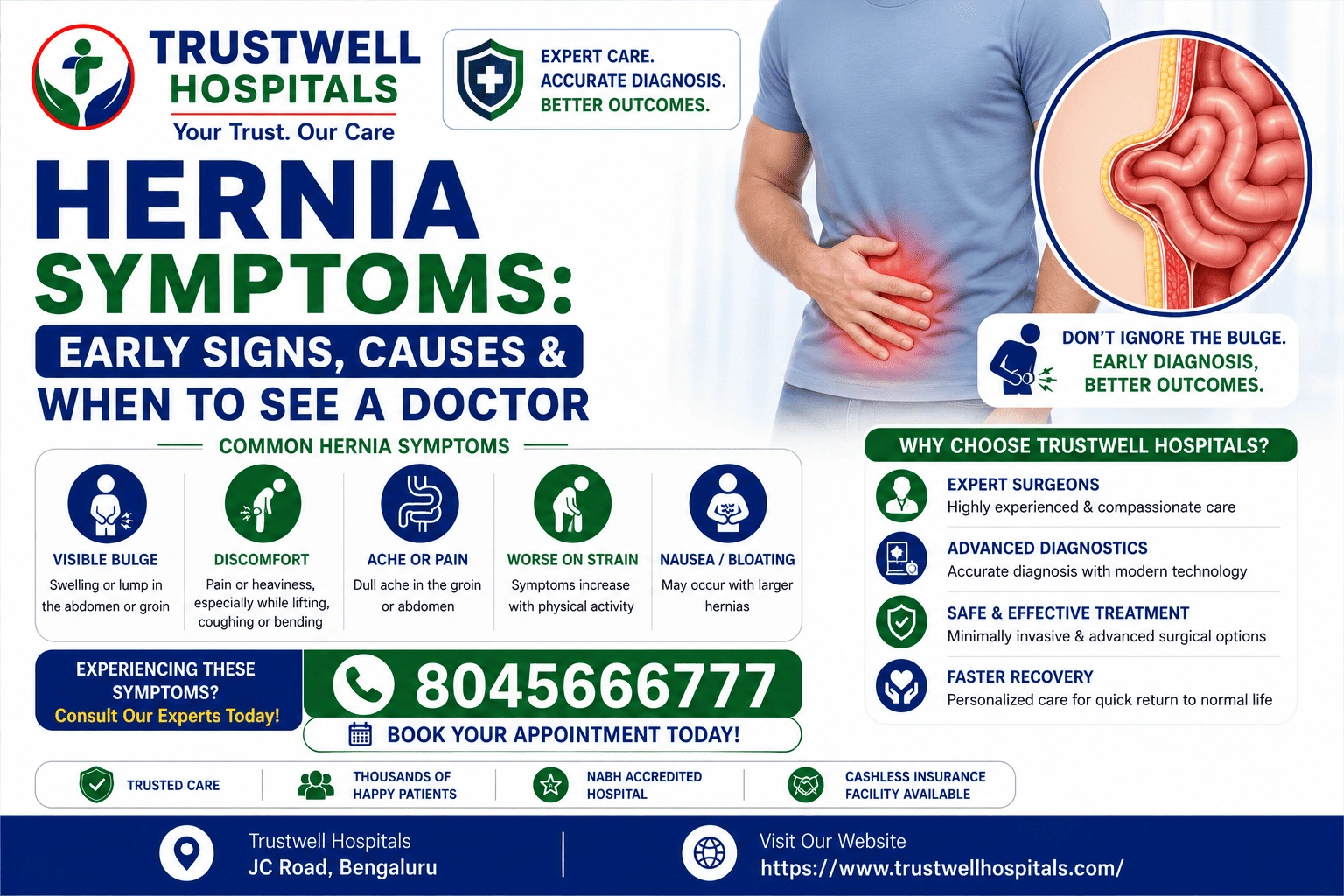
What Is a Hernia?
A hernia occurs when an organ, intestine, or fatty tissue pushes through a weakened area of muscle or connective tissue. Although hernias can develop in different parts of the body, they most commonly occur in the abdominal wall and groin. The most common types include:- Inguinal hernia
- Femoral hernia
- Umbilical hernia
- Incisional hernia
- Hiatal hernia
Early Symptoms of a Hernia
During the early stages, symptoms are often mild and may only appear during physical activity. Common early warning signs include:- Small visible bulge
- Mild discomfort while lifting
- Feeling of pressure in the groin
- Occasional aching sensation
- Mild swelling after standing for long periods
- Discomfort during exercise
Common Hernia Symptoms
As the hernia enlarges, symptoms usually become more noticeable.Visible Lump or Bulge
The most recognizable symptom is a swelling or lump beneath the skin. Patients often notice that the bulge:- Becomes larger while standing
- Appears during coughing
- Increases after lifting heavy objects
- Reduces or disappears when lying flat
Pain or Discomfort
Pain varies depending on the type of hernia. Patients commonly describe:- Dull aching pain
- Burning sensation
- Pulling discomfort
- Pressure in the abdomen
- Groin pain after physical activity
Feeling of Heaviness
Many patients describe a sensation of heaviness or dragging in the lower abdomen or groin, especially at the end of the day. This symptom may gradually worsen as the hernia enlarges.Swelling That Changes Throughout the Day
Some hernias become more noticeable after prolonged standing or physical exertion and appear smaller after resting. This changing size is a characteristic feature of many reducible hernias.Symptoms of Different Types of Hernias
Inguinal Hernia
The most common type of hernia. Typical symptoms include:- Groin swelling
- Pain while lifting
- Bulge near the pubic bone
- Discomfort when coughing
- Burning sensation
Femoral Hernia
Often seen in women. Symptoms include:- Lump in the upper thigh
- Groin pain
- Sudden severe pain if strangulated
Umbilical Hernia
Occurs around the belly button. Symptoms may include:- Bulge near the navel
- Swelling after coughing
- Mild discomfort
- Pressure around the umbilicus
Incisional Hernia
Develops at the site of previous abdominal surgery. Common symptoms include:- Swelling along the surgical scar
- Pain while lifting
- Increasing size over time
Hiatal Hernia
Unlike abdominal wall hernias, a hiatal hernia may not produce a visible lump. Instead, patients often experience:- Heartburn
- Acid reflux
- Chest discomfort
- Difficulty swallowing
- Regurgitation
What Causes a Hernia?
A hernia develops when increased pressure inside the abdomen acts on a weakened area of muscle. Common causes include:- Heavy lifting
- Chronic coughing
- Obesity
- Pregnancy
- Chronic constipation
- Aging
- Previous abdominal surgery
- Smoking
- Family history
Who Is at Higher Risk?
Certain individuals are more likely to develop hernias. Risk factors include:- Men
- Older adults
- Smokers
- Construction workers
- Weightlifters
- Pregnant women
- Patients with chronic constipation
- Individuals with obesity
- People with previous abdominal surgery
When Should You See a Doctor?
Many hernias gradually enlarge over time and do not heal without treatment. You should consult a doctor if you notice:- Persistent swelling
- Increasing pain
- Bulge that becomes larger
- Difficulty performing daily activities
- Pain during lifting
- Groin discomfort lasting several weeks
- Recurrent swelling
Understanding the Urgency of Hernia Symptoms
Not every hernia requires emergency surgery, but knowing which symptoms need immediate attention can help prevent serious complications. The table below explains the appropriate action based on your symptoms.
| Symptom | What It May Mean | What You Should Do |
|---|---|---|
| Small bulge that disappears when lying down | Early or reducible hernia | Schedule a consultation with a surgeon for evaluation. |
| Mild discomfort while lifting or standing | Hernia may be getting larger | Avoid heavy lifting and book a medical appointment. |
| Bulge gradually increasing in size | Progressive hernia | Seek medical advice to discuss treatment options before complications develop. |
| Persistent pain that affects daily activities | Symptomatic hernia | Consult a specialist as surgery may be recommended. |
| Bulge that cannot be pushed back | Possible incarcerated hernia | Visit the emergency department immediately. |
| Severe pain with redness, fever, nausea, or vomiting | Possible strangulated hernia | Seek emergency medical care without delay, as urgent surgery may be required. |
| Difficulty passing stools or gas with abdominal swelling | Possible bowel obstruction | Go to the nearest emergency hospital immediately. |
Emergency Symptoms That Should Never Be Ignored
Although many hernias remain uncomplicated, some require immediate emergency treatment. Seek urgent medical care if you experience:- Sudden severe pain
- A bulge that cannot be pushed back
- Redness over the swelling
- Fever
- Persistent vomiting
- Severe abdominal swelling
- Inability to pass stools or gas
How Is a Hernia Diagnosed?
Diagnosing a hernia usually begins with a detailed medical history and physical examination. In many cases, an experienced surgeon can identify a hernia by examining the swelling while you stand, cough, or strain. When the diagnosis is uncertain or a deeper hernia is suspected, additional investigations may be recommended. These include:- Physical examination
- Ultrasound
- CT scan
- MRI scan (selected cases)
- Blood tests if complications are suspected
Treatment Options for Hernias
Unlike muscle strains, hernias do not heal on their own because the weakness in the abdominal wall remains present. Treatment depends on the type of hernia, its size, symptoms, and the patient’s overall health.Watchful Waiting
Some patients with very small, minimally symptomatic hernias may be monitored through regular follow-up appointments. However, observation does not mean the hernia has healed. Doctors continue to monitor for enlargement or complications that may require surgery.Surgical Repair
Surgery is the only definitive treatment because it repairs the weakened abdominal wall. Depending on the type of hernia, surgical options include:- Open hernia repair
- Laparoscopic hernia repair
- Mesh repair
- Robotic-assisted hernia surgery in selected cases
What Happens If a Hernia Is Left Untreated?
Although some hernias remain stable for months or years, many gradually increase in size. Untreated hernias may lead to:- Persistent pain
- Enlargement of the bulge
- Reduced quality of life
- Incarcerated hernia
- Strangulated hernia
- Intestinal obstruction
- Emergency surgery

