


 Neuro Sciences
 Gastro Sciences
 Kidney Diseases
 Orthopedics
 Transplantation
 ENT and Head-Neck Surgery
 Advanced Trauma Center
 Cardiology
 Interventional Pulmonology
 Hematology and Bone Marrow Transplant(BMT)
 Anesthesia
 Critical Care Excellence: Comprehensive Intensive Care Services in Bangalore
 Dental Surgery and Oral Implants
 Dermatology and Cosmetic Surgery
 Endocrinology and Diabetology
 Facial Plastic and Reconstructive Surgery
 Family Medicine
 Internal Medicine
 Microbiology
 Obstetrics and Gynaecology
 Oncology
 Ophthalmology
 Oral and Maxillofacial Surgery
 Pathology and Laboratory
 Pediatrics
Piles Symptoms: Early Signs, Causes, Stages, and When to See a Doctor
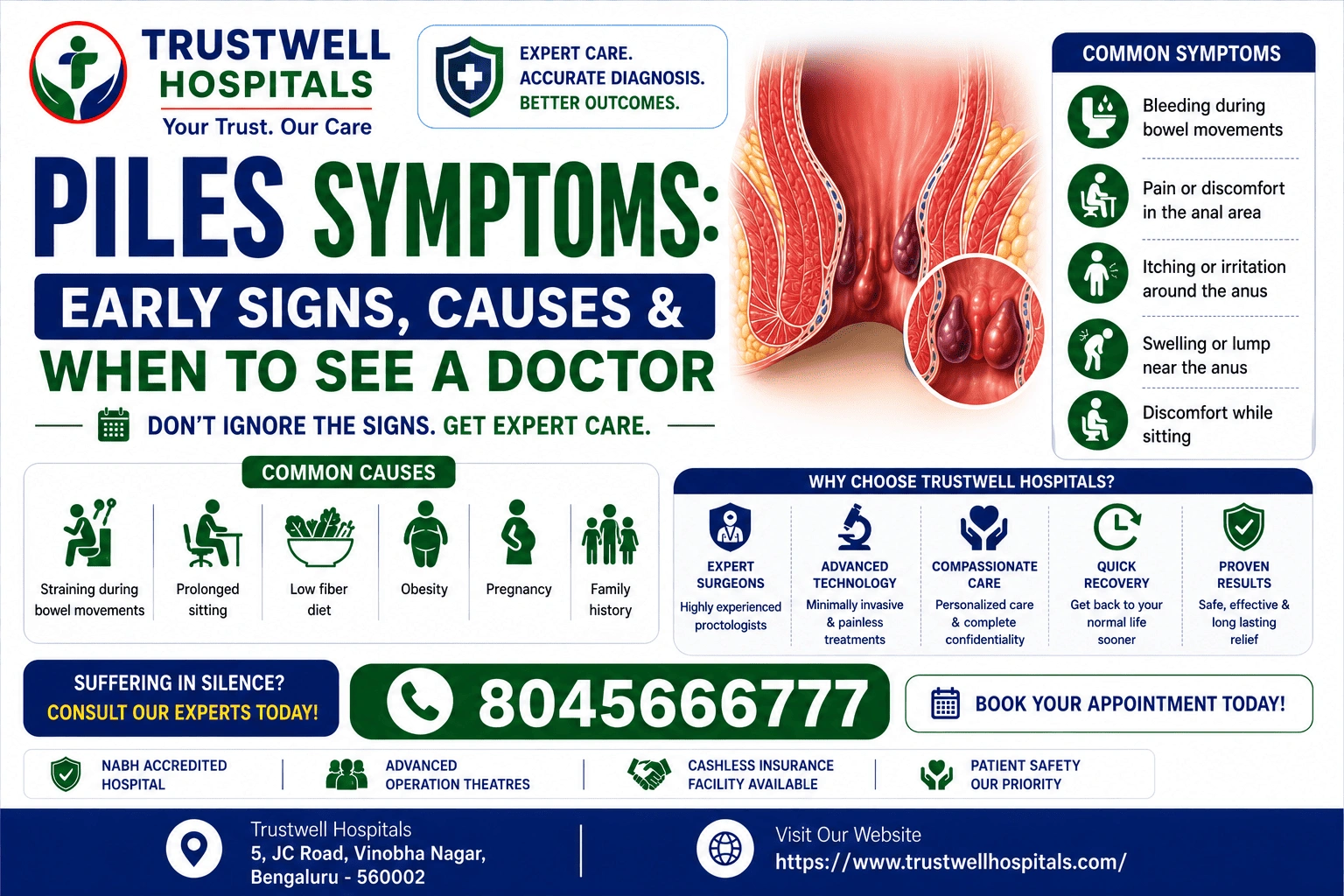
What Are Piles?
Piles are enlarged blood vessels that develop inside the rectum (internal hemorrhoids) or under the skin around the anus (external hemorrhoids). They occur when increased pressure causes the veins in this area to swell. Depending on their location, piles are classified into:- Internal hemorrhoids
- External hemorrhoids
- Prolapsed hemorrhoids
- Thrombosed hemorrhoids
Early Symptoms of Piles
In the initial stages, piles may cause only mild discomfort. Many patients experience symptoms intermittently, particularly after prolonged sitting or straining during bowel movements. Early warning signs include:- Mild itching around the anus
- Slight discomfort while passing stools
- Occasional bright red bleeding
- Feeling of incomplete bowel emptying
- Mild irritation after bowel movements
Common Symptoms of Piles
As hemorrhoids enlarge, symptoms generally become more noticeable.Rectal Bleeding
One of the most common symptoms of piles is bright red blood during or immediately after a bowel movement. Patients may notice:- Blood on toilet paper
- Blood in the toilet bowl
- Blood coating the stool
Pain During Bowel Movements
Pain is more commonly associated with external or thrombosed hemorrhoids. Patients often describe:- Sharp pain while passing stools
- Burning sensation
- Pain lasting several hours after bowel movements
- Discomfort while sitting
Anal Itching
Persistent itching around the anus occurs due to irritation from mucus discharge or prolapsed hemorrhoids. Continuous scratching may worsen inflammation and increase discomfort.Swelling Around the Anus
External hemorrhoids may produce soft or firm swelling near the anal opening. Some patients notice:- A tender lump
- Swelling after prolonged standing
- Increased discomfort while sitting
- Difficulty maintaining hygiene
Mucus Discharge
Internal hemorrhoids may produce mucus that irritates the surrounding skin. This can cause:- Wetness around the anus
- Itching
- Skin irritation
- Mild discomfort
Symptoms Based on the Stage of Piles
Doctors classify internal hemorrhoids into four stages based on their severity.Grade I
- Small internal hemorrhoids
- Mild bleeding
- No prolapse
- Minimal discomfort
Grade II
- Hemorrhoids prolapse during bowel movements
- Return inside spontaneously
- Bleeding becomes more frequent
- Mild pain or discomfort
Grade III
- Prolapsed hemorrhoids require manual repositioning
- Increased swelling
- Greater discomfort
- Persistent irritation
Grade IV
- Permanently prolapsed hemorrhoids
- Severe pain
- Continuous swelling
- Increased risk of thrombosis
- May require surgical treatment
Treatment Options Based on the Stage of Piles
The treatment for piles depends on the severity of the hemorrhoids, the symptoms you experience, and how much they affect your daily life. Early-stage piles are often managed conservatively, while advanced grades may require minimally invasive procedures or surgery.
| Stage of Piles | Typical Symptoms | Common Treatment Approach | |||||||||||||||
|---|---|---|---|---|---|---|---|---|---|---|---|---|---|---|---|---|---|
| Grade I | Mild bleeding, no prolapse, minimal discomfort | High-fibre diet, increased water intake, stool softeners, lifestyle modifications, and topical medications | |||||||||||||||
| Grade II | Prolapse during bowel movements that returns on its own | Lifestyle changes, medications, and office-based procedures such as rubber band ligation if symptoms persist | |||||||||||||||
| Grade III | Prolapse that requires manual repositioning | Minimally invasive procedures or surgical treatment, depending on symptom severity | |||||||||||||||
| Grade IV | Permanently prolapsed hemorrhoids with severe pain or swelling |
|
What Causes Piles?
Piles develop when excessive pressure is placed on the veins of the rectum and anus. Common causes include:- Chronic constipation
- Straining during bowel movements
- Prolonged sitting on the toilet
- Low-fiber diet
- Obesity
- Pregnancy
- Heavy lifting
- Aging
- Chronic diarrhea
Who Is at Higher Risk?
Several factors increase the likelihood of developing hemorrhoids. These include:- Adults over 45 years
- Pregnant women
- Individuals with sedentary lifestyles
- People who frequently lift heavy weights
- Patients with chronic constipation
- Those consuming inadequate dietary fiber
- Individuals with obesity
- Family history of hemorrhoids
When Should You See a Doctor?
Although mild hemorrhoids sometimes improve with dietary changes and lifestyle modifications, medical evaluation is recommended if symptoms persist or worsen. Consult a doctor if you experience:- Recurrent rectal bleeding
- Severe pain
- Persistent swelling
- Prolapsed hemorrhoids
- Difficulty sitting
- Bleeding lasting more than a few days
- Sudden painful anal lump
- Unexplained weight loss
- Changes in bowel habits
Conditions That Can Be Mistaken for Piles
Not every case of rectal bleeding or anal pain is caused by hemorrhoids. Several other conditions produce similar symptoms. These include:- Anal fissures
- Anal fistulas
- Colon polyps
- Colorectal cancer
- Inflammatory bowel disease
- Rectal prolapse
How Are Piles Diagnosed?
Diagnosing piles begins with a detailed discussion of your symptoms, bowel habits, medical history, and lifestyle. During the examination, your doctor evaluates the anal and rectal region to determine the type and severity of hemorrhoids. Common diagnostic methods include:- Physical examination
- Digital rectal examination
- Anoscopy
- Proctoscopy
- Sigmoidoscopy (when indicated)
- Colonoscopy for selected patients
Treatment Options for Piles
Treatment depends on the severity of symptoms, the grade of hemorrhoids, and their impact on daily life.Lifestyle Modifications
Many patients with early-stage hemorrhoids improve through simple lifestyle changes. Doctors usually recommend:- Eating a high-fiber diet
- Drinking plenty of water
- Avoiding prolonged sitting on the toilet
- Exercising regularly
- Preventing constipation
- Avoiding excessive straining during bowel movements
Medications
Mild hemorrhoids often respond well to conservative treatment. Common options include:- Topical creams and ointments
- Suppositories
- Pain-relieving medications
- Stool softeners
- Warm sitz baths
Surgical Treatment
Patients with Grade III or Grade IV hemorrhoids, recurrent bleeding, thrombosed piles, or persistent symptoms may require surgery. Several surgical options are available depending on the severity of the condition. These include:- Conventional hemorrhoidectomy
- Stapled hemorrhoidopexy
- Laser hemorrhoid surgery
- Rubber band ligation
- Doppler-guided hemorrhoidal artery ligation
What Happens If Piles Are Left Untreated?
Although mild hemorrhoids may remain stable for some time, untreated piles can gradually worsen. Possible complications include:- Chronic bleeding
- Iron deficiency anemia
- Persistent prolapse
- Severe pain
- Thrombosed hemorrhoids
- Infection
- Difficulty maintaining anal hygiene

