


 Neuro Sciences
 Gastro Sciences
 Kidney Diseases
 Orthopedics
 Transplantation
 ENT and Head-Neck Surgery
 Advanced Trauma Center
 Cardiology
 Interventional Pulmonology
 Hematology and Bone Marrow Transplant(BMT)
 Anesthesia
 Critical Care Excellence: Comprehensive Intensive Care Services in Bangalore
 Dental Surgery and Oral Implants
 Dermatology and Cosmetic Surgery
 Endocrinology and Diabetology
 Facial Plastic and Reconstructive Surgery
 Family Medicine
 Internal Medicine
 Microbiology
 Obstetrics and Gynaecology
 Oncology
 Ophthalmology
 Oral and Maxillofacial Surgery
 Pathology and Laboratory
 Pediatrics
Hernia vs Piles: Understanding the Differences in Symptoms, Causes, Treatment, and When to See a Doctor
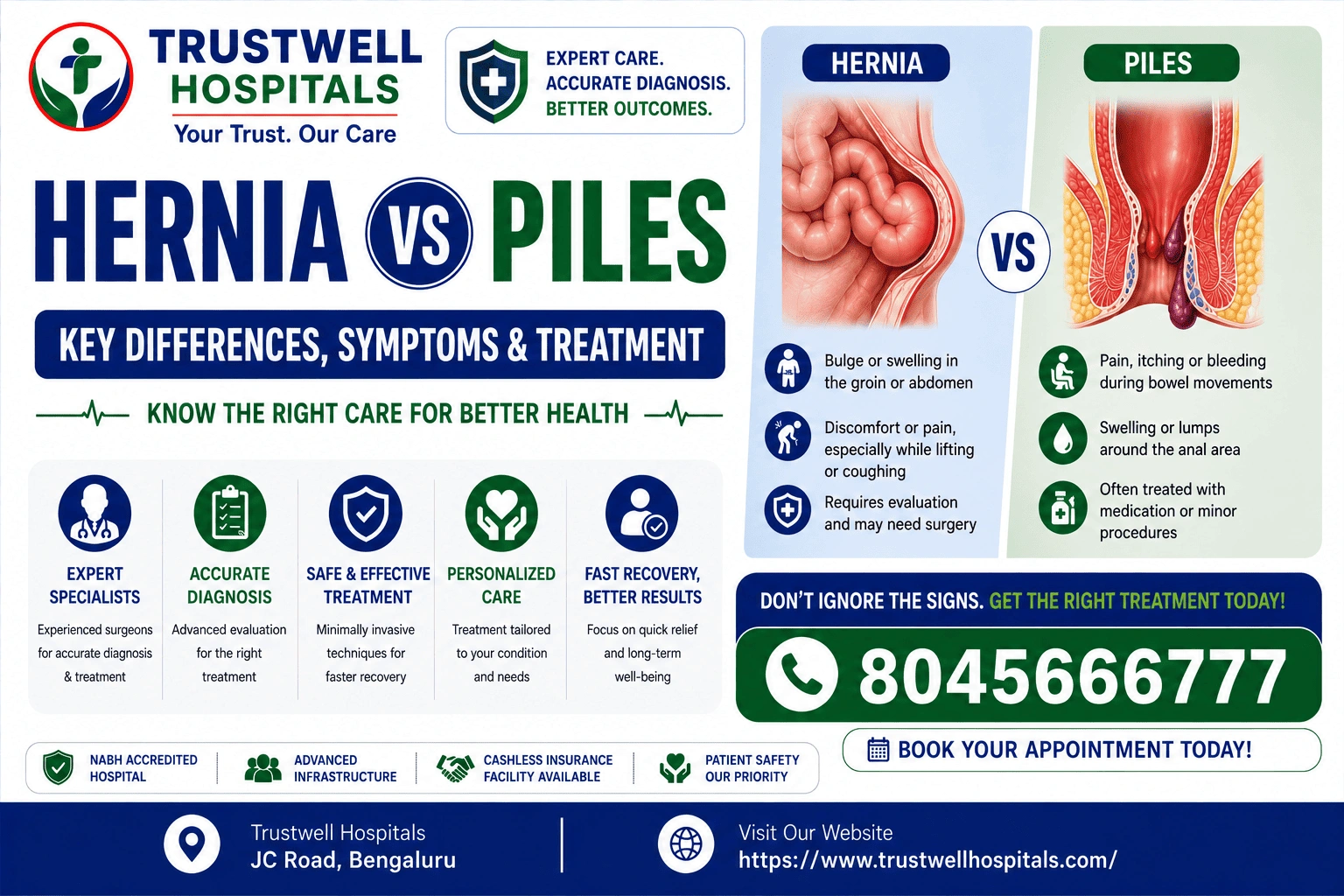
What Is a Hernia?
A hernia develops when an internal organ or fatty tissue protrudes through a weak area in the abdominal wall or surrounding muscles. Common types include:- Inguinal hernia
- Femoral hernia
- Umbilical hernia
- Incisional hernia
- Hiatal hernia
What Are Piles?
Piles, also known as hemorrhoids, are swollen veins inside the rectum or around the anus. They commonly develop because of increased pressure caused by constipation, prolonged straining during bowel movements, pregnancy, obesity, or long periods of sitting. Depending on their location, piles may be:- Internal hemorrhoids
- External hemorrhoids
- Prolapsed hemorrhoids
- Thrombosed hemorrhoids
Hernia vs Piles: Key Differences
Although both conditions may cause discomfort, they affect different parts of the body and present differently.| Feature | Hernia | Piles |
| Affected area | Abdominal wall or groin | Rectum and anus |
| Primary cause | Weakness in abdominal muscles | Swollen rectal veins |
| Visible swelling | Usually in the groin or abdomen | Around the anus (external piles) |
| Pain location | Groin or abdomen | Anal region |
| Bleeding | Rare | Common |
| Pain during bowel movements | Uncommon | Common |
| Lump changes with posture | Often yes | Usually no |
| Definitive treatment | Surgical repair | Depends on severity |
Symptoms of a Hernia
Hernia symptoms depend on the location and size of the defect. Common symptoms include:- Visible lump in the groin or abdomen
- Pain while lifting heavy objects
- Burning sensation
- Feeling of heaviness
- Swelling that increases while standing
- Discomfort after prolonged walking
- Bulge that often reduces when lying down
Symptoms of Piles
Unlike hernias, piles primarily affect the anal canal and rectum. Common symptoms include:- Bright red bleeding during bowel movements
- Anal itching
- Pain while passing stools
- Burning sensation
- Swelling around the anus
- Feeling of incomplete bowel emptying
- Mucus discharge
- Lump near the anal opening
What Causes Hernias and Piles?
Although they can share some risk factors, the underlying causes are very different.Causes of Hernias
Hernias develop because of weakness in the abdominal wall combined with increased pressure inside the abdomen. Common causes include:- Heavy lifting
- Chronic coughing
- Obesity
- Pregnancy
- Aging
- Previous abdominal surgery
- Family history
Causes of Piles
Piles occur because of increased pressure in the veins of the rectum and anus. Risk factors include:- Chronic constipation
- Straining during bowel movements
- Low-fiber diet
- Obesity
- Pregnancy
- Chronic diarrhea
- Prolonged sitting on the toilet
Who Is More Likely to Develop Hernias or Piles?
| Risk Factor | Hernia | Piles (Hemorrhoids) |
|---|---|---|
| Heavy lifting | ✔ Common risk factor due to increased pressure on the abdominal wall | ✖ Usually not a direct cause |
| Chronic constipation | ✔ Can increase abdominal pressure | ✔ Major risk factor because of straining during bowel movements |
| Pregnancy | ✔ Increased abdominal pressure may contribute | ✔ Common due to increased pelvic pressure and hormonal changes |
| Obesity | ✔ Raises pressure inside the abdomen | ✔ Increases pressure on the rectal veins |
| Aging | ✔ Weakens abdominal muscles over time | ✔ Weakens the supporting tissues around the anal canal |
| Chronic cough | ✔ Repeated coughing can weaken the abdominal wall | ✖ Rarely contributes directly |
| Low-fibre diet | ✖ Not usually a direct cause | ✔ Increases the risk of constipation and piles |
| Sitting on the toilet for long periods | ✖ Not associated | ✔ Can increase pressure on the anal veins |
| Previous abdominal surgery | ✔ May lead to incisional hernias | ✖ Not associated |
| Family history | ✔ May increase the risk of certain hernias | ✖ Family history has a smaller role compared with lifestyle factors |
Can Hernias and Piles Occur Together?
Yes. Some patients may develop both conditions simultaneously because they share several risk factors, including chronic constipation, obesity, pregnancy, aging, and activities that increase abdominal pressure. For example, repeated straining during bowel movements can worsen hemorrhoids while also increasing pressure on weakened abdominal muscles, contributing to hernia formation. Treating constipation, maintaining a healthy weight, eating a fiber-rich diet, and avoiding unnecessary straining can help reduce the risk of both conditions.When Should You See a Doctor?
Medical evaluation is recommended if you experience:- Persistent abdominal or groin swelling
- Rectal bleeding
- Pain during bowel movements
- A growing lump in the groin
- Anal pain lasting more than a few days
- Difficulty performing daily activities because of pain
- Swelling that continues to increase in size
How Are Hernias and Piles Diagnosed?
Although hernias and piles usually affect different parts of the body, an accurate diagnosis is essential because several digestive and colorectal conditions can produce similar symptoms.Diagnosing a Hernia
A hernia is often diagnosed through a physical examination. Your doctor may ask you to stand, cough, or strain gently to make the bulge more visible. Depending on the type and location of the hernia, additional investigations may include:- Ultrasound
- CT scan
- MRI scan (selected cases)
- Blood tests if complications are suspected
Diagnosing Piles
Piles are diagnosed based on your symptoms and a clinical examination of the anal region. Additional investigations may include:- Digital rectal examination
- Anoscopy
- Proctoscopy
- Sigmoidoscopy (when indicated)
Treatment Options
Although both conditions may require surgery in advanced cases, their treatment strategies are very different.Hernia Treatment
A hernia cannot heal on its own because the weakness in the abdominal wall persists. While very small, minimally symptomatic hernias may be monitored, surgery is the only definitive treatment. Treatment options include:- Observation in selected patients
- Open hernia repair
- Mesh repair
- Laparoscopic Hernia Surgery
- Robotic-assisted hernia repair in selected cases
Piles Treatment
The treatment of piles depends on their severity and symptoms. Early-stage hemorrhoids may improve with:- Increased dietary fiber
- Adequate hydration
- Stool softeners
- Sitz baths
- Topical medications
What Happens If These Conditions Are Left Untreated?
Ignoring either condition may increase the risk of complications.Untreated Hernia
Possible complications include:- Enlargement of the hernia
- Persistent pain
- Incarcerated hernia
- Strangulated hernia
- Intestinal obstruction
- Emergency surgery
Untreated Piles
Untreated hemorrhoids may lead to:- Chronic bleeding
- Iron deficiency anemia
- Persistent prolapse
- Severe pain
- Thrombosed hemorrhoids
- Difficulty maintaining anal hygiene

